Essential Features Every E-commerce Website Needs

A successful e-commerce website needs more than attractive product pages and a working checkout. Customers should be able to discover products easily, understand what they are buying, trust the store, complete payment without unnecessary friction, and follow their order after purchase.

The exact functionality depends on the type of business, but several essential e-commerce website features provide the foundation for a reliable online shopping experience. These features should work together rather than feeling like separate plugins or tools added over time.

Product Discovery Should Be Fast and Simple

Customers should be able to find the right product without browsing through dozens of unrelated pages. Clear categories, logical navigation, useful search, and filtering become increasingly important as the product catalog grows.

Filters should reflect how customers actually compare products. A clothing store may need size, color, brand, price, and availability filters, while an electronics store may need specifications, compatibility, storage, screen size, or technical features.

Search should also provide useful results when customers use common product names or related terms. A technically accurate search system that returns no results because the customer did not type an exact product title can still create a poor shopping experience.

Once a customer reaches a product page, the information should make the purchasing decision easier. High-quality images, accurate pricing, product variations, availability, descriptions, dimensions, specifications, delivery details, and other important information should be clearly presented.

Cart and Checkout Need to Remove Buying Friction

The shopping cart should give customers a clear summary of what they intend to purchase. Products, quantities, selected variations, discounts, shipping-related information, and totals should be easy to review and change.

Checkout should then require only the information necessary to complete the transaction. Long registration processes, repeated fields, unclear validation errors, and unnecessary steps can cause customers to abandon a purchase they were already prepared to make.

Providing suitable payment options is equally important. The right methods depend on the market and customer base, but the checkout should connect securely with trusted payment providers and give customers clear confirmation when payment succeeds or fails.

  • Easy-to-edit shopping cart
  • Simple and mobile-friendly checkout
  • Multiple appropriate payment methods
  • Clear shipping costs and delivery options
  • Discount and coupon handling where required
  • Reliable payment and order confirmation

Businesses should also plan for failed payments, abandoned transactions, refunds, and cancellations. E-commerce systems need clear order states so customers and administrators can understand what happened without manually investigating every transaction.

Customer Accounts, Orders, and Communication

Customer accounts can make repeat purchases easier by storing useful information such as addresses, order history, saved products, subscriptions, or account preferences. However, businesses should avoid making account creation unnecessarily difficult when a simpler checkout experience would serve the customer better.

After purchase, customers should receive clear confirmation and be able to understand the status of their order. Depending on the business, this may include payment confirmation, processing updates, shipment notifications, tracking information, delivery status, or pickup instructions.

Automated email or mobile notifications can reduce support questions because customers do not need to contact the business simply to ask whether an order has shipped.

Customer support should also remain easy to access. FAQs, contact forms, live chat, support tickets, AI assistants, or other communication options can help customers resolve problems without leaving the store.

Inventory, Security, and Store Management Matter Behind the Scenes

Many essential e-commerce features are not immediately visible to customers. Inventory management, order administration, reporting, security, and integrations are critical to operating the store reliably.

Stock should update correctly when products are purchased, cancelled, returned, or restocked. Stores with product variations need accurate inventory at the variation level rather than only a total quantity for the parent product. Low-stock notifications can help businesses reorder popular products before they become unavailable.

Security needs to protect both customers and administrators. The store should use HTTPS, maintain plugins and software, secure administrator access, validate important actions on the backend, and integrate payment providers using supported secure methods.

Backups and monitoring are important too. If an update causes a problem or an integration stops working, the business should have a reliable way to identify the issue and recover the store.

Build a Better E-commerce Website

Integrations and Analytics Help the Store Grow

As an e-commerce business grows, the store often needs to connect with other systems. Shipping providers can generate rates and tracking information, CRM systems can receive customer data, accounting platforms can receive transaction information, and inventory systems can synchronize stock across several sales channels.

These integrations can reduce manual work, but they should be implemented carefully. The store should record errors, prevent duplicate updates, and provide administrators with enough information to understand when synchronization fails.

Analytics should also be part of the e-commerce foundation. Businesses need to know which products receive attention, which marketing channels generate sales, where customers leave the checkout process, and which pages create problems.

This information can guide improvements in product presentation, navigation, pricing, checkout, marketing, and customer experience instead of relying only on assumptions.

The Best E-commerce Features Support the Buying Journey

Not every store needs subscriptions, loyalty programs, advanced recommendations, AI search, marketplaces, or dozens of integrations. Adding features simply because competitors use them can increase complexity without improving sales.

Encoder IT Limited develops WooCommerce, Shopify, and custom e-commerce solutions with features such as product management, payment gateways, checkout customization, inventory and order systems, shipping integrations, customer accounts, API integrations, performance optimization, and ongoing maintenance.

The essential features of an e-commerce website are the ones that make shopping and store management reliable: customers can find products easily, understand what they are buying, pay securely, receive clear order information, and get support when they need it. Behind the scenes, the business should have accurate inventory, manageable orders, secure administration, useful reporting, and a platform that can continue growing as requirements change.
Custom Shopify Store Development for Modern Businesses

Shopify gives businesses a strong foundation for selling online, but a successful store usually needs more than installing a theme and uploading products. Branding, navigation, product presentation, checkout flow, integrations, performance, and ongoing management all influence how well an e-commerce website supports customers and business growth.

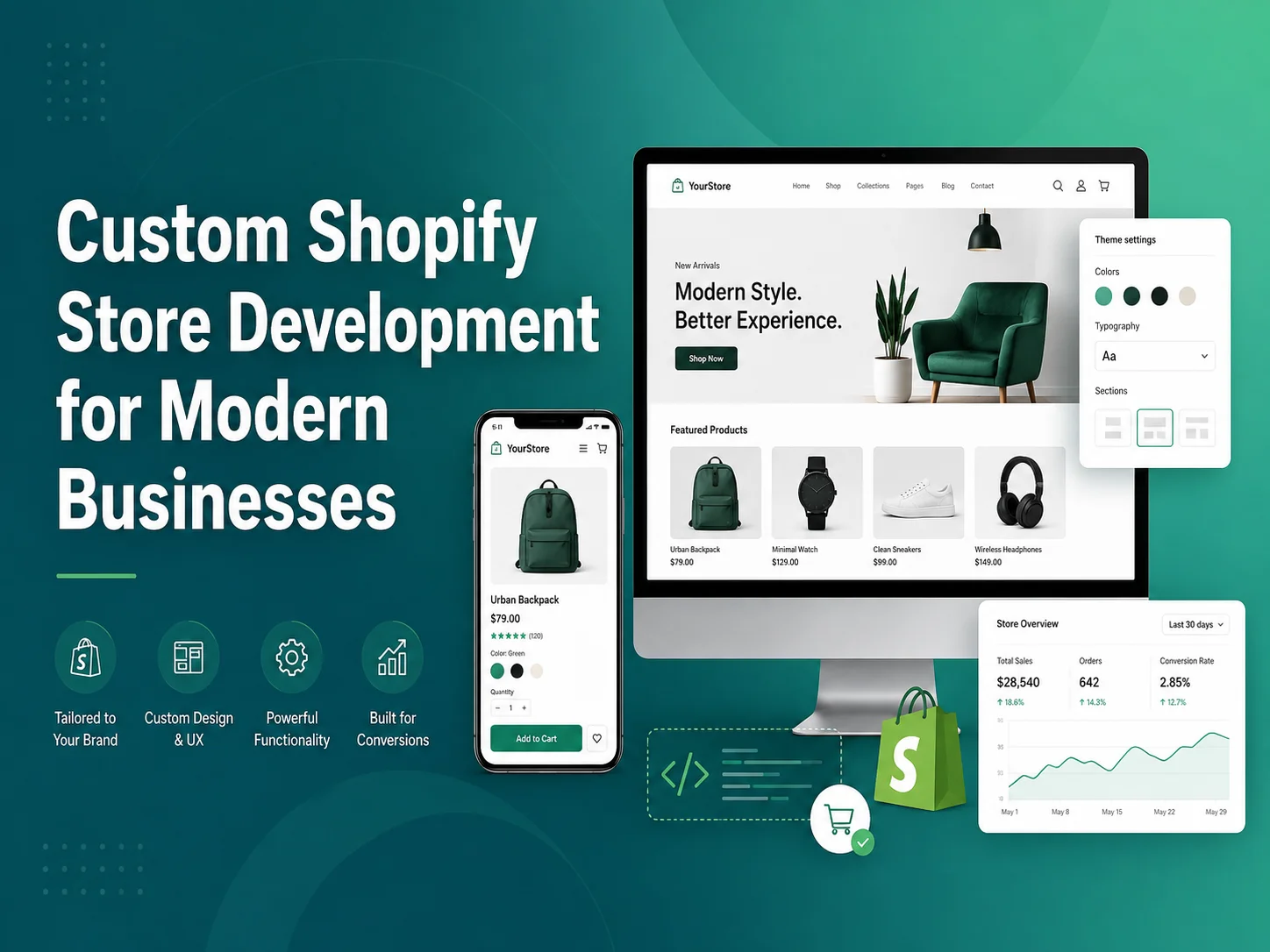
Custom Shopify store development allows businesses to adapt Shopify around their own products, customers, workflows, and brand instead of relying entirely on the default experience of a ready-made theme. The level of customization can range from improving an existing store to developing custom sections, product experiences, integrations, and functionality around specific business requirements.

Why Businesses Choose Custom Shopify Development

Ready-made Shopify themes can be a practical starting point, particularly for smaller stores with straightforward requirements. Problems often appear when a growing business needs a stronger brand identity or functionality that the theme was not originally designed to support.

A store may need a different product-page structure, advanced filtering, custom product options, bundles, subscriptions, specialized shipping logic, multilingual content, or integration with inventory and business-management systems. Trying to solve every requirement by adding another app can eventually make the store more complicated and harder to maintain.

Custom development provides greater control over these areas. Existing Shopify functionality can still be used where it works well, while the parts that directly affect the customer experience or business workflow can be adapted more carefully.

Design the Store Around How Customers Shop

E-commerce design should make it easy for customers to discover products, compare options, understand important details, and move toward checkout. A visually attractive homepage has limited value if visitors cannot find the product they need or understand which variation to purchase.

Custom Shopify design can create a clearer relationship between the brand and the shopping experience. Typography, colors, photography, product cards, navigation, filters, promotional sections, and calls to action can all be designed consistently rather than assembled from unrelated theme components.

Product pages deserve particular attention because they often influence the purchasing decision. Images, pricing, variations, stock information, delivery details, product descriptions, reviews, and purchase actions should be arranged according to the type of product being sold.

A fashion store, for example, may need size and color selection to be extremely prominent. A technical product may need specifications and comparison information. A premium brand may depend more heavily on photography, storytelling, and a carefully controlled visual experience.

Custom Functionality Can Support More Complex E-commerce Needs

As an online business grows, standard store functionality may not cover every workflow. Custom Shopify development can extend the store where necessary without changing the entire platform.

  • Custom product and collection templates
  • Advanced product filtering and search
  • Product bundles and custom options
  • Subscription or recurring purchase experiences
  • Custom cart and promotional logic
  • CRM, ERP, or inventory integrations
  • Shipping and fulfillment integrations
  • Custom customer-account functionality

These features should be introduced based on actual requirements. Adding too many apps or custom features can increase maintenance and affect performance, so businesses should prioritize functionality that improves an important customer journey or reduces meaningful operational work.

Custom integrations can also connect Shopify with systems already used by the business. Product information might synchronize with an ERP, orders could move into a fulfillment platform, customer information may be sent to a CRM, or inventory may need to stay synchronized across several sales channels.

Discuss Your Shopify Store

Performance Matters as the Store Becomes More Customized

E-commerce stores often become heavier over time as businesses add marketing scripts, tracking systems, apps, popups, reviews, recommendations, analytics, and custom features. Each tool may be useful individually, but together they can affect page speed and the shopping experience.

A custom development process should therefore include performance considerations from the beginning. Images should be optimized, unnecessary applications and scripts should be reviewed, and custom sections should be built efficiently rather than loading large resources for functionality the customer may never use.

Mobile performance is particularly important because customers frequently browse and purchase products from smartphones. Product images, menus, filters, variant selectors, cart controls, and checkout-related actions should remain easy to use on smaller screens.

Make the Store Easier to Manage After Launch

Custom development should not make routine store management unnecessarily difficult. Business teams still need to update products, pricing, collections, promotional sections, images, and other content without requesting development work for every small change.

Reusable Shopify sections and well-organized theme settings can provide flexibility while keeping the visual design controlled. This allows marketing teams to create new landing pages or promotional layouts without accidentally breaking the overall design system.

Businesses should also consider ongoing maintenance. Apps change, integrations need updates, new product requirements appear, and customer behavior evolves. A clean custom implementation is easier to extend than a store built around a large number of unrelated workarounds.

When Is a Custom Shopify Store Worth It?

Custom Shopify development makes the most sense when the store has requirements that directly affect branding, conversions, customer experience, or business operations. A very small catalog with simple products may work perfectly well with a carefully selected theme and limited customization.

A growing brand may benefit from deeper customization when it needs a distinctive shopping experience, complex product presentation, advanced integrations, improved performance, or more control over how customers move from discovery to purchase.

Encoder IT Limited provides Shopify design and development services for businesses that need custom storefronts, theme customization, responsive UI/UX, product and collection development, third-party integrations, performance improvements, and ongoing e-commerce support.

The purpose of custom Shopify development is not to customize every part of the platform. It is to keep the reliable e-commerce foundation Shopify provides while improving the areas that are important to your particular business. When design, functionality, integrations, and performance are planned together, the result can be a more distinctive store that is easier for customers to use and easier for the business to grow.

How to Build a Fast and Secure Online Store

A successful online store needs more than attractive product pages. Customers expect products to load quickly, search and filtering to respond smoothly, checkout to work without delays, and payments to be handled securely. If an e-commerce website is slow or appears unreliable, customers may leave before completing their purchase.

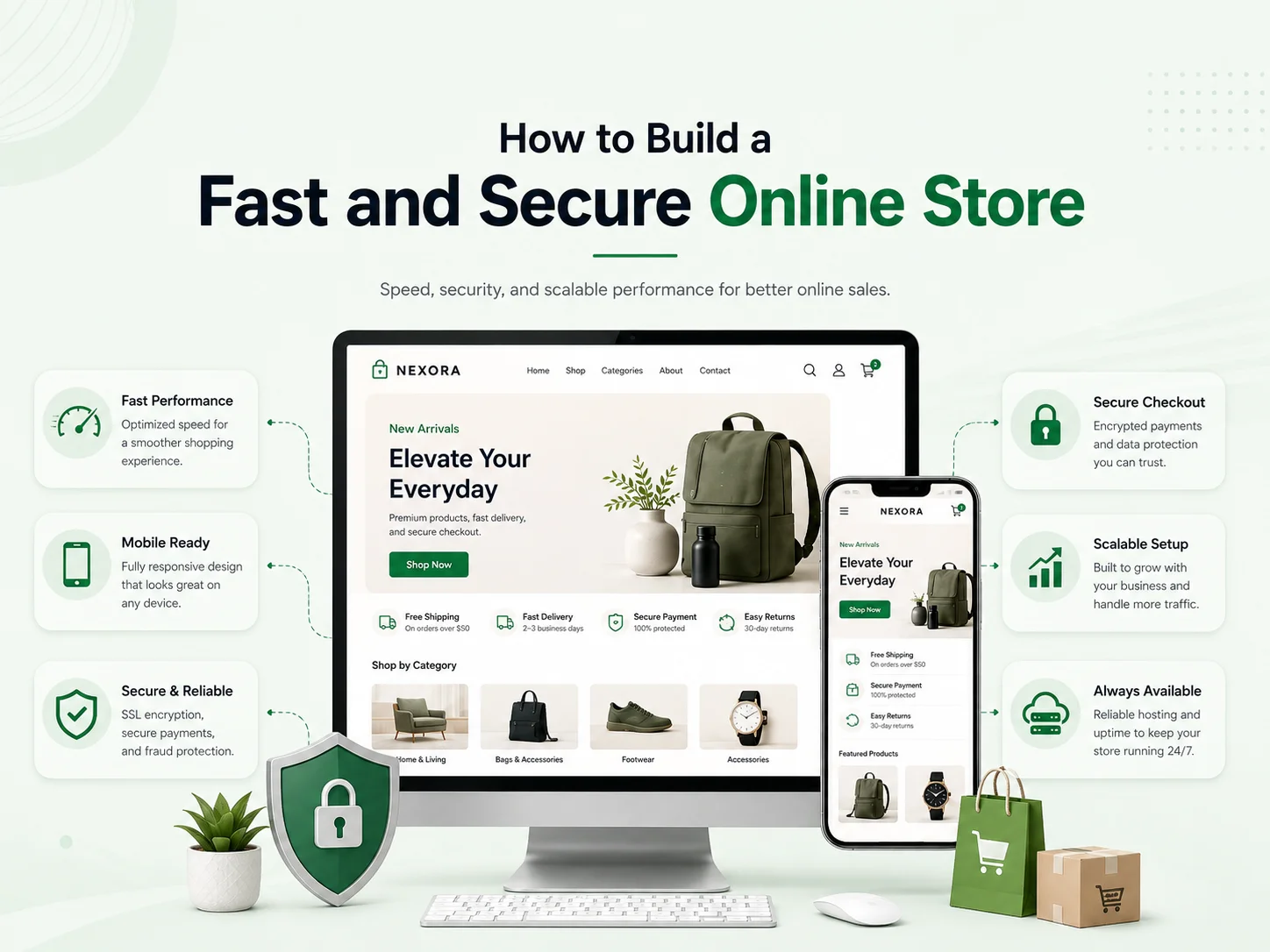
Building a fast and secure online store requires attention across the complete platform—from hosting, images, frontend code, and database performance to authentication, payments, software updates, APIs, and administrative access. Performance and security should be planned during development rather than treated as separate fixes after the store is already live.

Build Performance Into the Store From the Beginning

E-commerce websites can become heavy quickly because they contain product images, variations, filters, reviews, tracking scripts, payment services, promotional tools, search features, and third-party applications. Each individual feature may be useful, but together they can significantly increase the amount of work required to load a page.

Product images are one of the first areas to optimize. High-quality photography is important for online shopping, but customers should not need to download unnecessarily large files. Images should be resized for their actual display dimensions, compressed appropriately, and loaded efficiently. Product galleries should also avoid loading every large image immediately when only the first few are visible.

The same principle applies to scripts and plugins. WooCommerce, Shopify, and custom e-commerce stores often accumulate analytics tools, chat systems, marketing pixels, popup applications, recommendation engines, review widgets, and other extensions. Businesses should periodically review which tools genuinely support sales and remove unnecessary ones rather than allowing the store to become increasingly complex.

Hosting and backend performance matter as well. A store that works comfortably with fifty daily orders may need different infrastructure when traffic and product data increase significantly. Slow database queries, inefficient search, unnecessary API calls, or limited server resources can make product browsing and checkout noticeably slower as the business grows.

Protect Customer Accounts and Checkout

An online store handles information that deserves careful protection. Depending on the platform, this may include customer names, addresses, order histories, account credentials, payment-related information, and business transaction records.

The complete store should use HTTPS, and sensitive payment credentials should remain protected rather than being exposed in browser-side code. Payment gateways should be integrated using the secure methods provided by the payment provider, while the backend should verify important transaction events before marking an order as paid.

Customer and administrator authentication also requires attention. Strong passwords, appropriate account permissions, secure password recovery, and additional authentication for sensitive administrative access can reduce unnecessary risk. Employees should only receive the level of access required for their role.

For example, someone responsible for managing product descriptions may not need permission to install extensions or change payment settings. Limiting administrative privileges reduces the impact of both mistakes and compromised accounts.

A secure e-commerce store should never rely on the checkout screen alone. Payments, customer permissions, prices, order totals, discounts, inventory changes, and other important actions should be verified by trusted backend logic before the business treats them as complete.

Keep Checkout Fast, Simple, and Reliable

Checkout is one of the most important areas of an online store because even small problems can interrupt a purchase that was already close to completion. Customers should not need to navigate through unnecessary steps, create complicated accounts, or wait for several slow third-party services before paying.

Forms should request only the information required to process the order. Address fields, shipping options, discounts, payment methods, and order totals should update clearly so customers understand exactly what they are purchasing and how much they will pay.

The checkout also needs to handle failure correctly. A declined payment, temporary network problem, expired session, or failed external API should not leave the customer unsure whether an order was placed. Clear messages and reliable order states help prevent duplicate payments and unnecessary support requests.

  • Optimize product images and media
  • Reduce unnecessary apps, plugins, and scripts
  • Use reliable hosting and efficient caching
  • Protect customer and administrator accounts
  • Verify payments through secure backend processes
  • Keep checkout forms simple
  • Maintain extensions and third-party integrations
  • Use backups, monitoring, and recovery procedures

Security and Speed Continue After the Store Launches

An online store can be fast and secure when it launches and become slower or more vulnerable over time. New products are added, databases grow, marketing teams install additional tools, payment providers change integrations, and software receives updates.

For WooCommerce stores, WordPress core, themes, plugins, and custom integrations should be maintained carefully. Shopify businesses should also review installed applications, theme customizations, scripts, and integrations to make sure they are still necessary and functioning correctly. Custom e-commerce platforms require similar attention to frameworks, libraries, servers, APIs, and databases.

Monitoring can help businesses discover problems before customers report them. Checkout failures, unexpected downtime, slow database requests, unusual login activity, broken integrations, and repeated application errors can all indicate that something needs investigation.

Backups are equally important. Businesses should have a practical recovery process for website files, databases, orders, products, and other important information. A backup is most valuable when the team knows how to restore it if an update, technical failure, or security incident damages the store.

Improve Your Online Store

Balance Features With Performance and Security

E-commerce businesses naturally want to add features that improve marketing and customer experience. Product recommendations, loyalty programs, live chat, advanced filters, subscriptions, wishlists, reviews, and personalization can all be valuable. The problem begins when every feature adds another script, plugin, API request, or point of failure without being reviewed as part of the complete platform.

The strongest stores prioritize features that contribute directly to customer experience or business operations. A simpler store that loads quickly and processes orders reliably can often provide more value than a feature-heavy platform that becomes difficult to maintain.

Encoder IT Limited develops and optimizes WooCommerce, Shopify, and custom e-commerce platforms. Our services can include store development, performance optimization, payment gateway integration, security improvements, custom functionality, API integrations, checkout development, and ongoing e-commerce maintenance.

A fast and secure online store is created through many coordinated decisions rather than one plugin or optimization setting. Efficient code, optimized media, reliable infrastructure, secure payments, controlled access, careful integrations, and ongoing maintenance all contribute to an e-commerce experience customers can use with confidence.

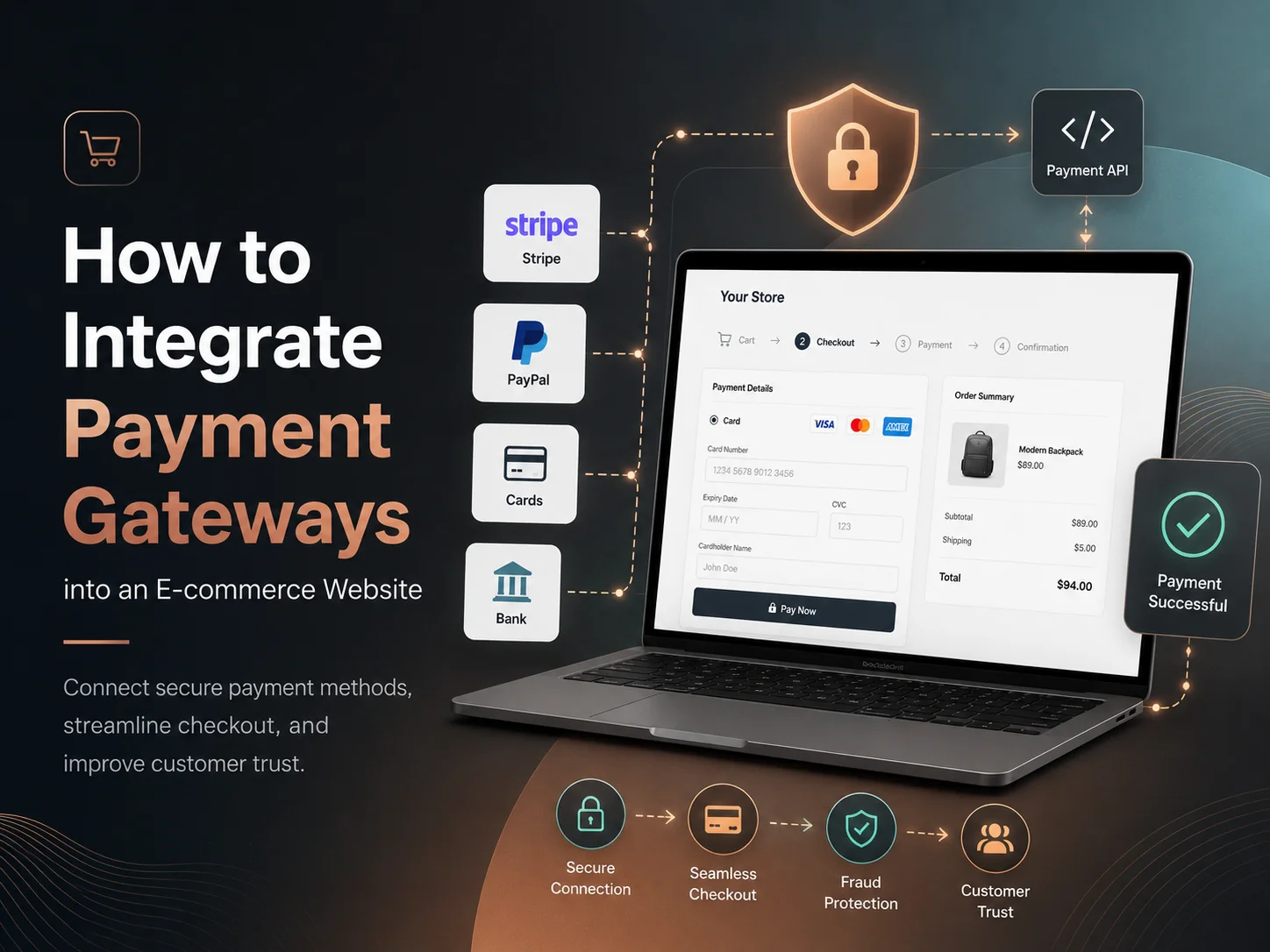
How to Integrate Payment Gateways into an E-commerce Website

Payment gateway integration is one of the most important parts of building an e-commerce website. Customers need a simple and trustworthy way to complete purchases, while the business needs reliable transaction records, secure payment processing, refund handling, and accurate order updates.

A payment gateway connects the e-commerce website with a payment provider so customers can pay using supported methods such as credit or debit cards, digital wallets, bank-based payments, or other regional options. The website itself should not try to handle sensitive payment information in an unsafe way. Instead, a trusted payment provider manages the sensitive parts of the transaction while the e-commerce system controls the order and customer experience.

Choose a Payment Gateway That Fits Your Business

The first step is selecting a payment provider based on where the business operates, where customers are located, which currencies need to be supported, and what payment methods customers expect.

Popular providers such as Stripe, PayPal, Square, Adyen, and region-specific gateways offer different combinations of payment methods, currencies, settlement options, subscription support, fraud tools, and developer APIs. E-commerce platforms such as WooCommerce and Shopify also support multiple payment providers through built-in integrations or extensions.

Businesses should compare more than transaction fees. Availability in the target country, payout schedules, refund handling, recurring payments, international transactions, fraud protection, reporting, and technical integration requirements can all influence the final choice.

An online store serving one country may only need a few local payment options, while an international e-commerce business may need cards, digital wallets, multiple currencies, and region-specific payment methods.

Understand How the Payment Flow Works

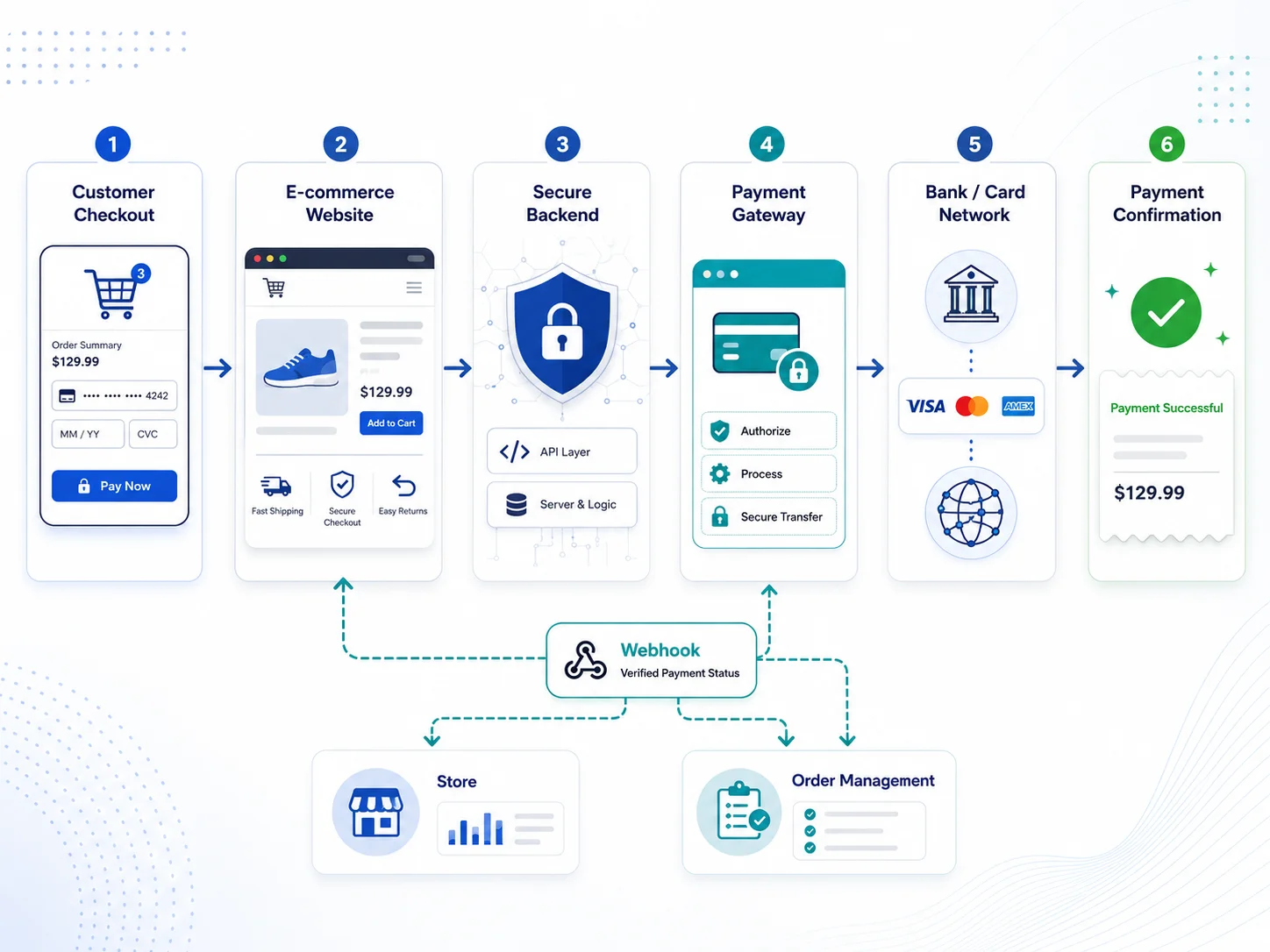
A typical payment begins when the customer completes the cart and moves to checkout. The e-commerce website calculates the order total, including products, discounts, shipping, and applicable taxes. The payment provider then securely collects or processes the customer’s payment details.

After the provider processes the transaction, the website needs to determine whether the payment succeeded, failed, requires additional authentication, or remains pending. The order status should be updated based on verified information from the payment provider rather than simply trusting what the customer’s browser reports.

E-commerce-1-2

Modern payment integrations commonly use server-to-server notifications or webhooks to confirm important transaction events. This is useful because a customer may close the browser immediately after paying or experience a network interruption before the website receives the final result.

The payment provider can still notify the backend that the transaction succeeded, allowing the e-commerce system to update the order and continue fulfillment correctly.

Connect Payments With the Complete Order Process

Payment integration should not be treated as an isolated checkout button. It needs to work with the entire order-management workflow.

When payment succeeds, the system may need to mark the order as paid, update inventory, send confirmation emails, generate an invoice, notify the store administrator, and begin fulfillment. If payment fails, customers should receive a clear message and an opportunity to try again without accidentally creating several duplicate orders.

Refunds also need proper integration. When a business refunds an order through the payment provider, the e-commerce system should keep a corresponding transaction record so administrators can understand what happened later.

  • Payment authorization and confirmation
  • Order-status updates
  • Inventory adjustment
  • Customer confirmation emails
  • Failed-payment handling
  • Refund and cancellation processing
  • Transaction history and reporting
  • Subscription or recurring billing where required

Subscription businesses need additional planning because recurring payments continue after the original checkout. The system needs to track subscription status, renewals, failed recurring payments, cancellations, upgrades, and other billing events over time.

Security Should Be Built Into the Integration

Payment security is one of the most important areas of e-commerce development. Private payment credentials and secret API keys should remain protected on the backend rather than being exposed through public browser code.

The website should use HTTPS, validate important requests on the server, and confirm payment events using trusted information from the payment provider. Sensitive transaction decisions should not depend only on values sent by the customer or frontend application.

Developers should also protect webhook endpoints. A webhook should be verified using the mechanism provided by the payment provider so an attacker cannot simply send a fake “payment successful” request and cause an unpaid order to be marked as completed.

The business should avoid storing card information directly unless there is a genuine need and the necessary compliance controls are in place. Hosted payment forms, secure payment elements, tokenization, and provider-managed checkout experiences can reduce the amount of sensitive payment data handled by the website.

Integrate Payments Into Your E-commerce Website

Test More Than Successful Payments

A payment integration is not ready simply because one test transaction succeeds. Developers should also test declined cards, insufficient funds, expired payment methods, duplicate submissions, network failures, abandoned checkout sessions, refunds, and other situations that real customers may experience.

The checkout experience should remain clear throughout these scenarios. Customers need to understand whether they were charged and whether an order was successfully created. Poor error handling can result in customers retrying payments unnecessarily or contacting support because the transaction status is unclear.

Testing is particularly important when payments trigger other systems. An order may update inventory, send information to accounting software, start shipping workflows, award loyalty points, or create access to a digital service. Developers should confirm that these actions only occur when the payment state actually allows them.

Build the Payment Experience Around Your Store

The best payment gateway integration depends on the type of e-commerce business. A simple online store may only need card payments and a digital wallet, while a marketplace may require seller payouts, commissions, refunds, and more complicated financial workflows. A subscription platform will have different requirements again.

Encoder IT Limited provides payment gateway integration and e-commerce development for WooCommerce, Shopify, and custom online stores. Our work can include Stripe, PayPal, custom payment APIs, checkout development, subscription billing, webhook integration, refunds, order automation, and connections with existing business systems.

A strong payment integration should feel simple to the customer even when the system behind it is complex. Secure checkout, reliable backend verification, accurate order updates, clear error handling, and proper refund support create a payment experience that customers can trust and businesses can manage confidently.

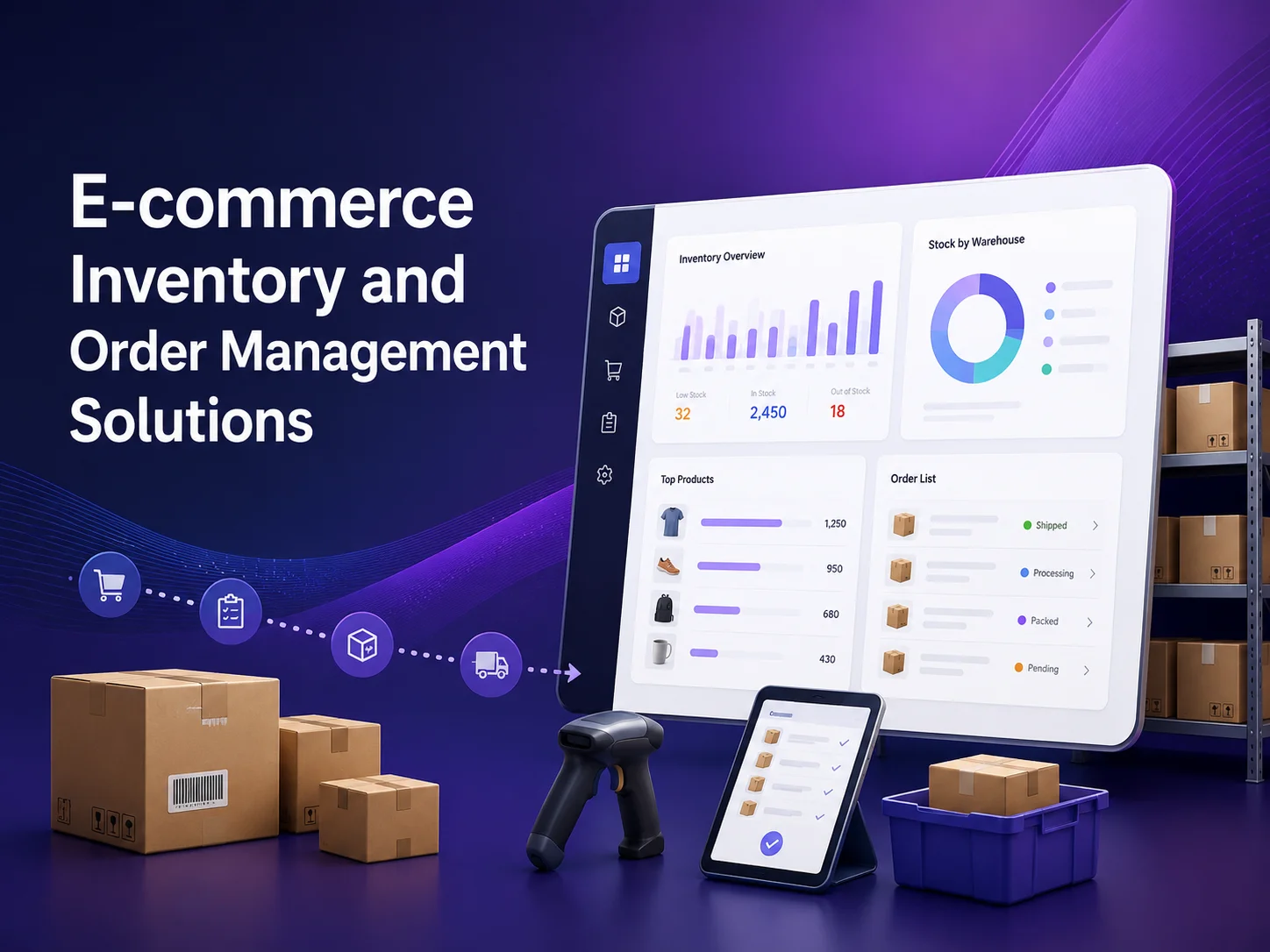
E-commerce Inventory and Order Management Solutions

Managing inventory and customer orders becomes more difficult as an e-commerce business grows. What may begin with a small product catalog and a manageable number of daily orders can eventually involve multiple warehouses, sales channels, suppliers, shipping providers, returns, refunds, and hundreds or thousands of stock movements.

E-commerce inventory and order management solutions help businesses keep these processes organized by connecting product stock, customer orders, fulfillment, payments, shipping, and reporting within a more consistent workflow. Instead of relying on separate spreadsheets or manually updating several systems, businesses can automate many of the repetitive steps that happen between receiving an order and delivering it to the customer.

Why Inventory Management Becomes More Important as You Grow

Accurate inventory information helps prevent two common e-commerce problems: selling products that are no longer available and holding more stock than the business actually needs. Both can affect cash flow and customer experience.

When inventory is updated manually, mistakes become more likely as order volume increases. A product may sell through the website while an employee forgets to update another sales channel. A returned item may never be added back into available stock. Warehouse staff may also have difficulty knowing which quantity is physically available, reserved for existing orders, damaged, or waiting for inspection.

A structured inventory system can track these movements automatically. When a customer places an order, the appropriate quantity can be reserved or deducted. When an order is cancelled, stock can be released. When new products arrive from a supplier, warehouse staff can update the quantity through an administrative system rather than maintaining several separate records.

For businesses selling through multiple channels, inventory synchronization becomes especially important. WooCommerce, Shopify, marketplaces, point-of-sale systems, and physical locations may all need to work with the same stock information so customers see more accurate availability.

Order Management Connects the Complete Customer Journey

An order does not end when the customer clicks the checkout button. The business still needs to verify payment, reserve stock, prepare the items, arrange shipping, notify the customer, handle delivery updates, and sometimes process returns or refunds.

An order management solution keeps these stages connected. Instead of employees manually checking several systems, each order can move through defined statuses such as pending payment, paid, processing, packed, shipped, completed, cancelled, or refunded.

These statuses can also trigger automation. A successful payment may move the order into fulfillment, reduce available inventory, send a confirmation email, and notify warehouse staff. Once a shipping label is created, the tracking number can be saved to the order and sent to the customer automatically.

E-commerce-2

Returns need the same level of coordination. If a customer sends a product back, the system may need to record the return, determine whether the item can be restocked, process a refund, adjust inventory, and update financial records. A connected workflow reduces the chance that one part of this process is completed while another is forgotten.

Useful Features in an Inventory and Order Management System

The exact functionality depends on the size and structure of the business. A small online store may only need reliable stock deduction and order tracking, while a larger operation may need warehouse-level inventory, purchasing, supplier records, fulfillment automation, and detailed reporting.

  • Real-time or near-real-time stock tracking
  • Low-stock and out-of-stock alerts
  • Order status and fulfillment management
  • Multi-location or warehouse inventory
  • SKU, variation, and product-level tracking
  • Returns, cancellations, and refund workflows
  • Shipping and tracking integrations
  • Multi-channel inventory synchronization
  • Sales and inventory reporting
  • Supplier and purchasing workflows where required

Businesses with products that have multiple sizes, colors, or other variations should make sure inventory is tracked at the correct variation level. Knowing that a product has ten units in total is not enough if all ten are one size and customers are attempting to purchase another.

Low-stock alerts can also help purchasing teams act earlier. Instead of discovering that a popular product has sold out, the system can notify employees when available inventory reaches a predefined threshold.

Build an E-commerce Management Solution

Connect Inventory With Payments, Shipping, and Other Business Systems

Inventory and order management becomes more valuable when it is connected with the systems the business already uses. Payment gateways can confirm whether an order is actually paid before fulfillment begins. Shipping providers can generate labels, rates, and tracking information. Accounting systems can receive relevant transaction data without requiring employees to enter every sale manually.

Businesses may also need integration with ERP, CRM, warehouse management, supplier, or point-of-sale systems. The goal is to reduce duplicated data entry and keep the same order or product information consistent across different parts of the company.

API integration is often central to this process. A custom integration can allow one platform to send product, inventory, order, shipping, or customer information to another system while controlling when and how those updates happen.

Reliability matters because automated systems can create larger problems if incorrect data is synchronized. Integrations should include error handling, logs, duplicate protection, and a clear way for administrators to identify transactions that need manual attention.

Automation Can Reduce Fulfillment Errors and Manual Work

A growing e-commerce operation often contains repetitive administrative work that can be automated. Employees may manually copy tracking numbers, update order statuses, prepare customer emails, check stock levels, or move order information into another business application.

An integrated system can automate many of these actions. For example, after a warehouse marks an order as shipped, the system can save the tracking number, change the order status, send the customer a notification, and update another connected platform without requiring several separate steps.

Automation should still include control points for unusual situations. High-value orders, payment disputes, damaged products, unusual returns, or stock discrepancies may need human review instead of following the standard workflow automatically.

Choosing the Right Solution for Your E-commerce Business

Not every store needs custom inventory software. WooCommerce, Shopify, and other platforms already provide core order and inventory functionality, and extensions can cover many common requirements. For a smaller business, using these existing capabilities may be more practical than building an entirely separate management system.

Custom development becomes more valuable when the business has workflows that standard e-commerce tools cannot handle cleanly. This may include multiple warehouses, complex product bundles, specialized fulfillment rules, marketplace operations, supplier automation, custom reporting, or integration with existing internal systems.

The best solution should match the current operation while leaving reasonable room for growth. Overbuilding can increase cost and complexity, but relying on disconnected spreadsheets for too long can create operational problems that become harder to fix as order volume increases.

Encoder IT Limited develops e-commerce inventory and order management solutions for WooCommerce, Shopify, and custom online stores. Our work can include inventory synchronization, order automation, payment and shipping integration, custom dashboards, API development, warehouse workflows, and connections with existing business software.

A strong inventory and order management system creates a clearer flow from the moment a customer places an order until the product is delivered or returned. By connecting stock, payments, fulfillment, shipping, and reporting, businesses can reduce manual work, improve inventory accuracy, and create a more reliable experience as e-commerce operations grow.

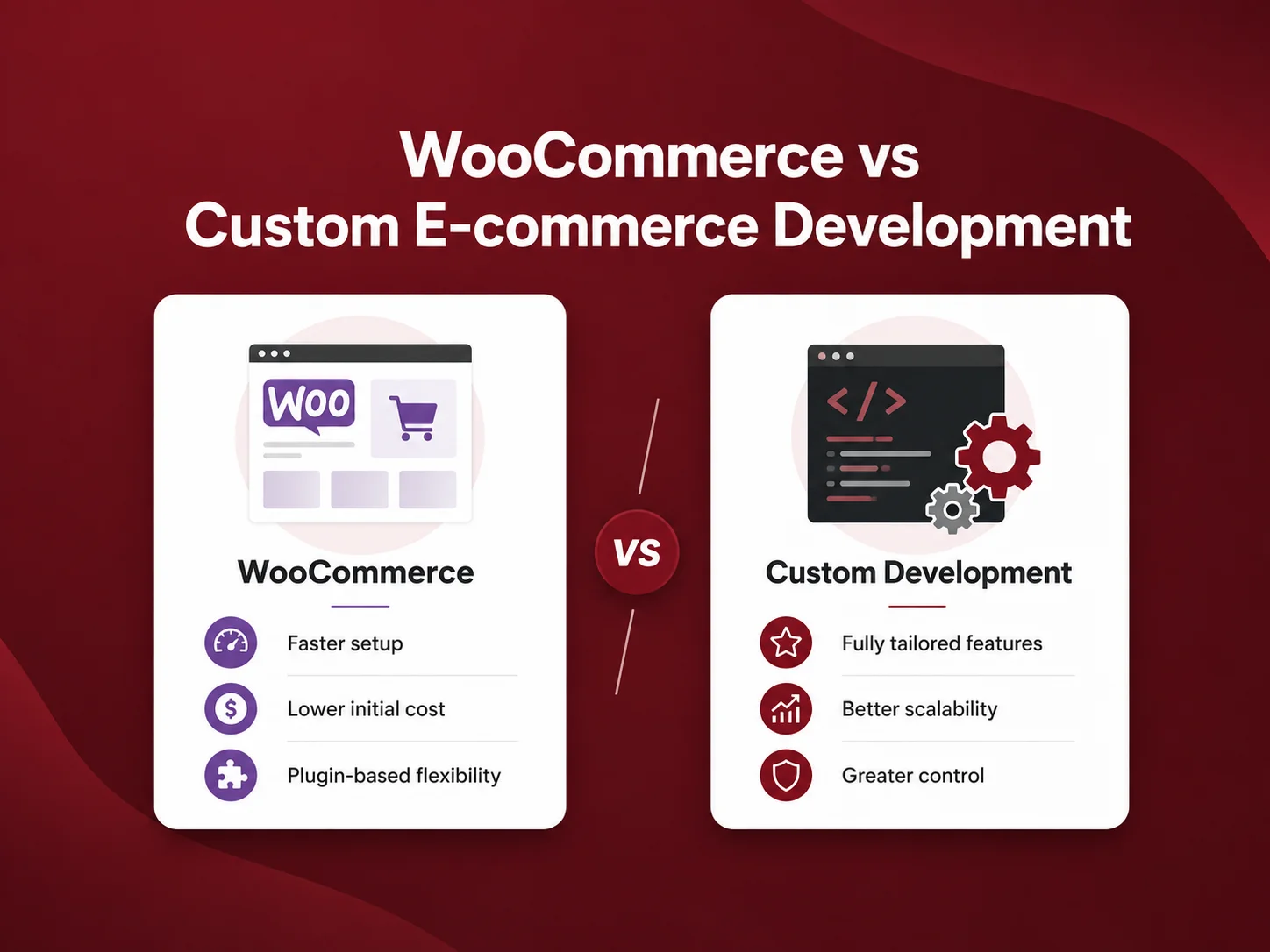
WooCommerce vs Custom E-commerce Development

Choosing between WooCommerce and custom e-commerce development depends on how your business sells, how complex your workflows are, and how much flexibility you need beyond standard online-store functionality. Both approaches can support professional e-commerce businesses, but they solve different types of problems.

WooCommerce can be an efficient choice when a business needs products, categories, checkout, payments, shipping, customer accounts, coupons, and familiar store-management tools. Custom e-commerce development becomes more attractive when the business has unique purchasing workflows, specialized integrations, multiple user roles, marketplace functionality, complex pricing, or operational requirements that do not fit comfortably into a standard platform.

WooCommerce Gives Businesses a Strong Ready-Made Foundation

WooCommerce runs on WordPress and provides much of the functionality required for a traditional online store. Businesses can manage products, variations, inventory, orders, customers, coupons, taxes, and shipping while continuing to use WordPress for pages, blogs, landing pages, and other content.

This can reduce development time because common e-commerce features do not need to be created from the beginning. Payment gateways, shipping providers, subscriptions, product filters, multilingual functionality, and many marketing services can often be added through existing extensions or integrations.

For small and medium-sized stores, this flexibility can be a major advantage. A business can launch with standard functionality, customize the design, and add more features as the store grows. WooCommerce also gives developers significant control over themes, plugins, hooks, APIs, and custom functionality when the standard experience needs to be extended.

The challenge appears when customization becomes excessive. If an online store needs dozens of plugins, complicated workarounds, and repeated modifications to make the platform behave like a completely different type of system, maintaining that setup can become more difficult.

Area WooCommerce Custom E-commerce
Initial Development Usually faster for standard stores Requires more planning and development
Core Store Features Available through WooCommerce and extensions Built around exact requirements
Customization Highly customizable within the WordPress ecosystem Maximum architectural flexibility
Unique Workflows May require custom plugins or workarounds Can be designed specifically around the workflow
Maintenance Includes WordPress, theme and plugin maintenance Depends on the custom architecture and technology stack
Best Fit Traditional and moderately customized online stores Complex or highly specialized commerce platforms

Custom E-commerce Development Removes Platform Limitations

A custom e-commerce platform is designed around the business instead of beginning with the assumptions of an existing store system. Developers can decide how products, customers, pricing, orders, permissions, payments, inventory, and other parts of the platform should work based on actual requirements.

This can be valuable when the business model is more complicated than a standard retailer selling products directly to customers. A B2B platform may have customer-specific pricing and approval processes. A marketplace may need sellers, commissions, payouts, disputes, and different user dashboards. Another company may require complex product configuration, quotation workflows, subscriptions, or integrations with internal systems.

Custom development also gives the technical team greater control over application architecture. Backend services, databases, APIs, frontend technology, caching, search, infrastructure, and administrative tools can be selected around expected traffic and functionality rather than being shaped primarily by a CMS.

That flexibility comes with additional responsibility. Features that WooCommerce already provides may need to be developed, tested, and maintained separately. Custom software therefore tends to require a larger initial investment and a development team capable of supporting the platform over the long term.

Cost Depends on How Far Your Requirements Move Beyond Standard E-commerce

For a straightforward store, building common commerce functionality from scratch usually provides little advantage. WooCommerce can offer a much faster path to products, payments, shipping, order management, and content administration.

The economics change when the business starts paying repeatedly to work around platform limitations. A store may depend on several premium extensions, custom synchronization scripts, complex checkout modifications, and plugins that were never designed to work together. Development time then shifts from building useful features to maintaining compatibility between many separate components.

At that point, businesses should compare the long-term cost of continuing to extend WooCommerce with the cost of building a more purpose-built system. Custom development may cost more initially but can provide a cleaner foundation when specialized functionality is central to how the company operates.

Businesses should also consider the internal team. If employees already know WordPress and WooCommerce, moving to a completely custom administrative system introduces training and maintenance requirements. The technical solution should improve the business rather than create unnecessary complexity.

Discuss Your E-commerce Requirements

When WooCommerce Is Usually the Better Choice

WooCommerce is often the practical option when the business follows a recognizable online-store model and most requirements can be handled cleanly through the platform. This can include retail stores, product catalogs, subscription businesses, service sales, and stores that need some custom functionality but still rely on standard commerce workflows.

It can also be a strong choice when content marketing is important. Because WooCommerce is integrated with WordPress, businesses can manage products alongside service pages, landing pages, articles, guides, and other search-focused content within the same system.

  • Small and medium-sized online stores
  • Stores requiring custom branding and product layouts
  • Businesses already using WordPress
  • Standard checkout, shipping, payments, and customer accounts
  • Stores that can meet most requirements through clean extensions and targeted custom development

When a Custom E-commerce Platform Makes More Sense

Custom development becomes more valuable when the e-commerce system is itself a major piece of business software. If customers, vendors, employees, and administrators all follow different workflows, a traditional store platform may eventually become difficult to adapt.

Examples include multi-vendor marketplaces, B2B ordering platforms, highly customized subscription systems, complex product configurators, specialized fulfillment networks, or e-commerce products that need deep integration with ERP, CRM, warehouse, finance, or other internal systems.

A custom platform also makes sense when the company has reached a scale where it needs deeper control over performance, architecture, data flows, and feature development. This does not mean WooCommerce cannot support successful large stores; the decision depends on whether its architecture continues to match the way the particular business needs to operate.

The Right Choice Is Often Somewhere Between the Two

The decision does not always need to be completely WooCommerce or completely custom. Many businesses use WooCommerce as the commerce foundation while developing custom themes, plugins, APIs, checkout logic, integrations, and administrative tools around it.

This hybrid approach can provide the advantages of an established e-commerce system without limiting every part of the project to standard functionality. It is often more efficient than rebuilding mature features such as product management and order administration while still giving the business control over the areas that make its operation unique.

Encoder IT Limited develops WooCommerce stores as well as fully custom e-commerce platforms. Our work can include custom WordPress and WooCommerce development, payment gateways, inventory and order systems, API integrations, marketplaces, customer portals, custom dashboards, and ongoing e-commerce maintenance.

The best choice depends on how closely your requirements match a standard online-store model. If WooCommerce can support the business cleanly, it can provide a flexible and cost-effective foundation. If the platform needs to support highly specialized workflows and complex operations, custom development may provide greater control and a better long-term fit.

How to Improve E-commerce Website Conversion Rates

Getting more visitors to an online store is important, but traffic alone does not create revenue. The website also needs to help those visitors find products, understand what they are buying, trust the business, and complete checkout without unnecessary friction.

E-commerce conversion rate optimization focuses on improving that journey. Instead of immediately spending more on advertising, businesses can often get more value from existing traffic by improving product discovery, product pages, checkout, mobile usability, performance, and customer confidence.

The strongest improvements usually come from fixing the places where customers hesitate or abandon the purchase process rather than adding more promotional elements to every page.

Make Products Easier to Find and Understand

Customers cannot buy products they cannot find. Navigation, categories, search, and filtering should help visitors reach relevant products quickly, especially when the store contains a large catalog.

Categories should use language customers understand rather than internal terminology. Filters such as size, color, price, brand, availability, or product type can reduce the amount of browsing required. Search should also handle common product names and useful keywords so customers do not repeatedly receive empty or irrelevant results.

Once visitors reach a product page, the information should answer the questions they are likely to have before purchasing. Clear product names, strong images, pricing, variations, availability, delivery information, descriptions, and important specifications should be easy to scan.

High-quality images are particularly important because customers cannot physically inspect products online. Depending on the product, multiple angles, close-up details, lifestyle photography, video, or size references can make the purchase decision easier.

Product descriptions should focus on useful information rather than generic marketing language. Explain what the product is, who it is for, important features, dimensions or specifications, and anything the customer needs to understand before ordering.

Reduce Friction Between Product Page and Checkout

Every unnecessary step between interest and purchase creates another opportunity for the customer to leave. Add-to-cart buttons should be easy to identify, selected variations should be clear, and customers should immediately understand whether an item has been successfully added to their cart.

The cart should clearly display products, quantities, prices, discounts, shipping-related information, and the expected total. Unexpected charges introduced late in checkout can create hesitation even when the product price itself was acceptable.

Businesses should also be careful with forced account creation. Some customers may want an account for order history or future purchases, while others simply want to complete one transaction quickly. Where appropriate, reducing unnecessary registration requirements can make checkout easier.

Checkout forms should request only the information required to process the order. Long forms, unclear validation messages, repeated data entry, and unnecessary steps can make purchasing feel more difficult than it needs to be.

  • Use clear product categories and filters
  • Improve product photography and descriptions
  • Keep important purchase information visible
  • Make add-to-cart actions obvious
  • Reduce unnecessary checkout fields
  • Show costs clearly before the final payment step
  • Provide suitable payment options
  • Make errors easy to understand and correct

Build Trust Before Asking Customers to Pay

Customers are more likely to purchase when they feel confident about the business and understand what will happen after payment. Trust is created throughout the shopping experience rather than by adding a single security badge near checkout.

Clear shipping information, return policies, contact details, customer support options, reviews, and accurate product information all contribute to confidence. If customers cannot easily understand delivery times or whether an item can be returned, they may postpone the purchase while looking for answers elsewhere.

Reviews and customer feedback can be useful when they are authentic and relevant to the product. They can help potential buyers understand sizing, quality, real-world usage, or other details that may not be obvious from the product description alone.

The overall quality of the website matters as well. Broken layouts, inconsistent branding, spelling mistakes, missing images, or outdated information can make customers question whether they should trust the store with a payment.

Improve Mobile Shopping and Website Speed

Many customers browse online stores from smartphones, which makes mobile usability a major part of conversion optimization. Product filters, image galleries, variation selectors, cart controls, and checkout forms should all be comfortable to use on smaller screens.

Buttons should be easy to tap, important information should not require excessive scrolling, and popups should not cover most of the screen. A desktop layout that simply shrinks to mobile dimensions often creates unnecessary friction.

Speed also affects the shopping experience. Large product images, excessive scripts, too many applications or plugins, and poorly optimized third-party tools can slow pages. A customer moving through several products should not have to wait repeatedly for each page to become usable.

Performance should be reviewed across the complete purchase journey rather than only on the homepage. Product listings, product pages, cart, and checkout often deserve the greatest attention because they directly influence purchasing.

Improve Your E-commerce Conversion Rate

Use Real Customer Behavior to Decide What to Improve

Conversion optimization works best when decisions are based on actual customer behavior. Analytics can show where visitors enter the website, which products receive attention, and where people leave the purchase journey.

If many customers reach product pages but rarely add items to the cart, the issue may involve pricing, product presentation, shipping information, or purchase confidence. If customers frequently add products but leave during checkout, the problem may involve forms, payment methods, unexpected costs, or technical errors.

Customer support questions can provide useful insight too. If employees repeatedly answer the same question about shipping, sizing, returns, or product compatibility, that information may need to become clearer on the website itself.

Businesses should improve one meaningful area at a time and evaluate the result rather than redesigning everything based on assumptions. Changes to navigation, product information, checkout, or calls to action can be measured to determine whether they actually improve customer behavior.

Focus on Removing Buying Friction

Encoder IT Limited develops and optimizes WooCommerce, Shopify, and custom e-commerce websites. Our work can include UI/UX improvements, product and checkout development, payment integration, performance optimization, custom functionality, API integrations, and ongoing e-commerce support.

Improving an e-commerce conversion rate does not necessarily mean adding more banners, popups, discounts, or marketing messages. In many cases, the strongest improvements come from making the buying process simpler: help customers find the right product, answer their questions clearly, reduce checkout friction, build trust, and make the store fast and easy to use on every device.

When those fundamentals are strong, the traffic the business already receives has a better opportunity to turn into completed orders rather than abandoned sessions.

Custom E-commerce Website Development: Complete Guide

A custom e-commerce website gives businesses more control over how products are presented, how customers shop, and how orders move through internal systems. Instead of adapting every business process to a standard template, the store can be designed around specific products, customers, integrations, and operational requirements.

Custom e-commerce website development can be a strong choice for businesses that need unique functionality, better scalability, specialized integrations, or a shopping experience that standard themes and plugins cannot provide effectively.

What Is Custom E-commerce Development?

Custom e-commerce development involves designing and building an online store around specific business requirements. This can include a fully customized WooCommerce or Shopify store, or a more advanced platform developed with technologies such as Laravel, React, Next.js, or Node.js.

The level of customization depends on the business. Some companies only need a custom frontend and checkout experience, while others require complex pricing, inventory, subscriptions, marketplaces, customer portals, or integration with internal software.

When Do You Need a Custom E-commerce Website?

Standard e-commerce platforms can handle many common online stores. Custom development becomes more valuable when existing solutions require too many workarounds or cannot support important business processes.

  • Complex product or pricing rules
  • Custom checkout workflows
  • Subscription or membership features
  • ERP, CRM, or inventory integrations
  • Multiple customer roles or pricing levels
  • Advanced search and filtering
  • Custom dashboards or customer portals

Choose the Right E-commerce Platform

Platform selection should depend on the products, business model, technical requirements, and future growth plans. WooCommerce can be a strong option for businesses that need WordPress flexibility and extensive customization, while Shopify can work well when managed infrastructure and simpler store administration are priorities.

For highly specialized workflows, a custom e-commerce application may provide greater control over architecture, user roles, integrations, and business logic.

Plan the Customer Journey

A successful online store should make it easy for customers to move from product discovery to checkout. Navigation, categories, search, filters, product pages, cart, and checkout should all work together as one clear journey.

Before development begins, define how customers will find products, compare options, select variations, complete payment, and manage orders after purchase. Good planning reduces unnecessary complexity later.

Design Clear Product Pages

Product pages should provide the information customers need to make confident buying decisions. This may include product images, descriptions, pricing, variations, stock availability, delivery information, specifications, and reviews.

The most important actions should remain visually clear. Avoid overcrowding product pages with unnecessary banners, popups, or unrelated information that distracts from the purchase decision.

Build a Simple Checkout Experience

Checkout is one of the most important parts of an e-commerce website. Long forms, confusing payment options, unexpected charges, or unnecessary steps can make purchasing difficult.

A custom checkout can simplify required fields, organize shipping and payment options, support business-specific rules, and provide clear validation. The experience should also work smoothly on mobile devices.

Integrate Payments, Shipping, and Business Software

E-commerce websites often need to communicate with other systems. APIs can connect the store with payment gateways, shipping providers, accounting platforms, CRM systems, ERP software, inventory platforms, email tools, and other services.

For example, a completed order can update inventory automatically, send information to a fulfillment provider, create an accounting record, and notify the customer without employees manually transferring data between systems.

Focus on Mobile Experience and Performance

Customers should be able to browse products, use filters, manage the cart, and complete checkout comfortably from smartphones and tablets. Responsive e-commerce design should prioritize important actions rather than simply shrinking the desktop layout.

Performance is equally important. Optimized images, efficient code, caching, database optimization, and suitable hosting can help keep product and checkout pages responsive as the store grows.

Build for Security and Scalability

E-commerce websites handle customer accounts, orders, payments, and other important information, so security needs to be considered throughout development. User permissions, secure API communication, software updates, backups, and reliable payment integration are all important parts of the platform.

The architecture should also support realistic growth. New products, customers, integrations, locations, or features should be possible without requiring the complete store to be rebuilt.

Custom E-commerce Development Process

A typical project begins with requirements analysis and planning, followed by UI/UX design, platform selection, frontend and backend development, integrations, testing, and deployment.

Testing should cover product variations, search, cart behavior, payments, shipping rules, customer accounts, responsive layouts, emails, and important third-party integrations before launch.

Custom vs Template-Based E-commerce

Template-based stores are faster and more affordable when the business has straightforward requirements. They can be an excellent choice for smaller stores that do not need specialized functionality.

Custom development is more appropriate when the store needs greater control over design, workflows, performance, integrations, or future expansion. The best solution is not necessarily the most customized one—it is the one that fits the business requirements without unnecessary complexity.

How Encoder IT Limited Can Help

Encoder IT Limited provides custom e-commerce design and development services for businesses that need professional, scalable, and user-friendly online stores.

  • WooCommerce development and customization
  • Shopify development
  • Custom e-commerce platforms
  • Payment and shipping integrations
  • API and business software integration
  • E-commerce UI/UX and performance optimization

Our team can help from initial planning and design through development, integration, testing, launch, and ongoing maintenance.

Request a Quote

Final Thoughts

Custom e-commerce website development gives businesses the flexibility to build an online store around their products, customers, and operational workflows. The right approach depends on how much customization is genuinely required.

By choosing the right platform, simplifying the customer journey, integrating important business systems, and planning for performance and growth, businesses can create e-commerce websites that are easier to manage and better prepared for long-term expansion.

How Much Does an E-commerce Website Cost?

The cost of building an e-commerce website can vary significantly. A small online store using an existing theme may require a relatively modest budget, while a custom e-commerce platform with advanced integrations, subscriptions, inventory management, or specialized workflows can require a much larger investment.

E-commerce website cost depends mainly on the platform, design, features, number of products, integrations, and level of customization required. Understanding these factors can help businesses create a more realistic development budget.

The cheapest e-commerce website is not always the most cost-effective. The right investment should balance development cost with performance, usability, scalability, and long-term maintenance.

Typical E-commerce Website Cost

As a general planning estimate, a simple e-commerce website may start around $2,000–$5,000+. A more professional customized store may fall around $5,000–$15,000+, while advanced custom e-commerce platforms can reach $15,000–$50,000+ or considerably more.

These are broad planning ranges rather than fixed prices. A proper estimate should be based on the actual functionality and business requirements.

Platform Choice Affects the Cost

Shopify and WooCommerce are common choices for online stores. Shopify provides managed hosting and commerce infrastructure through a subscription model, which can simplify technical management. WooCommerce is built for WordPress and provides greater control over hosting, code, plugins, and customization.

A custom e-commerce application built with technologies such as Laravel, React, Next.js, or Node.js generally requires a larger development budget but may be appropriate when standard platforms cannot support the required business workflows.

Custom Design vs Ready-Made Theme

Using a pre-built theme can reduce initial design and development costs. This may work well for businesses with straightforward requirements and limited customization.

Custom UI/UX design costs more because designers and developers create layouts specifically around the brand, products, customers, and conversion journey. It provides greater flexibility for businesses that want a unique shopping experience.

Features That Increase Development Cost

A basic store may only require products, categories, cart, checkout, customer accounts, and payment integration. The cost increases as more specialized functionality is introduced.

  • Advanced product filters and search
  • Multiple payment gateways
  • Subscriptions or memberships
  • Custom pricing and discount rules
  • Inventory or ERP integration
  • Shipping and logistics integration
  • Multi-language or multi-currency support
  • Custom customer dashboards

Payment and Third-Party Integrations

E-commerce websites frequently need to connect with payment gateways, CRM systems, accounting software, shipping providers, inventory platforms, email services, or other business applications.

Standard integrations can be relatively straightforward, while custom API integrations require additional development, testing, error handling, and ongoing maintenance. The number and complexity of integrations can therefore have a significant impact on the project budget.

Number of Products and Product Complexity

A store selling twenty simple products requires less setup than one containing thousands of products with variations, attributes, categories, custom pricing, or complex inventory rules.

Product migration can also add cost when existing information must be transferred from another platform, cleaned, reorganized, or imported into a new store.

Mobile Experience and Performance

A professional e-commerce website should provide a smooth shopping experience across desktop, tablet, and mobile devices. Responsive layouts, product galleries, filters, cart functionality, and checkout need to work comfortably on smaller screens.

Performance optimization may involve image optimization, caching, database improvements, cleaner frontend code, and better hosting. These improvements can require additional development but are important for a reliable online store.

Ongoing E-commerce Website Costs

The initial development budget is only part of the total cost. Businesses should also plan for hosting or platform subscriptions, domain renewal, premium extensions, maintenance, security, backups, payment processing, and future improvements.

As the business grows, additional features and integrations may also be required.

How to Control E-commerce Development Costs

Start by identifying the features required for launch and separating them from features that can be introduced later. A focused first version is usually more cost-effective than trying to build every possible feature immediately.

Clear requirements also reduce unnecessary development changes. Before requesting quotations, document your products, payment methods, shipping requirements, integrations, customer workflows, and important custom functionality.

How Encoder IT Limited Can Help

Encoder IT Limited provides e-commerce website design and development for businesses ranging from smaller online stores to customized e-commerce platforms.

  • WooCommerce development
  • Shopify development and customization
  • Custom e-commerce development
  • Payment and shipping integration
  • API and third-party integrations
  • E-commerce UI/UX and performance optimization

We can review your requirements and recommend an approach based on your functionality, budget, scalability needs, and long-term business plans.

Request a Quote

Final Thoughts

There is no single price for an e-commerce website. A simple store may require only a few thousand dollars, while advanced custom platforms can require significantly larger budgets.

The best way to estimate your project is to define the required products, features, design, payment methods, integrations, and future growth plans. This creates a clearer development scope and helps ensure your investment supports both current needs and future expansion.

Shopify vs WooCommerce: Which Is Better for Your Business?

Choosing the right e-commerce platform can affect how easily you manage products, payments, orders, marketing, integrations, and future store development. Shopify and WooCommerce are both strong options, but they are designed around different approaches.

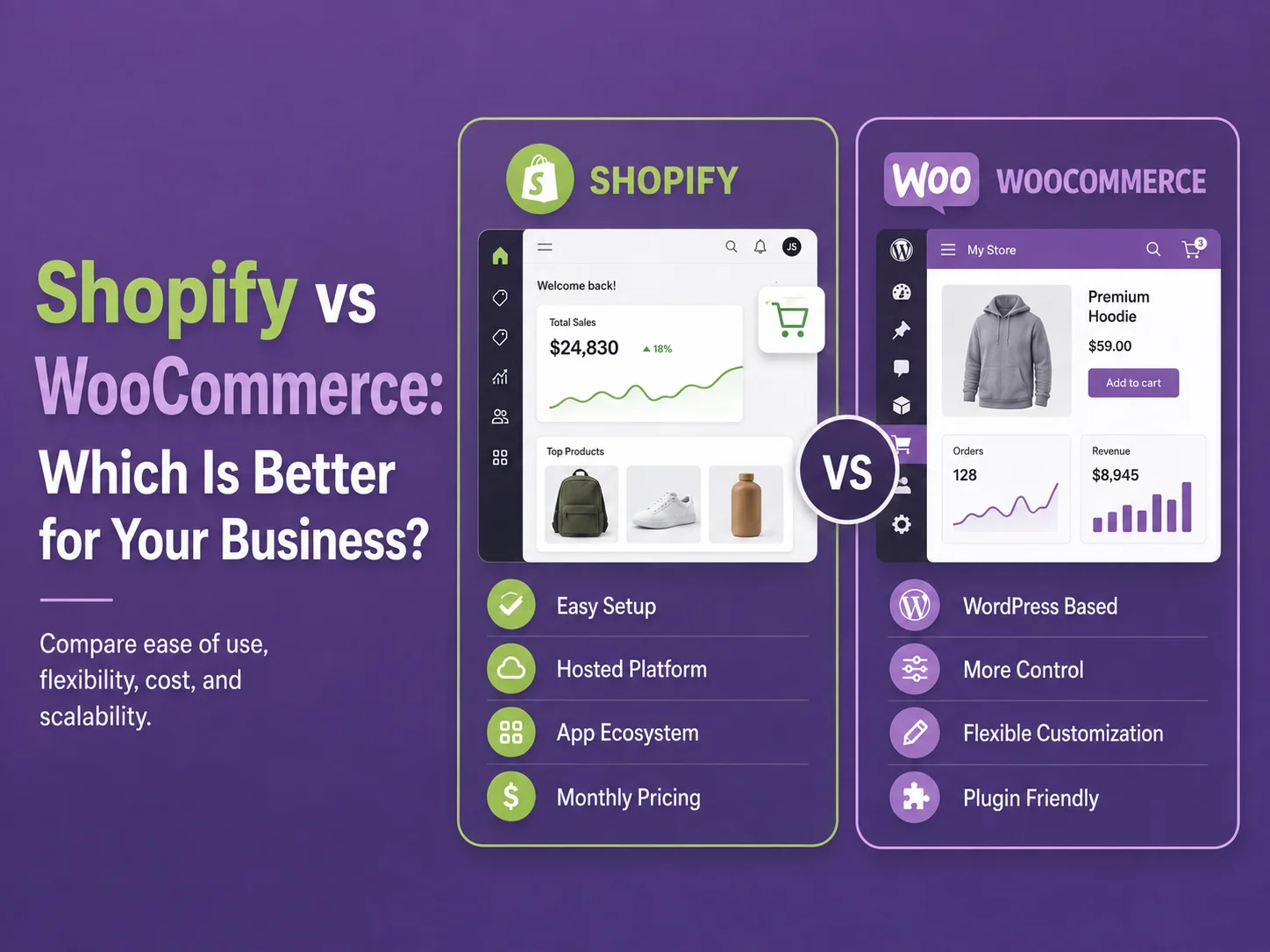
Shopify provides a hosted commerce platform where much of the technical infrastructure is managed for you, while WooCommerce is an open-source e-commerce platform built for WordPress that provides greater control over hosting, code, and customization.

Shopify is often better for businesses that want simplicity and managed infrastructure, while WooCommerce can be better when customization, WordPress flexibility, and technical control are priorities.

What Is Shopify?

Shopify is a hosted commerce platform designed to help businesses create and operate online stores. Hosting and core commerce functionality are managed within the platform, allowing store owners to focus more on products, orders, customers, and sales rather than server management.

It can be a practical choice for businesses that want to launch an online store without managing much of the underlying technical infrastructure.

What Is WooCommerce?

WooCommerce is an open-source e-commerce platform for WordPress. It transforms a WordPress website into an online store while giving businesses control over their hosting, website code, store data, design, and integrations.

Because it operates within WordPress, WooCommerce can be particularly useful for businesses that already use WordPress or need highly customized website and e-commerce functionality.

Shopify vs WooCommerce: Ease of Use

Shopify generally provides a more managed setup experience. Hosting, store administration, and many technical responsibilities are handled through one platform, which can make it easier for businesses without a development team.

WooCommerce requires more involvement with WordPress, hosting, updates, plugins, and technical configuration. However, that additional responsibility also provides greater control over how the store is built and managed.

Customization and Flexibility

Both platforms support themes, extensions, integrations, and custom development. The main difference is the level of control available.

WooCommerce is open source, so developers can customize store functionality deeply when a business has specialized products, checkout processes, pricing rules, customer workflows, or integrations. Shopify also supports extensive customization through themes, apps, and its development ecosystem, but development takes place within Shopify’s platform structure.

Design and User Experience

Both Shopify and WooCommerce can support professional, responsive e-commerce experiences. The final quality depends heavily on the theme, UI/UX design, development quality, product content, and overall store structure.

Businesses should focus on simple navigation, clear product pages, useful search and filtering, mobile usability, fast performance, and an easy checkout journey regardless of the platform selected.

Apps, Plugins, and Integrations

Shopify provides an app ecosystem for extending store functionality, while WooCommerce can be extended through WordPress and WooCommerce plugins as well as custom development.

Both platforms can connect with payment services, marketing tools, CRM systems, shipping providers, analytics platforms, and other business software. For highly specialized workflows, custom API integration may be required.

Cost and Ongoing Management

Shopify uses paid platform plans, and additional costs may come from apps, themes, or custom development. This creates a relatively structured operating model because hosting and platform infrastructure are included.

WooCommerce itself is open source, but businesses still need hosting and may pay for premium extensions, themes, security, maintenance, and development. Therefore, WooCommerce should not automatically be considered the cheaper option—the actual cost depends on how the store is built and maintained.

Which Is Better for Growing Businesses?

Shopify may be a better fit when you want a managed platform, straightforward store administration, and less responsibility for hosting and infrastructure.

WooCommerce may be a better fit when your business already uses WordPress, requires significant customization, needs greater technical control, or has specialized workflows and integrations.

Quick Comparison

  • Ease of setup: Shopify generally requires less technical management.
  • Customization: WooCommerce provides extensive open-source control.
  • Hosting: Included with Shopify; selected and managed separately with WooCommerce.
  • WordPress integration: WooCommerce is built specifically for WordPress.
  • Maintenance: Shopify manages more platform infrastructure, while WooCommerce gives the store owner greater responsibility and control.
  • Custom development: Both support customization, but their development environments differ.

How Encoder IT Limited Can Help

Encoder IT Limited provides Shopify, WooCommerce, custom e-commerce, and API integration services. We can help businesses choose and develop an e-commerce platform based on their products, workflows, integrations, customization requirements, and long-term plans.

Our services include WooCommerce development, Shopify customization, custom checkout functionality, payment integration, shipping integration, API development, store performance optimization, and ongoing maintenance.

Request a Quote

Final Thoughts

There is no single winner in the Shopify vs WooCommerce comparison. Shopify can be a strong choice for businesses that prefer a managed commerce platform, while WooCommerce offers greater open-source flexibility and control within WordPress.

The best choice depends on your technical resources, customization requirements, budget structure, existing website, and future business plans. Focus on the platform that supports your actual operational needs rather than choosing based on popularity alone.