Managing inventory and customer orders becomes more difficult as an e-commerce business grows. What may begin with a small product catalog and a manageable number of daily orders can eventually involve multiple warehouses, sales channels, suppliers, shipping providers, returns, refunds, and hundreds or thousands of stock movements.
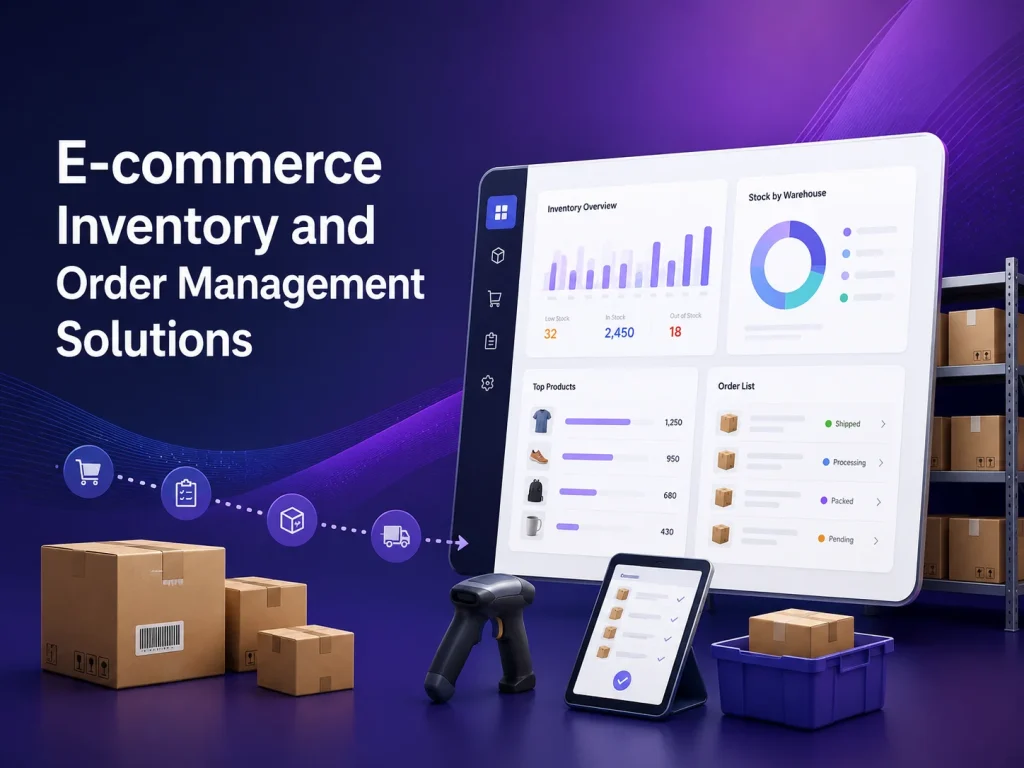
E-commerce inventory and order management solutions help businesses keep these processes organized by connecting product stock, customer orders, fulfillment, payments, shipping, and reporting within a more consistent workflow. Instead of relying on separate spreadsheets or manually updating several systems, businesses can automate many of the repetitive steps that happen between receiving an order and delivering it to the customer.
Why Inventory Management Becomes More Important as You Grow
Accurate inventory information helps prevent two common e-commerce problems: selling products that are no longer available and holding more stock than the business actually needs. Both can affect cash flow and customer experience.
When inventory is updated manually, mistakes become more likely as order volume increases. A product may sell through the website while an employee forgets to update another sales channel. A returned item may never be added back into available stock. Warehouse staff may also have difficulty knowing which quantity is physically available, reserved for existing orders, damaged, or waiting for inspection.
A structured inventory system can track these movements automatically. When a customer places an order, the appropriate quantity can be reserved or deducted. When an order is cancelled, stock can be released. When new products arrive from a supplier, warehouse staff can update the quantity through an administrative system rather than maintaining several separate records.
For businesses selling through multiple channels, inventory synchronization becomes especially important. WooCommerce, Shopify, marketplaces, point-of-sale systems, and physical locations may all need to work with the same stock information so customers see more accurate availability.
Order Management Connects the Complete Customer Journey
An order does not end when the customer clicks the checkout button. The business still needs to verify payment, reserve stock, prepare the items, arrange shipping, notify the customer, handle delivery updates, and sometimes process returns or refunds.
An order management solution keeps these stages connected. Instead of employees manually checking several systems, each order can move through defined statuses such as pending payment, paid, processing, packed, shipped, completed, cancelled, or refunded.
These statuses can also trigger automation. A successful payment may move the order into fulfillment, reduce available inventory, send a confirmation email, and notify warehouse staff. Once a shipping label is created, the tracking number can be saved to the order and sent to the customer automatically.

Returns need the same level of coordination. If a customer sends a product back, the system may need to record the return, determine whether the item can be restocked, process a refund, adjust inventory, and update financial records. A connected workflow reduces the chance that one part of this process is completed while another is forgotten.
Useful Features in an Inventory and Order Management System
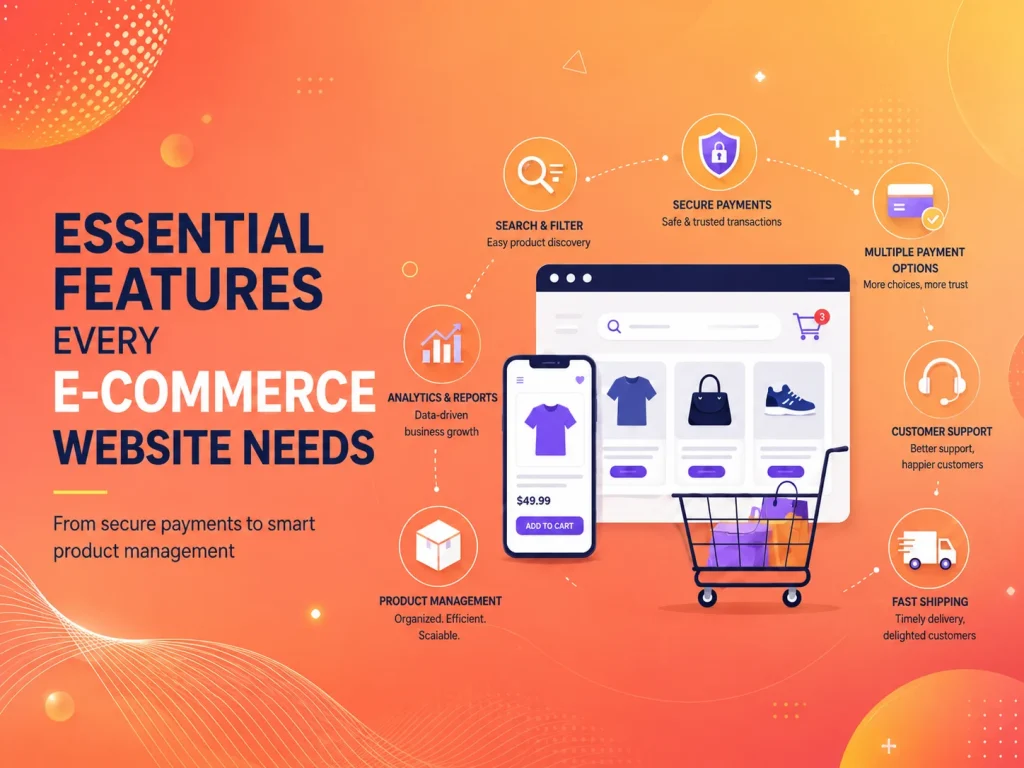
The exact functionality depends on the size and structure of the business. A small online store may only need reliable stock deduction and order tracking, while a larger operation may need warehouse-level inventory, purchasing, supplier records, fulfillment automation, and detailed reporting.
- Real-time or near-real-time stock tracking
- Low-stock and out-of-stock alerts
- Order status and fulfillment management
- Multi-location or warehouse inventory
- SKU, variation, and product-level tracking
- Returns, cancellations, and refund workflows
- Shipping and tracking integrations
- Multi-channel inventory synchronization
- Sales and inventory reporting
- Supplier and purchasing workflows where required
Businesses with products that have multiple sizes, colors, or other variations should make sure inventory is tracked at the correct variation level. Knowing that a product has ten units in total is not enough if all ten are one size and customers are attempting to purchase another.
Low-stock alerts can also help purchasing teams act earlier. Instead of discovering that a popular product has sold out, the system can notify employees when available inventory reaches a predefined threshold.
Build an E-commerce Management Solution
Connect Inventory With Payments, Shipping, and Other Business Systems
Inventory and order management becomes more valuable when it is connected with the systems the business already uses. Payment gateways can confirm whether an order is actually paid before fulfillment begins. Shipping providers can generate labels, rates, and tracking information. Accounting systems can receive relevant transaction data without requiring employees to enter every sale manually.
Businesses may also need integration with ERP, CRM, warehouse management, supplier, or point-of-sale systems. The goal is to reduce duplicated data entry and keep the same order or product information consistent across different parts of the company.
API integration is often central to this process. A custom integration can allow one platform to send product, inventory, order, shipping, or customer information to another system while controlling when and how those updates happen.
Reliability matters because automated systems can create larger problems if incorrect data is synchronized. Integrations should include error handling, logs, duplicate protection, and a clear way for administrators to identify transactions that need manual attention.
Automation Can Reduce Fulfillment Errors and Manual Work
A growing e-commerce operation often contains repetitive administrative work that can be automated. Employees may manually copy tracking numbers, update order statuses, prepare customer emails, check stock levels, or move order information into another business application.
An integrated system can automate many of these actions. For example, after a warehouse marks an order as shipped, the system can save the tracking number, change the order status, send the customer a notification, and update another connected platform without requiring several separate steps.
Automation should still include control points for unusual situations. High-value orders, payment disputes, damaged products, unusual returns, or stock discrepancies may need human review instead of following the standard workflow automatically.
Choosing the Right Solution for Your E-commerce Business
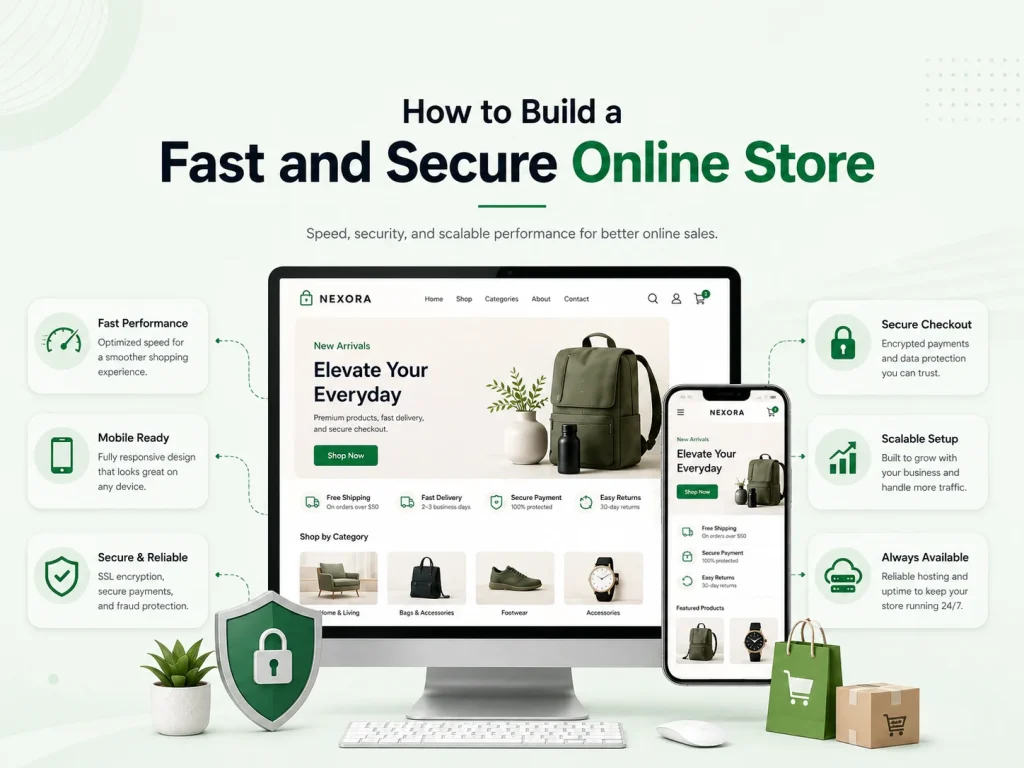
Not every store needs custom inventory software. WooCommerce, Shopify, and other platforms already provide core order and inventory functionality, and extensions can cover many common requirements. For a smaller business, using these existing capabilities may be more practical than building an entirely separate management system.
Custom development becomes more valuable when the business has workflows that standard e-commerce tools cannot handle cleanly. This may include multiple warehouses, complex product bundles, specialized fulfillment rules, marketplace operations, supplier automation, custom reporting, or integration with existing internal systems.
The best solution should match the current operation while leaving reasonable room for growth. Overbuilding can increase cost and complexity, but relying on disconnected spreadsheets for too long can create operational problems that become harder to fix as order volume increases.
Encoder IT Limited develops e-commerce inventory and order management solutions for WooCommerce, Shopify, and custom online stores. Our work can include inventory synchronization, order automation, payment and shipping integration, custom dashboards, API development, warehouse workflows, and connections with existing business software.
A strong inventory and order management system creates a clearer flow from the moment a customer places an order until the product is delivered or returned. By connecting stock, payments, fulfillment, shipping, and reporting, businesses can reduce manual work, improve inventory accuracy, and create a more reliable experience as e-commerce operations grow.