Getting more visitors to an online store is important, but traffic alone does not create revenue. The website also needs to help those visitors find products, understand what they are buying, trust the business, and complete checkout without unnecessary friction.
E-commerce conversion rate optimization focuses on improving that journey. Instead of immediately spending more on advertising, businesses can often get more value from existing traffic by improving product discovery, product pages, checkout, mobile usability, performance, and customer confidence.
The strongest improvements usually come from fixing the places where customers hesitate or abandon the purchase process rather than adding more promotional elements to every page.
Make Products Easier to Find and Understand
Customers cannot buy products they cannot find. Navigation, categories, search, and filtering should help visitors reach relevant products quickly, especially when the store contains a large catalog.
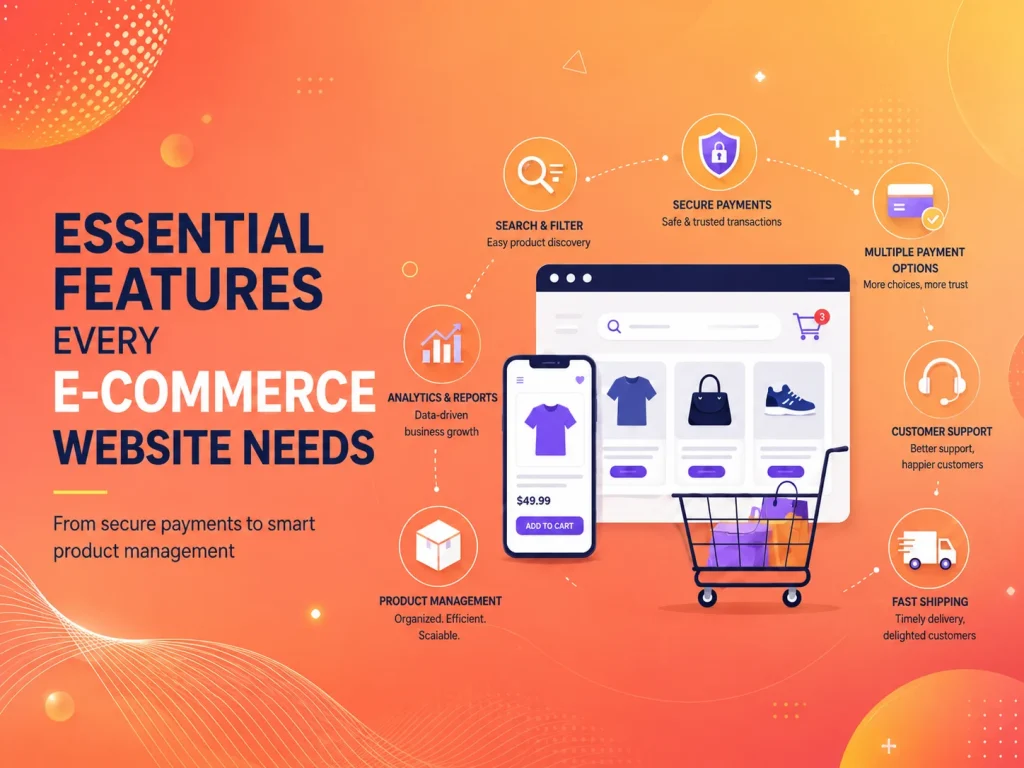
Categories should use language customers understand rather than internal terminology. Filters such as size, color, price, brand, availability, or product type can reduce the amount of browsing required. Search should also handle common product names and useful keywords so customers do not repeatedly receive empty or irrelevant results.
Once visitors reach a product page, the information should answer the questions they are likely to have before purchasing. Clear product names, strong images, pricing, variations, availability, delivery information, descriptions, and important specifications should be easy to scan.
High-quality images are particularly important because customers cannot physically inspect products online. Depending on the product, multiple angles, close-up details, lifestyle photography, video, or size references can make the purchase decision easier.
Product descriptions should focus on useful information rather than generic marketing language. Explain what the product is, who it is for, important features, dimensions or specifications, and anything the customer needs to understand before ordering.
Reduce Friction Between Product Page and Checkout
Every unnecessary step between interest and purchase creates another opportunity for the customer to leave. Add-to-cart buttons should be easy to identify, selected variations should be clear, and customers should immediately understand whether an item has been successfully added to their cart.
The cart should clearly display products, quantities, prices, discounts, shipping-related information, and the expected total. Unexpected charges introduced late in checkout can create hesitation even when the product price itself was acceptable.
Businesses should also be careful with forced account creation. Some customers may want an account for order history or future purchases, while others simply want to complete one transaction quickly. Where appropriate, reducing unnecessary registration requirements can make checkout easier.
Checkout forms should request only the information required to process the order. Long forms, unclear validation messages, repeated data entry, and unnecessary steps can make purchasing feel more difficult than it needs to be.
- Use clear product categories and filters
- Improve product photography and descriptions
- Keep important purchase information visible
- Make add-to-cart actions obvious
- Reduce unnecessary checkout fields
- Show costs clearly before the final payment step
- Provide suitable payment options
- Make errors easy to understand and correct
Build Trust Before Asking Customers to Pay
Customers are more likely to purchase when they feel confident about the business and understand what will happen after payment. Trust is created throughout the shopping experience rather than by adding a single security badge near checkout.
Clear shipping information, return policies, contact details, customer support options, reviews, and accurate product information all contribute to confidence. If customers cannot easily understand delivery times or whether an item can be returned, they may postpone the purchase while looking for answers elsewhere.
Reviews and customer feedback can be useful when they are authentic and relevant to the product. They can help potential buyers understand sizing, quality, real-world usage, or other details that may not be obvious from the product description alone.
The overall quality of the website matters as well. Broken layouts, inconsistent branding, spelling mistakes, missing images, or outdated information can make customers question whether they should trust the store with a payment.
Many customers browse online stores from smartphones, which makes mobile usability a major part of conversion optimization. Product filters, image galleries, variation selectors, cart controls, and checkout forms should all be comfortable to use on smaller screens.
Buttons should be easy to tap, important information should not require excessive scrolling, and popups should not cover most of the screen. A desktop layout that simply shrinks to mobile dimensions often creates unnecessary friction.
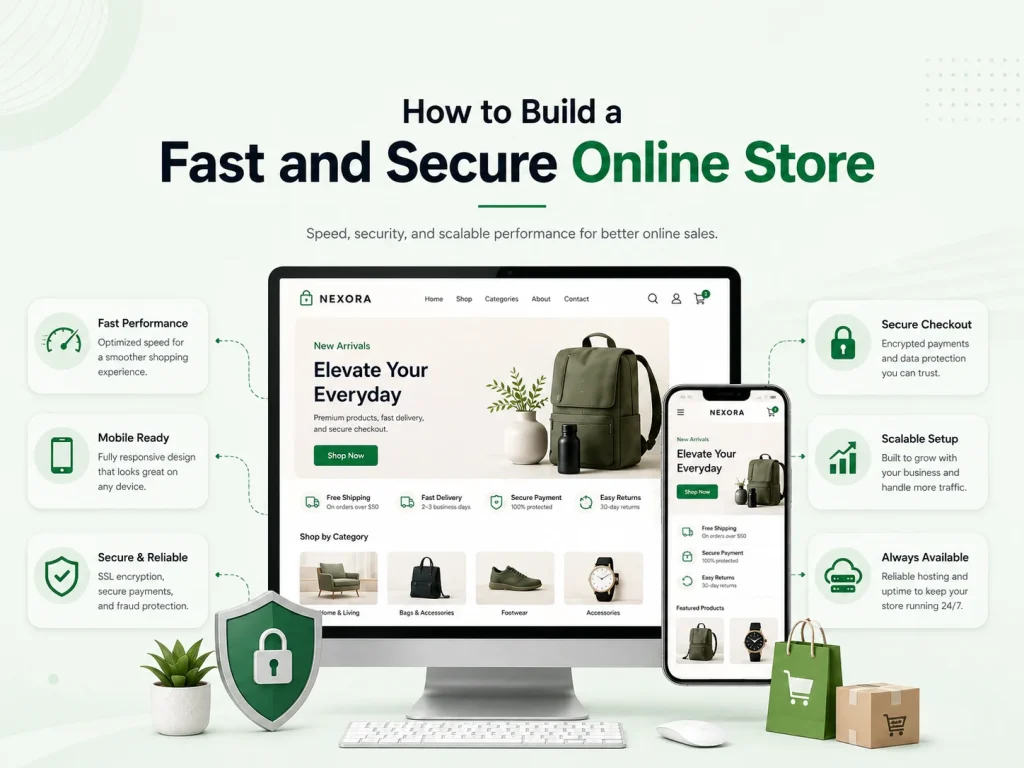
Speed also affects the shopping experience. Large product images, excessive scripts, too many applications or plugins, and poorly optimized third-party tools can slow pages. A customer moving through several products should not have to wait repeatedly for each page to become usable.
Performance should be reviewed across the complete purchase journey rather than only on the homepage. Product listings, product pages, cart, and checkout often deserve the greatest attention because they directly influence purchasing.
Improve Your E-commerce Conversion Rate
Use Real Customer Behavior to Decide What to Improve
Conversion optimization works best when decisions are based on actual customer behavior. Analytics can show where visitors enter the website, which products receive attention, and where people leave the purchase journey.
If many customers reach product pages but rarely add items to the cart, the issue may involve pricing, product presentation, shipping information, or purchase confidence. If customers frequently add products but leave during checkout, the problem may involve forms, payment methods, unexpected costs, or technical errors.
Customer support questions can provide useful insight too. If employees repeatedly answer the same question about shipping, sizing, returns, or product compatibility, that information may need to become clearer on the website itself.
Businesses should improve one meaningful area at a time and evaluate the result rather than redesigning everything based on assumptions. Changes to navigation, product information, checkout, or calls to action can be measured to determine whether they actually improve customer behavior.
Focus on Removing Buying Friction
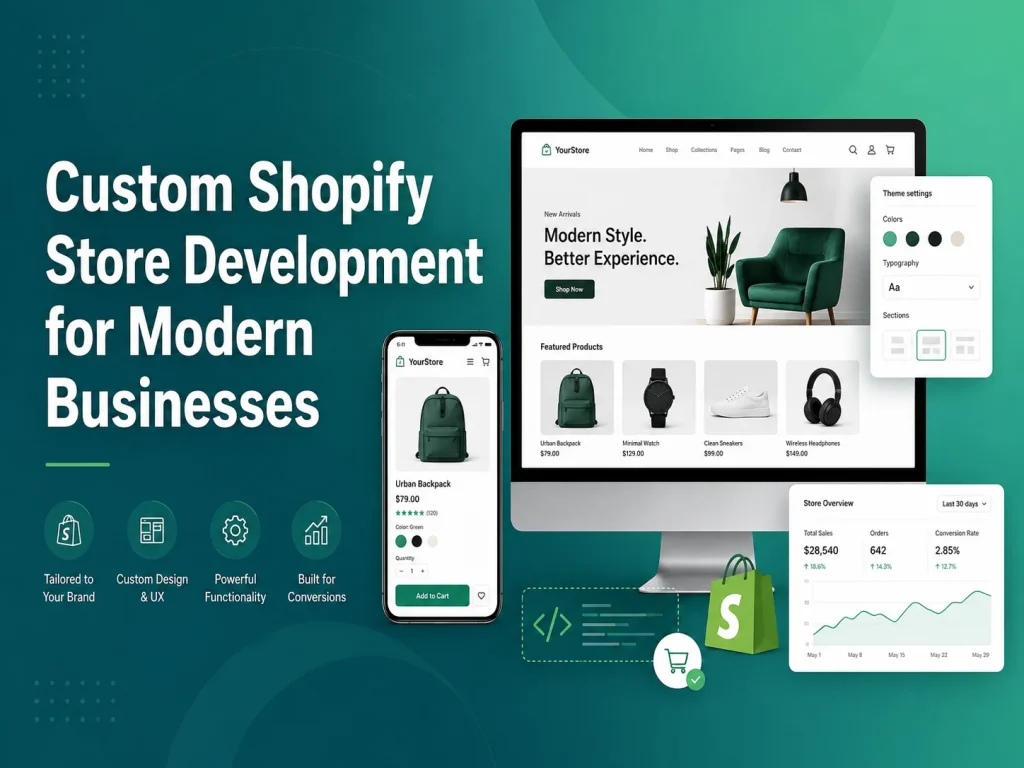
Encoder IT Limited develops and optimizes WooCommerce, Shopify, and custom e-commerce websites. Our work can include UI/UX improvements, product and checkout development, payment integration, performance optimization, custom functionality, API integrations, and ongoing e-commerce support.
Improving an e-commerce conversion rate does not necessarily mean adding more banners, popups, discounts, or marketing messages. In many cases, the strongest improvements come from making the buying process simpler: help customers find the right product, answer their questions clearly, reduce checkout friction, build trust, and make the store fast and easy to use on every device.
When those fundamentals are strong, the traffic the business already receives has a better opportunity to turn into completed orders rather than abandoned sessions.