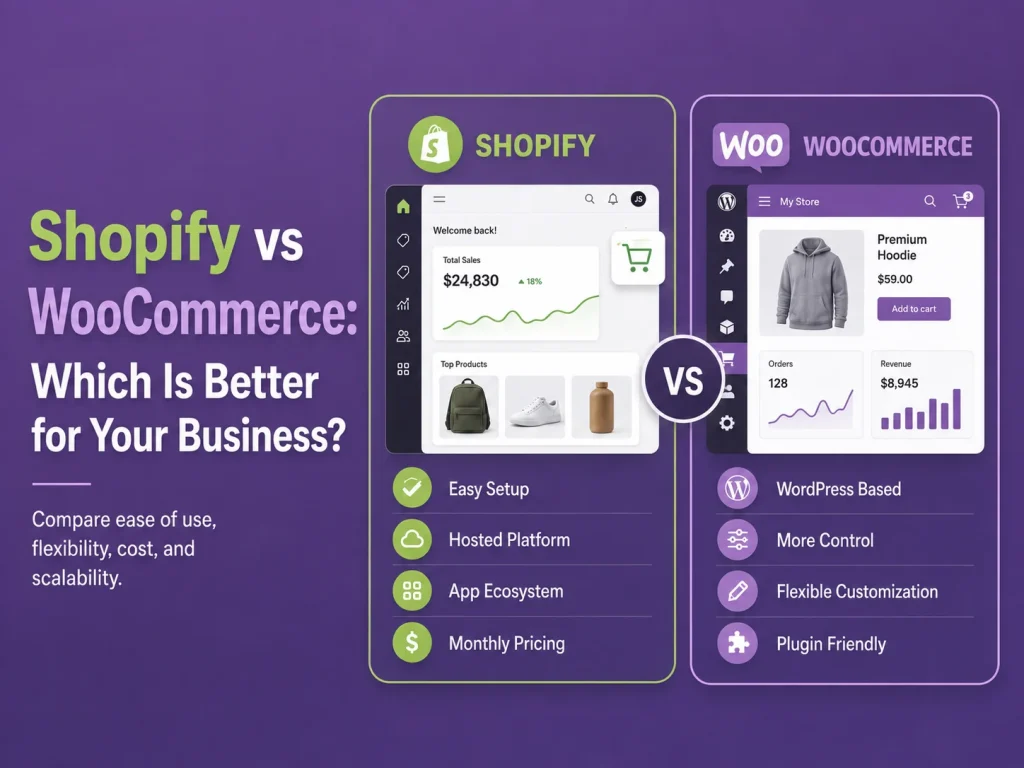
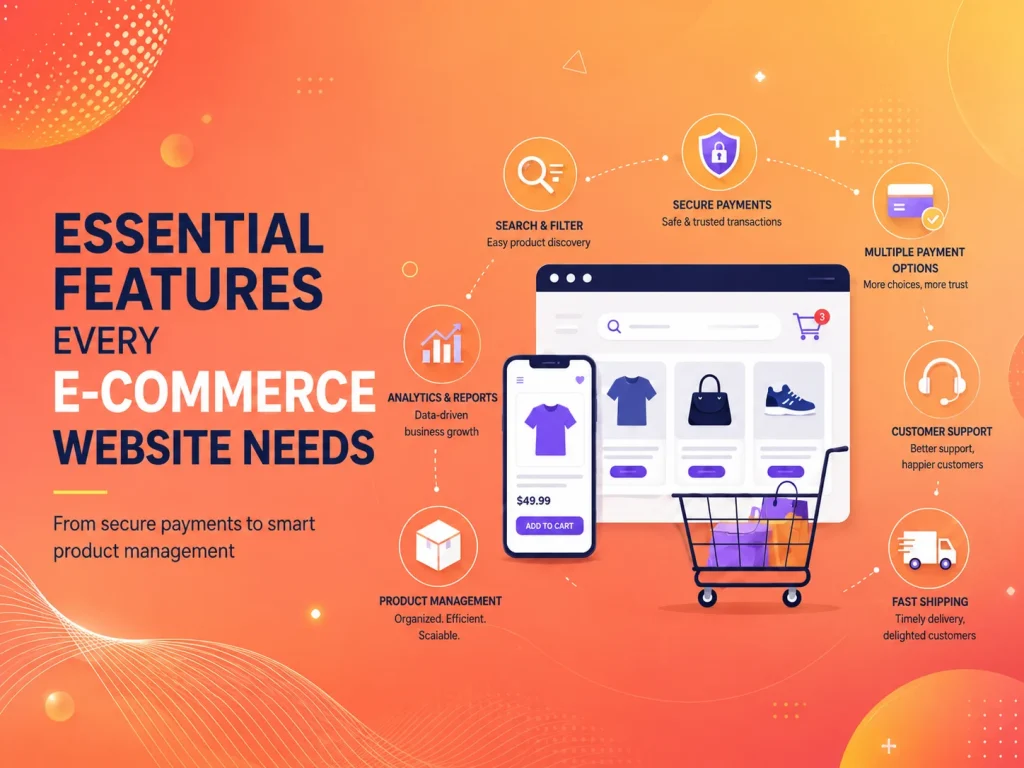
Choosing the right e-commerce platform can affect how easily you manage products, payments, orders, marketing, integrations, and future store development. Shopify and WooCommerce are both strong options, but they are designed around different approaches.
Shopify provides a hosted commerce platform where much of the technical infrastructure is managed for you, while WooCommerce is an open-source e-commerce platform built for WordPress that provides greater control over hosting, code, and customization.
Shopify is often better for businesses that want simplicity and managed infrastructure, while WooCommerce can be better when customization, WordPress flexibility, and technical control are priorities.
What Is Shopify?
Shopify is a hosted commerce platform designed to help businesses create and operate online stores. Hosting and core commerce functionality are managed within the platform, allowing store owners to focus more on products, orders, customers, and sales rather than server management.
It can be a practical choice for businesses that want to launch an online store without managing much of the underlying technical infrastructure.
What Is WooCommerce?
WooCommerce is an open-source e-commerce platform for WordPress. It transforms a WordPress website into an online store while giving businesses control over their hosting, website code, store data, design, and integrations.
Because it operates within WordPress, WooCommerce can be particularly useful for businesses that already use WordPress or need highly customized website and e-commerce functionality.
Shopify vs WooCommerce: Ease of Use
Shopify generally provides a more managed setup experience. Hosting, store administration, and many technical responsibilities are handled through one platform, which can make it easier for businesses without a development team.
WooCommerce requires more involvement with WordPress, hosting, updates, plugins, and technical configuration. However, that additional responsibility also provides greater control over how the store is built and managed.
Customization and Flexibility
Both platforms support themes, extensions, integrations, and custom development. The main difference is the level of control available.
WooCommerce is open source, so developers can customize store functionality deeply when a business has specialized products, checkout processes, pricing rules, customer workflows, or integrations. Shopify also supports extensive customization through themes, apps, and its development ecosystem, but development takes place within Shopify’s platform structure.
Design and User Experience
Both Shopify and WooCommerce can support professional, responsive e-commerce experiences. The final quality depends heavily on the theme, UI/UX design, development quality, product content, and overall store structure.
Businesses should focus on simple navigation, clear product pages, useful search and filtering, mobile usability, fast performance, and an easy checkout journey regardless of the platform selected.
Apps, Plugins, and Integrations
Shopify provides an app ecosystem for extending store functionality, while WooCommerce can be extended through WordPress and WooCommerce plugins as well as custom development.
Both platforms can connect with payment services, marketing tools, CRM systems, shipping providers, analytics platforms, and other business software. For highly specialized workflows, custom API integration may be required.
Cost and Ongoing Management
Shopify uses paid platform plans, and additional costs may come from apps, themes, or custom development. This creates a relatively structured operating model because hosting and platform infrastructure are included.
WooCommerce itself is open source, but businesses still need hosting and may pay for premium extensions, themes, security, maintenance, and development. Therefore, WooCommerce should not automatically be considered the cheaper option—the actual cost depends on how the store is built and maintained.
Which Is Better for Growing Businesses?
Shopify may be a better fit when you want a managed platform, straightforward store administration, and less responsibility for hosting and infrastructure.
WooCommerce may be a better fit when your business already uses WordPress, requires significant customization, needs greater technical control, or has specialized workflows and integrations.
Quick Comparison
- Ease of setup: Shopify generally requires less technical management.
- Customization: WooCommerce provides extensive open-source control.
- Hosting: Included with Shopify; selected and managed separately with WooCommerce.
- WordPress integration: WooCommerce is built specifically for WordPress.
- Maintenance: Shopify manages more platform infrastructure, while WooCommerce gives the store owner greater responsibility and control.
- Custom development: Both support customization, but their development environments differ.
How Encoder IT Limited Can Help
Encoder IT Limited provides Shopify, WooCommerce, custom e-commerce, and API integration services. We can help businesses choose and develop an e-commerce platform based on their products, workflows, integrations, customization requirements, and long-term plans.
Our services include WooCommerce development, Shopify customization, custom checkout functionality, payment integration, shipping integration, API development, store performance optimization, and ongoing maintenance.
Request a Quote
Final Thoughts
There is no single winner in the Shopify vs WooCommerce comparison. Shopify can be a strong choice for businesses that prefer a managed commerce platform, while WooCommerce offers greater open-source flexibility and control within WordPress.
The best choice depends on your technical resources, customization requirements, budget structure, existing website, and future business plans. Focus on the platform that supports your actual operational needs rather than choosing based on popularity alone.