The cost of building an e-commerce website can vary significantly. A small online store using an existing theme may require a relatively modest budget, while a custom e-commerce platform with advanced integrations, subscriptions, inventory management, or specialized workflows can require a much larger investment.
E-commerce website cost depends mainly on the platform, design, features, number of products, integrations, and level of customization required. Understanding these factors can help businesses create a more realistic development budget.
The cheapest e-commerce website is not always the most cost-effective. The right investment should balance development cost with performance, usability, scalability, and long-term maintenance.
Typical E-commerce Website Cost
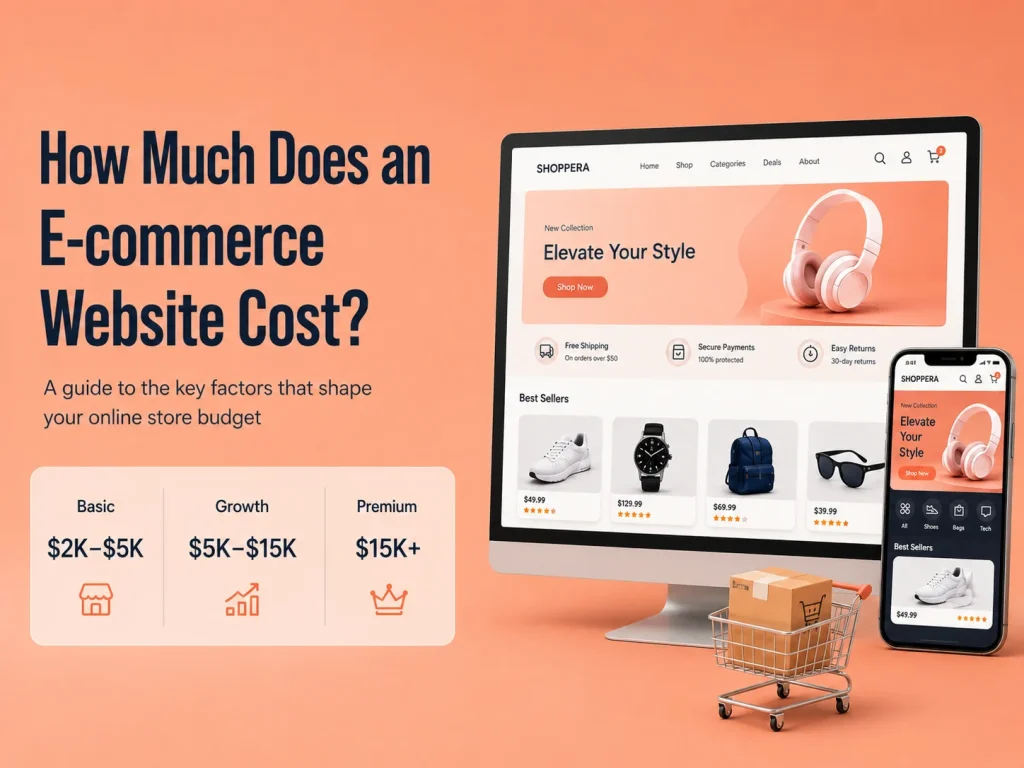
As a general planning estimate, a simple e-commerce website may start around $2,000–$5,000+. A more professional customized store may fall around $5,000–$15,000+, while advanced custom e-commerce platforms can reach $15,000–$50,000+ or considerably more.
These are broad planning ranges rather than fixed prices. A proper estimate should be based on the actual functionality and business requirements.
Shopify and WooCommerce are common choices for online stores. Shopify provides managed hosting and commerce infrastructure through a subscription model, which can simplify technical management. WooCommerce is built for WordPress and provides greater control over hosting, code, plugins, and customization.
A custom e-commerce application built with technologies such as Laravel, React, Next.js, or Node.js generally requires a larger development budget but may be appropriate when standard platforms cannot support the required business workflows.
Custom Design vs Ready-Made Theme
Using a pre-built theme can reduce initial design and development costs. This may work well for businesses with straightforward requirements and limited customization.
Custom UI/UX design costs more because designers and developers create layouts specifically around the brand, products, customers, and conversion journey. It provides greater flexibility for businesses that want a unique shopping experience.
Features That Increase Development Cost
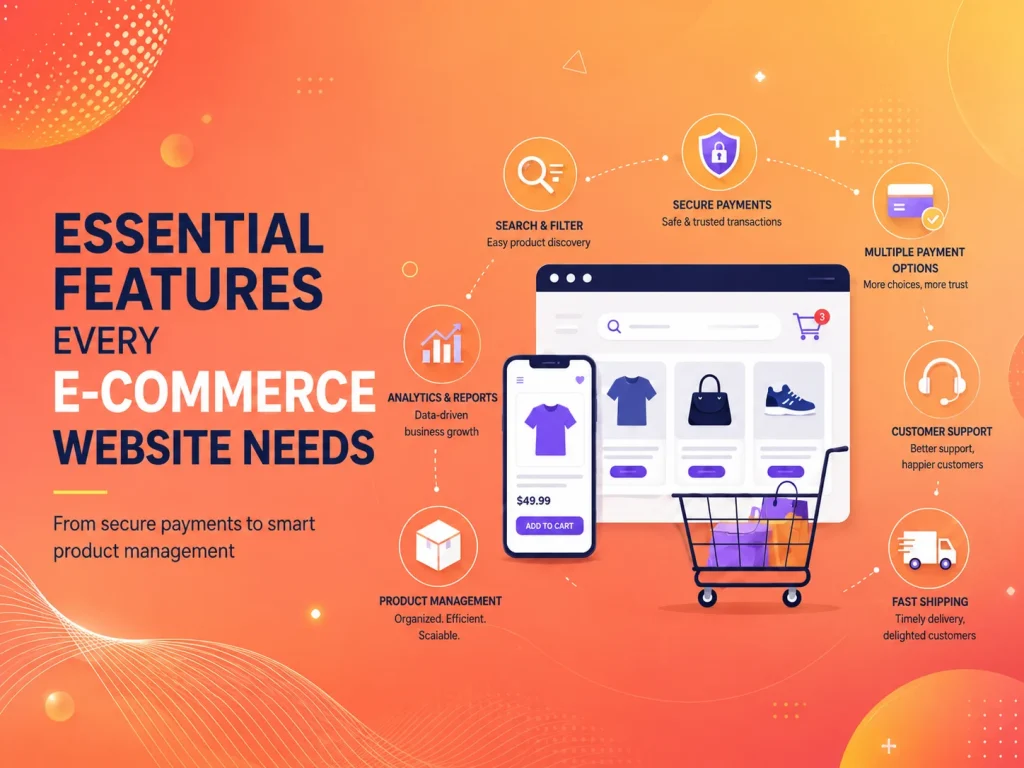
A basic store may only require products, categories, cart, checkout, customer accounts, and payment integration. The cost increases as more specialized functionality is introduced.
- Advanced product filters and search
- Multiple payment gateways
- Subscriptions or memberships
- Custom pricing and discount rules
- Inventory or ERP integration
- Shipping and logistics integration
- Multi-language or multi-currency support
- Custom customer dashboards
Payment and Third-Party Integrations
E-commerce websites frequently need to connect with payment gateways, CRM systems, accounting software, shipping providers, inventory platforms, email services, or other business applications.
Standard integrations can be relatively straightforward, while custom API integrations require additional development, testing, error handling, and ongoing maintenance. The number and complexity of integrations can therefore have a significant impact on the project budget.
Number of Products and Product Complexity
A store selling twenty simple products requires less setup than one containing thousands of products with variations, attributes, categories, custom pricing, or complex inventory rules.
Product migration can also add cost when existing information must be transferred from another platform, cleaned, reorganized, or imported into a new store.
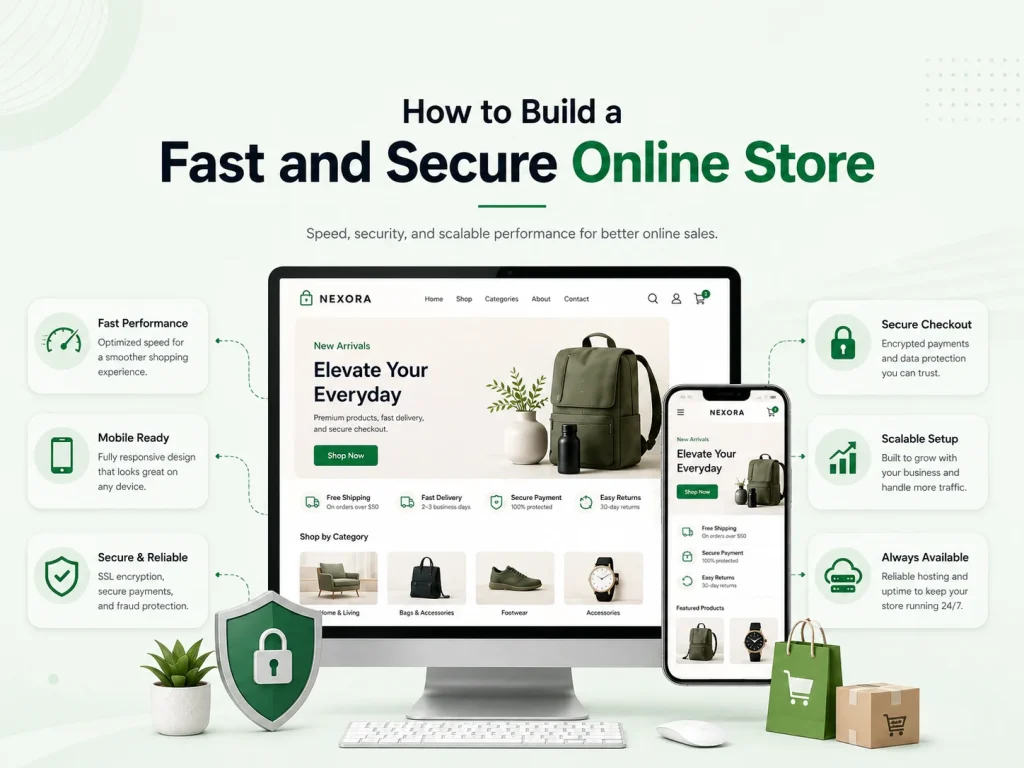
A professional e-commerce website should provide a smooth shopping experience across desktop, tablet, and mobile devices. Responsive layouts, product galleries, filters, cart functionality, and checkout need to work comfortably on smaller screens.
Performance optimization may involve image optimization, caching, database improvements, cleaner frontend code, and better hosting. These improvements can require additional development but are important for a reliable online store.
Ongoing E-commerce Website Costs
The initial development budget is only part of the total cost. Businesses should also plan for hosting or platform subscriptions, domain renewal, premium extensions, maintenance, security, backups, payment processing, and future improvements.
As the business grows, additional features and integrations may also be required.
How to Control E-commerce Development Costs
Start by identifying the features required for launch and separating them from features that can be introduced later. A focused first version is usually more cost-effective than trying to build every possible feature immediately.
Clear requirements also reduce unnecessary development changes. Before requesting quotations, document your products, payment methods, shipping requirements, integrations, customer workflows, and important custom functionality.
How Encoder IT Limited Can Help
Encoder IT Limited provides e-commerce website design and development for businesses ranging from smaller online stores to customized e-commerce platforms.
- WooCommerce development
- Shopify development and customization
- Custom e-commerce development
- Payment and shipping integration
- API and third-party integrations
- E-commerce UI/UX and performance optimization
We can review your requirements and recommend an approach based on your functionality, budget, scalability needs, and long-term business plans.
Request a Quote
Final Thoughts
There is no single price for an e-commerce website. A simple store may require only a few thousand dollars, while advanced custom platforms can require significantly larger budgets.
The best way to estimate your project is to define the required products, features, design, payment methods, integrations, and future growth plans. This creates a clearer development scope and helps ensure your investment supports both current needs and future expansion.