Shopify gives businesses a strong foundation for selling online, but a successful store usually needs more than installing a theme and uploading products. Branding, navigation, product presentation, checkout flow, integrations, performance, and ongoing management all influence how well an e-commerce website supports customers and business growth.
Custom Shopify store development allows businesses to adapt Shopify around their own products, customers, workflows, and brand instead of relying entirely on the default experience of a ready-made theme. The level of customization can range from improving an existing store to developing custom sections, product experiences, integrations, and functionality around specific business requirements.
Why Businesses Choose Custom Shopify Development
Ready-made Shopify themes can be a practical starting point, particularly for smaller stores with straightforward requirements. Problems often appear when a growing business needs a stronger brand identity or functionality that the theme was not originally designed to support.
A store may need a different product-page structure, advanced filtering, custom product options, bundles, subscriptions, specialized shipping logic, multilingual content, or integration with inventory and business-management systems. Trying to solve every requirement by adding another app can eventually make the store more complicated and harder to maintain.
Custom development provides greater control over these areas. Existing Shopify functionality can still be used where it works well, while the parts that directly affect the customer experience or business workflow can be adapted more carefully.
Design the Store Around How Customers Shop
E-commerce design should make it easy for customers to discover products, compare options, understand important details, and move toward checkout. A visually attractive homepage has limited value if visitors cannot find the product they need or understand which variation to purchase.
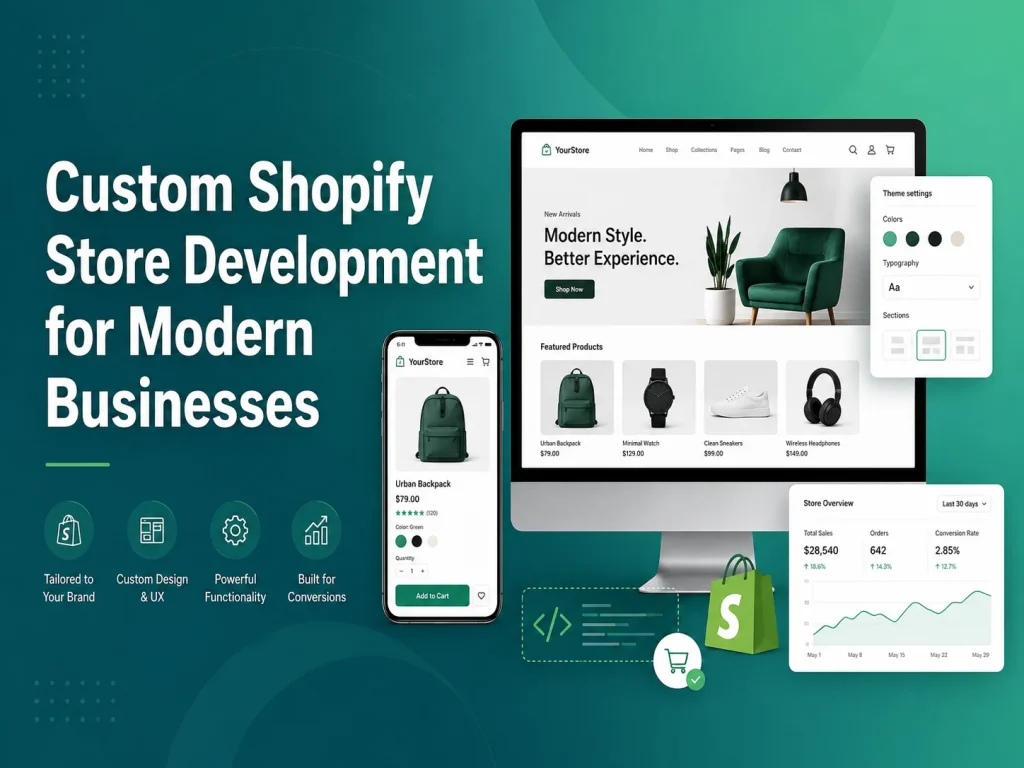
Custom Shopify design can create a clearer relationship between the brand and the shopping experience. Typography, colors, photography, product cards, navigation, filters, promotional sections, and calls to action can all be designed consistently rather than assembled from unrelated theme components.
Product pages deserve particular attention because they often influence the purchasing decision. Images, pricing, variations, stock information, delivery details, product descriptions, reviews, and purchase actions should be arranged according to the type of product being sold.
A fashion store, for example, may need size and color selection to be extremely prominent. A technical product may need specifications and comparison information. A premium brand may depend more heavily on photography, storytelling, and a carefully controlled visual experience.
Custom Functionality Can Support More Complex E-commerce Needs
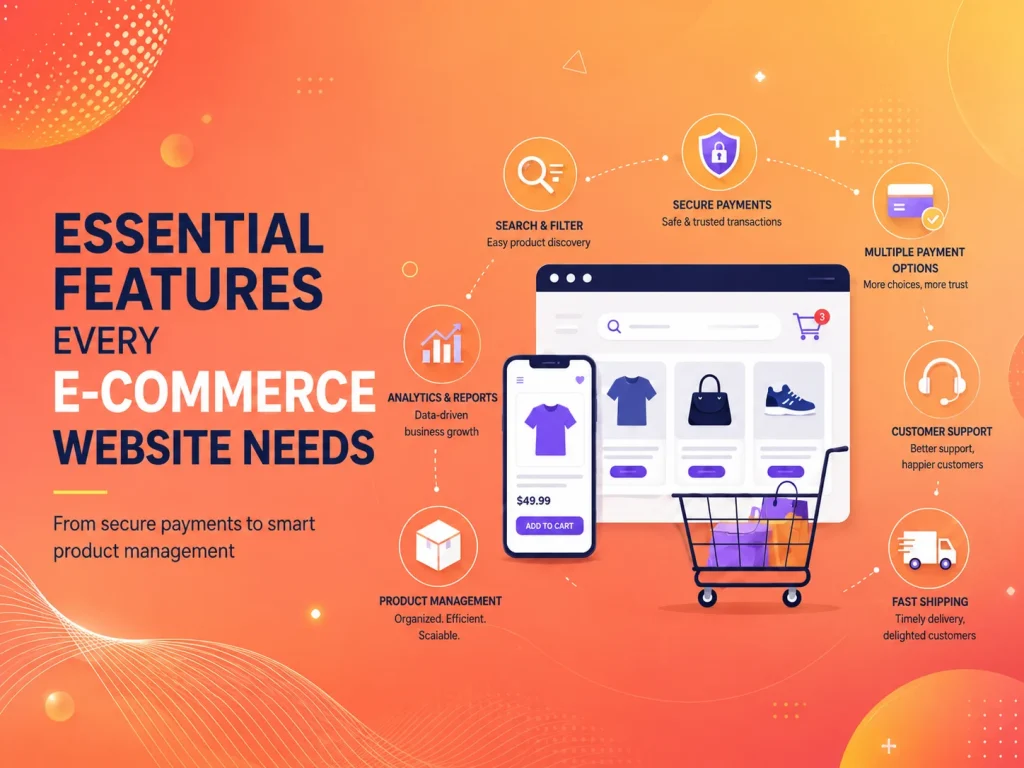
As an online business grows, standard store functionality may not cover every workflow. Custom Shopify development can extend the store where necessary without changing the entire platform.
- Custom product and collection templates
- Advanced product filtering and search
- Product bundles and custom options
- Subscription or recurring purchase experiences
- Custom cart and promotional logic
- CRM, ERP, or inventory integrations
- Shipping and fulfillment integrations
- Custom customer-account functionality
These features should be introduced based on actual requirements. Adding too many apps or custom features can increase maintenance and affect performance, so businesses should prioritize functionality that improves an important customer journey or reduces meaningful operational work.
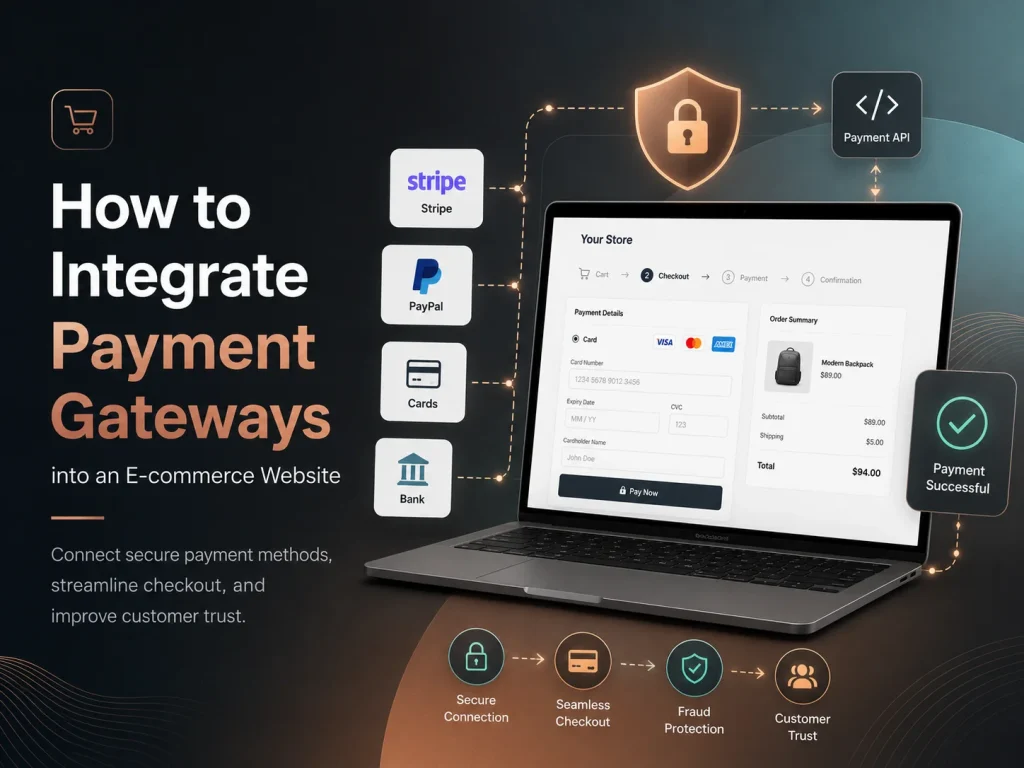
Custom integrations can also connect Shopify with systems already used by the business. Product information might synchronize with an ERP, orders could move into a fulfillment platform, customer information may be sent to a CRM, or inventory may need to stay synchronized across several sales channels.
Discuss Your Shopify Store
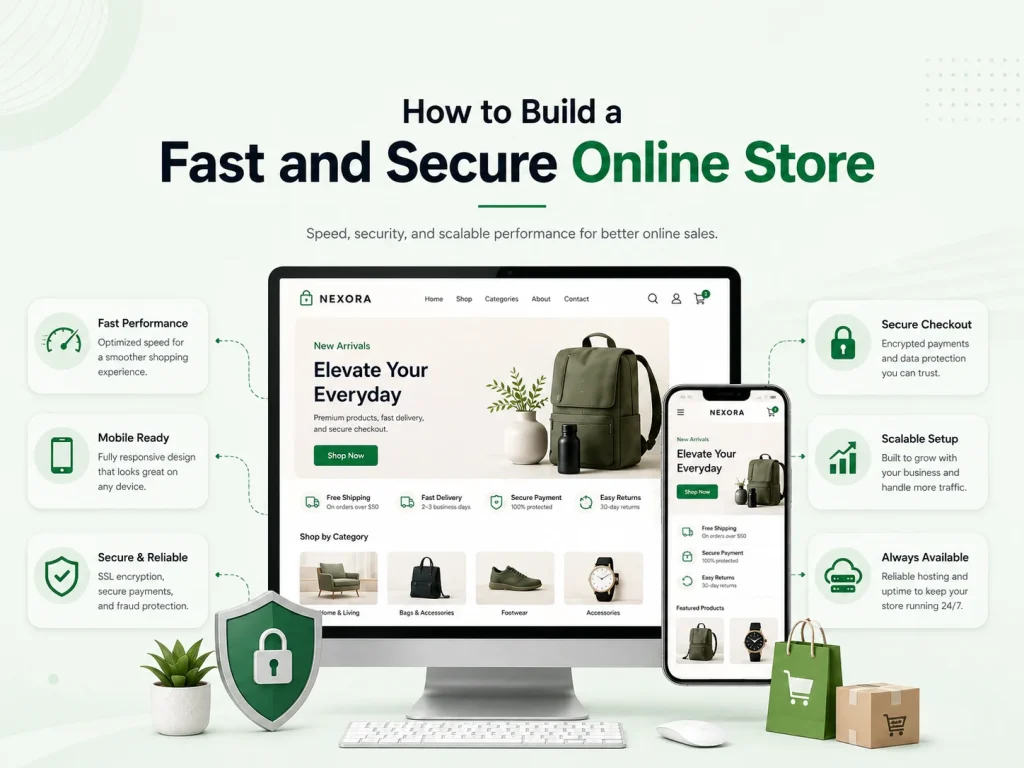
E-commerce stores often become heavier over time as businesses add marketing scripts, tracking systems, apps, popups, reviews, recommendations, analytics, and custom features. Each tool may be useful individually, but together they can affect page speed and the shopping experience.
A custom development process should therefore include performance considerations from the beginning. Images should be optimized, unnecessary applications and scripts should be reviewed, and custom sections should be built efficiently rather than loading large resources for functionality the customer may never use.
Mobile performance is particularly important because customers frequently browse and purchase products from smartphones. Product images, menus, filters, variant selectors, cart controls, and checkout-related actions should remain easy to use on smaller screens.
Make the Store Easier to Manage After Launch
Custom development should not make routine store management unnecessarily difficult. Business teams still need to update products, pricing, collections, promotional sections, images, and other content without requesting development work for every small change.
Reusable Shopify sections and well-organized theme settings can provide flexibility while keeping the visual design controlled. This allows marketing teams to create new landing pages or promotional layouts without accidentally breaking the overall design system.
Businesses should also consider ongoing maintenance. Apps change, integrations need updates, new product requirements appear, and customer behavior evolves. A clean custom implementation is easier to extend than a store built around a large number of unrelated workarounds.
When Is a Custom Shopify Store Worth It?
Custom Shopify development makes the most sense when the store has requirements that directly affect branding, conversions, customer experience, or business operations. A very small catalog with simple products may work perfectly well with a carefully selected theme and limited customization.
A growing brand may benefit from deeper customization when it needs a distinctive shopping experience, complex product presentation, advanced integrations, improved performance, or more control over how customers move from discovery to purchase.
Encoder IT Limited provides Shopify design and development services for businesses that need custom storefronts, theme customization, responsive UI/UX, product and collection development, third-party integrations, performance improvements, and ongoing e-commerce support.
The purpose of custom Shopify development is not to customize every part of the platform. It is to keep the reliable e-commerce foundation Shopify provides while improving the areas that are important to your particular business. When design, functionality, integrations, and performance are planned together, the result can be a more distinctive store that is easier for customers to use and easier for the business to grow.