Launching a mobile application is a major milestone, but it is not the end of the development process. Once real users begin using the app, new requirements, technical issues, operating-system updates, security concerns, and performance challenges start appearing. This is why businesses should consider mobile app maintenance as part of the complete product lifecycle rather than an optional service after launch.
An application that works perfectly during release can still develop problems later. Users may install it on newer Android or iOS versions, third-party services may change their APIs, application data may grow, or customers may discover workflows that were not fully covered during testing. Regular maintenance helps keep the app stable while allowing the product to improve as the business grows.
The first period after launch is usually focused on monitoring real-world usage. Development teams watch for crashes, login problems, slow API responses, failed payments, notification issues, and unexpected behavior on different devices. Even a well-tested application can behave differently when hundreds or thousands of people start using it under different network conditions and device configurations.
Customer feedback also becomes much more valuable after launch. Businesses can see which features are used most often, which screens create confusion, and where users leave important processes such as registration, checkout, booking, or subscription. Instead of making decisions only from assumptions, the team can begin improving the application based on actual behavior.
Some problems may require an immediate update, while others can be grouped into planned releases. A payment failure or authentication issue usually needs faster attention than a small visual inconsistency. A good maintenance process helps the business prioritize these problems according to their effect on customers and operations.

Maintenance Is More Than Fixing Bugs
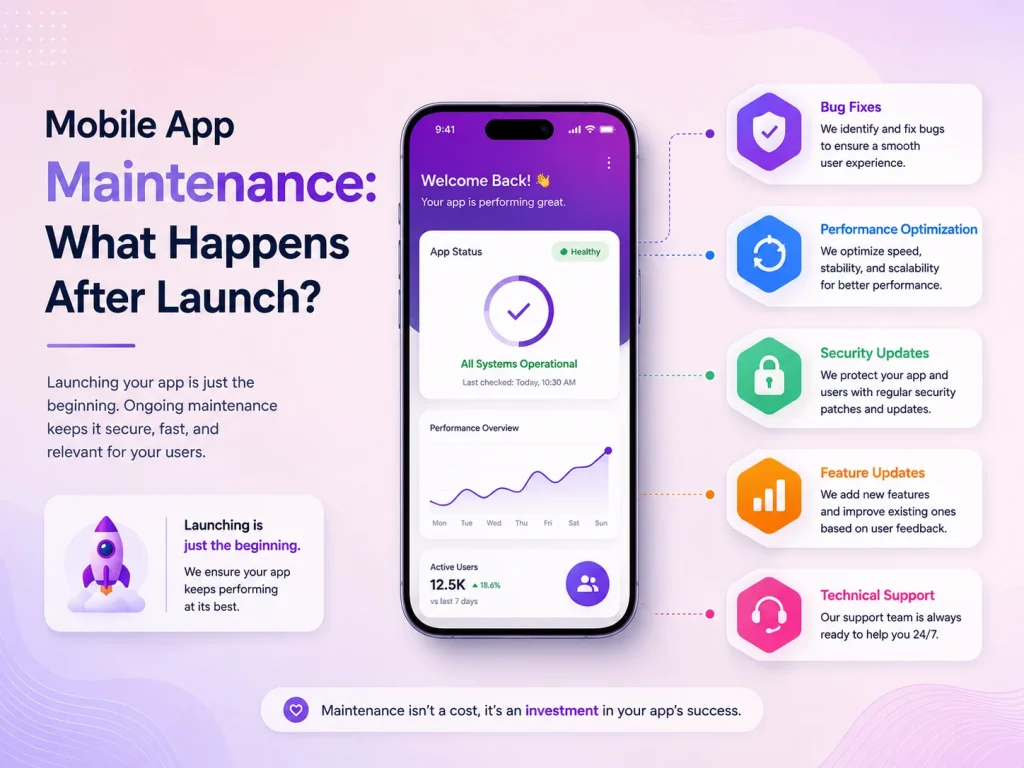
Many businesses think mobile app maintenance only means fixing errors, but it covers much more. Android and iOS continue changing, and new versions may introduce different permission rules, background-processing behavior, notification requirements, security controls, or device compatibility issues. Applications need to be reviewed and updated so they continue working correctly as the mobile platforms evolve.
Third-party services also require attention. A mobile app may depend on payment gateways, maps, social login, analytics, cloud storage, push notifications, AI services, or other APIs. These providers can update their SDKs, authentication methods, or technical requirements. If an app continues using outdated integrations, an important feature can eventually become unreliable or stop working completely.
A mobile app should be treated as a continuously evolving digital product. Maintenance is not only about repairing something when it breaks; it is about keeping the application secure, compatible, fast, and useful while adapting it to changing technology, customer expectations, and business requirements.
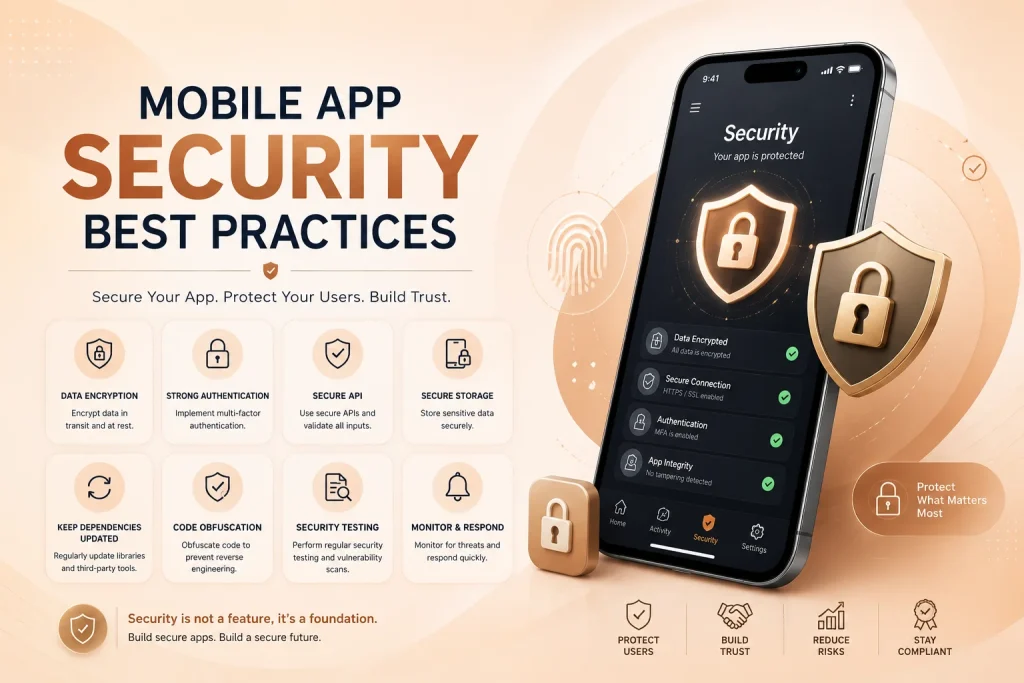
Security is another important part of long-term maintenance. Dependencies and third-party libraries may receive security updates, backend authentication may need improvement, and new risks can appear as the application grows. Regular reviews help ensure sensitive information, account permissions, APIs, and business workflows continue to be protected.
Application performance can change as the number of users and the amount of stored data increase. An API that was fast during the first few months may become slower as the database grows. Larger images, additional features, background services, and poorly optimized requests can gradually make the application feel less responsive.
Maintenance can involve optimizing database queries, reducing unnecessary API calls, improving image handling, managing caching, updating backend infrastructure, and reviewing application code. These improvements are especially important for e-commerce apps, SaaS products, marketplaces, booking systems, and business applications where users expect fast and reliable access.
User experience also needs to evolve. Analytics and support requests may show that users struggle with a particular form, navigation flow, or feature. Rather than completely redesigning the application, businesses can make smaller targeted improvements that reduce friction. Simplifying a checkout process, improving search, reorganizing navigation, or shortening a registration flow can sometimes create more value than adding a large new feature.
Regular maintenance also gives businesses an opportunity to remove features or technical components that are no longer useful. Keeping the application focused can improve both performance and maintainability.
New Features and Business Requirements After Launch
As a business grows, the original version of the app may no longer cover every requirement. Customers may ask for additional payment methods, subscriptions, loyalty programs, messaging, advanced search, location services, reporting, or AI-powered functionality. Internal teams may need new dashboards, approval workflows, or integrations with CRM and accounting systems.
New features should be added carefully because every change can affect existing functionality. A new payment option may require changes to the backend, database, checkout flow, notifications, and reporting. A new user role may affect permissions across several areas of the application. Maintenance therefore includes both technical development and planning how new functionality fits into the existing product.
- Bug fixes and crash resolution
- Android and iOS compatibility updates
- Security and dependency updates
- API and third-party integration maintenance
- Performance and database optimization
- UI/UX improvements based on real user behavior
- New features and business workflow updates
- Backend, notification, and infrastructure maintenance
The amount of maintenance required depends on the type of application. A relatively simple app with limited functionality may need fewer updates, while a business-critical application with payments, thousands of users, third-party integrations, and complex workflows usually requires more regular monitoring and development.
Why Maintenance Should Be Planned Before Launch
The easiest applications to maintain are usually the ones designed with long-term support in mind. Clean architecture, reusable components, documented APIs, organized database structures, automated testing, staging environments, and proper error logging can make future updates significantly easier.
Businesses should also decide who will be responsible for monitoring the app after release. There should be a clear process for reporting bugs, prioritizing issues, deploying updates, reviewing security concerns, and planning new features. Waiting until a serious problem appears can turn a manageable maintenance task into a more expensive emergency.
Budgeting for maintenance is equally important. Mobile applications are active software products, so businesses should expect ongoing costs for technical support, infrastructure, platform compatibility, security updates, and future improvements. The exact amount will depend on the complexity and importance of the application.
Keeping Your Mobile App Reliable With Encoder IT Limited
Encoder IT Limited provides ongoing mobile app development and maintenance services for businesses, startups, and SaaS platforms. We can support existing applications or continue maintaining products developed by our own team.
Our mobile app maintenance services can include Flutter and React Native updates, native Android and iOS support, bug fixing, performance optimization, backend and API maintenance, security improvements, third-party integration updates, feature development, and application modernization.
We focus on maintaining the complete application ecosystem rather than only the visible mobile interface. This can include mobile apps, backend APIs, databases, administrative systems, integrations, and the workflows connecting them together.
Request a Quote
A mobile app should continue improving after it reaches users. Regular monitoring, security updates, performance improvements, and carefully planned feature development help businesses protect their investment and keep the application useful over the long term.
Planning maintenance from the beginning creates a stronger foundation for future growth and helps prevent small technical issues from becoming larger problems later.