When planning a mobile application, one of the first decisions is whether to build for Android, iOS, or both platforms. The right choice depends on your target users, budget, required features, development timeline, business model, and long-term product strategy.
Android and iOS are both mature mobile platforms capable of supporting e-commerce apps, SaaS products, marketplaces, booking systems, business applications, customer portals, and many other digital products. The important question is not which platform is generally better, but which one gives your business the strongest starting point.
Understand the Difference Between Android and iOS Development
Native Android applications are commonly developed using Kotlin, while native iOS applications are commonly built with Swift. Each platform has its own development tools, interface conventions, device ecosystem, testing requirements, and platform-specific capabilities.
Android applications need to work across a broad range of devices with different screen sizes, manufacturers, hardware configurations, and operating-system versions. This gives businesses access to a wide variety of users, but it can also increase the amount of device testing required.
iOS development targets Apple’s more controlled device ecosystem. The smaller number of device families can make some areas of testing more predictable, although developers still need to support different screen sizes, operating-system versions, permissions, and Apple-specific application behavior.
From the customer’s perspective, both platforms can provide fast, secure, and polished mobile experiences when the app is properly designed and developed.
Start With Your Target Audience
Your customers should have a major influence on the platform decision. If most of your existing users already access your services through Android devices, launching Android first may provide more immediate value. If your customer base is primarily using Apple devices, starting with iOS may make more sense.
This decision should ideally be based on real business information. Website analytics, customer data, existing device usage, geographic markets, and user research can help identify which platform deserves priority.
The type of product matters as well. A consumer application may have very different platform priorities from an internal employee app. If a company already supplies Android devices to field employees, for example, developing an iOS version first would provide little practical benefit.
Businesses targeting a broad consumer market often eventually need both Android and iOS. In that situation, the real decision may be whether to develop both together or launch one platform first and expand after validating the product.
Consider Features, Devices, and the User Experience
Most common mobile features can be developed for both platforms, including user accounts, payments, push notifications, maps, cameras, file uploads, subscriptions, biometric authentication, and real-time communication. However, some applications depend heavily on platform-specific functionality or hardware.
If your product connects with specialized devices, uses advanced Bluetooth functionality, depends heavily on background services, or requires deeper operating-system integration, the development team should review those requirements before selecting a platform.
UI/UX should also respect the conventions users already understand. Android and iOS do not need to look completely different, but navigation, permissions, gestures, and certain interface behaviors may need platform-specific adjustments. Trying to force exactly the same experience onto both operating systems can sometimes make the application feel less natural.
Budget and Development Time Can Influence the Decision
If your budget allows only one native application initially, choosing the platform with the strongest business opportunity can reduce the cost and complexity of the first release. The second platform can then be developed after the product has received real user feedback.
Building separate native Android and iOS apps means maintaining two implementations. New features, bug fixes, testing, and platform updates may need work on both sides. For businesses that know they need both platforms from the beginning, cross-platform development with Flutter or React Native may provide another option.
A shared cross-platform codebase can reduce duplicated development for many business applications while still allowing Android- or iOS-specific code when required. This does not automatically make cross-platform development the right choice for every product, but it is worth evaluating before investing in two completely separate native codebases.
- Choose Android first when your users, devices, or business operations are primarily Android-based.
- Choose iOS first when Apple users represent the strongest initial market for your product.
- Build both when your customers are distributed across both platforms and excluding either group would limit the product.
- Consider cross-platform development when you need Android and iOS together and most features can share the same business logic.
Request a Quote
Think Beyond the First App Release
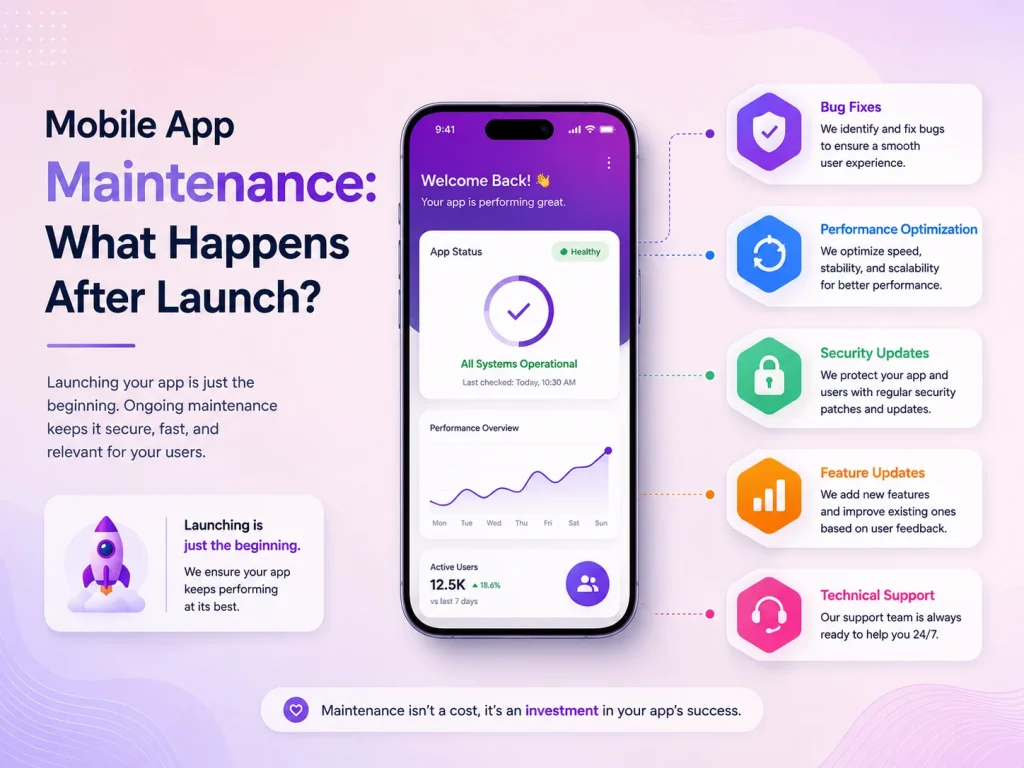
The platform decision should include long-term maintenance. Android and iOS continue receiving operating-system updates, and applications need ongoing testing, security updates, SDK maintenance, and compatibility work after launch.
You should also consider how quickly the application is expected to grow. A small first version may later require subscriptions, payments, AI features, customer messaging, advanced reports, location services, or integrations with existing business systems. The initial technology and architecture should make those future changes manageable.
If you expect the app to become an important part of your business, selecting a platform only because it appears cheaper for the first version can create unnecessary limitations later. Development cost, maintainability, available technical expertise, customer reach, and future functionality should be considered together.
Making the Right Choice for Your Business
There is no universal answer to Android vs iOS app development. A business with a clearly defined Android audience may benefit from launching Android first, while another company may have stronger reasons to prioritize iOS. Many businesses eventually need both.
Encoder IT Limited develops Android, iOS, Flutter, and React Native applications for startups and established businesses. We help evaluate target users, required features, backend architecture, integrations, budget, and future plans before recommending a development approach.
The best platform is the one that connects your product with the right users while giving the application a reliable foundation for future development. Start with your audience and business requirements, then choose the technology that supports those goals instead of selecting a platform based only on popularity.