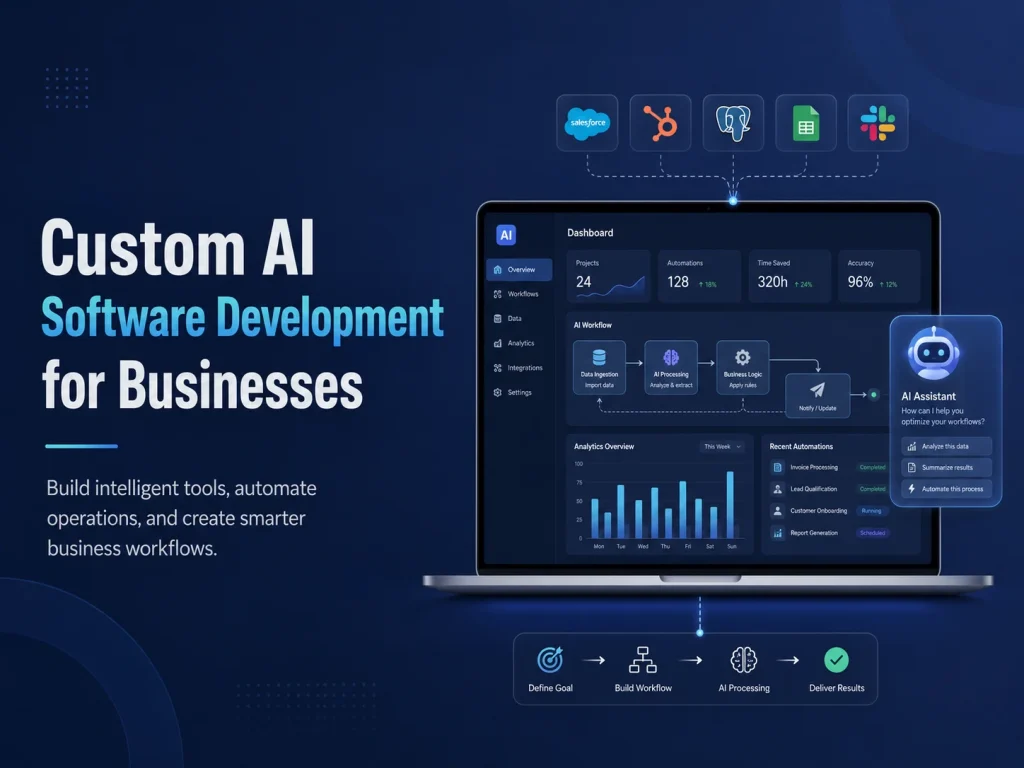
Artificial intelligence is becoming more useful for businesses when it is connected directly to real workflows, company data, customer interactions, and internal systems. Instead of relying only on general-purpose AI tools, many companies are now exploring custom AI software development to solve specific operational problems and create software that fits the way their business actually works.
Custom AI software can be designed for customer support, document processing, internal knowledge search, sales assistance, workflow automation, reporting, content processing, recommendations, or other business-specific use cases. The main advantage is flexibility: the software can combine AI with existing databases, APIs, user roles, approval processes, and business rules rather than forcing employees to adapt to a generic tool.
What Is Custom AI Software?
Custom AI software is an application or feature developed around the requirements of a particular business. It may use existing AI models and APIs while adding the company’s own interface, backend logic, permissions, data sources, integrations, and workflows.
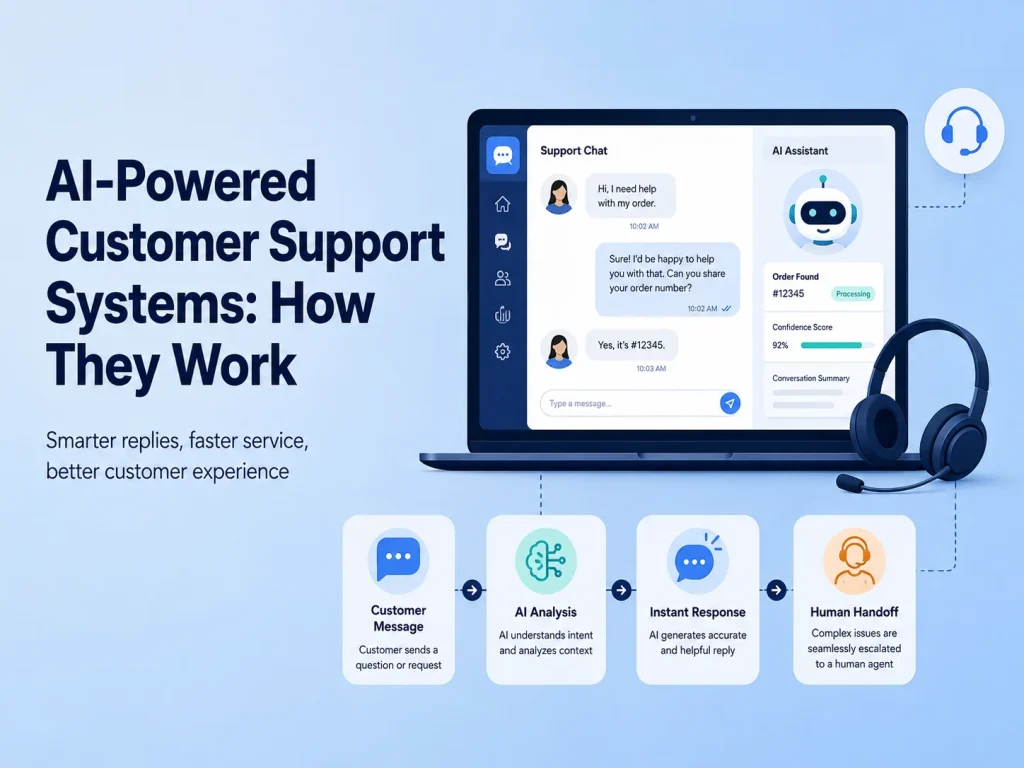
For example, a general AI chatbot can answer broad questions, but a custom business assistant could search company documentation, retrieve information from a CRM, summarize a customer history, identify the user’s permissions, and create a support request through the company’s existing system.
The AI is therefore only one part of the complete application. Authentication, databases, APIs, business logic, security, reporting, notifications, and human approvals may all be needed to turn an AI capability into reliable business software.
Where Custom AI Can Create Business Value
The strongest use cases usually appear where employees repeatedly spend time reading, searching, categorizing, summarizing, or interpreting information. AI can reduce some of this manual work and pass structured information into existing business processes.
A customer service platform could automatically summarize long conversations and suggest relevant answers. A sales system could analyze new enquiries, identify customer requirements, and organize leads before follow-up. A document-heavy business could extract information from uploaded files and send the important fields into another system.
Internal AI assistants are another practical use case. Employees may need to search policies, training materials, product documentation, procedures, or historical records throughout the day. A custom knowledge assistant can provide a more conversational way to access approved company information without replacing the original source documents.
- AI-powered customer support systems
- Internal company knowledge assistants
- Document extraction and summarization
- Lead classification and sales assistance
- Intelligent search across business information
- AI-powered reporting and data interpretation
- Workflow automation connected to existing software
General AI tools can be useful for individual productivity, but businesses often need more control when AI becomes part of an operational process. Employees may need access to specific company information, while customers should only see data connected to their own accounts. Some actions may require approval, and every interaction may need to follow existing business rules.
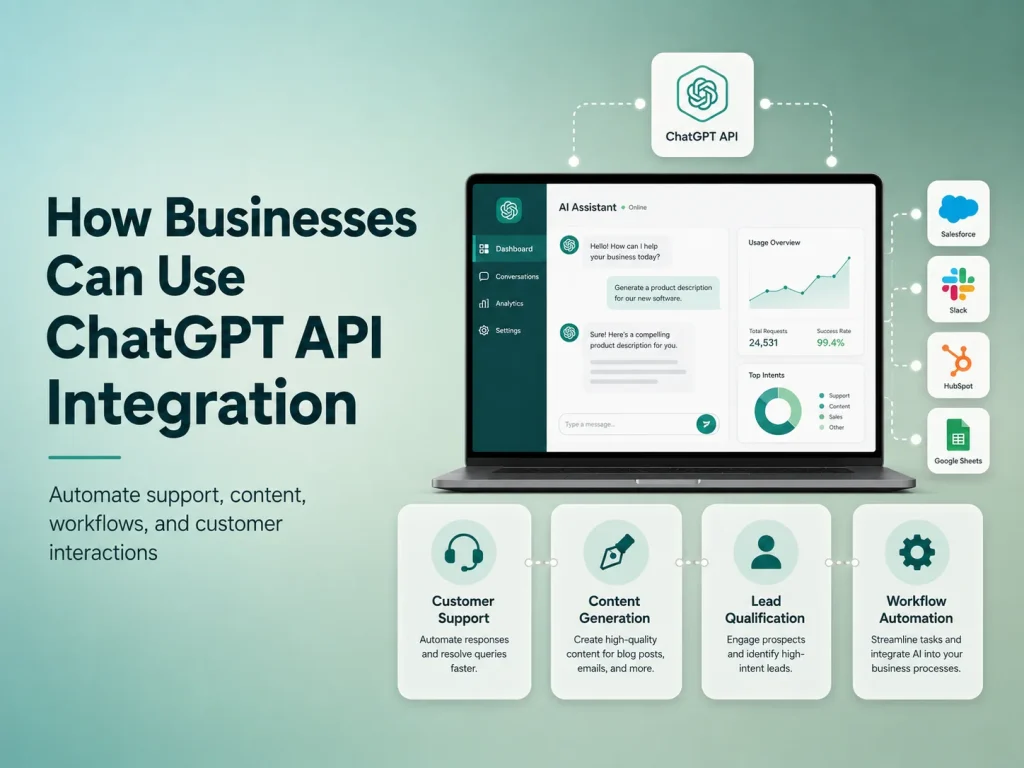
Custom software allows these requirements to be built into the system. AI can be connected with a CRM, ERP, e-commerce platform, SaaS product, mobile app, customer portal, or internal database through controlled APIs. The application can determine which information is available to each user and what actions can be performed after the AI interprets a request.
This also allows businesses to design the user experience around a specific task. An employee who only needs to summarize customer records does not require a large general-purpose AI interface. A focused tool with a clear workflow may be easier to use, easier to train employees on, and easier to monitor.
AI Should Work With Traditional Business Logic
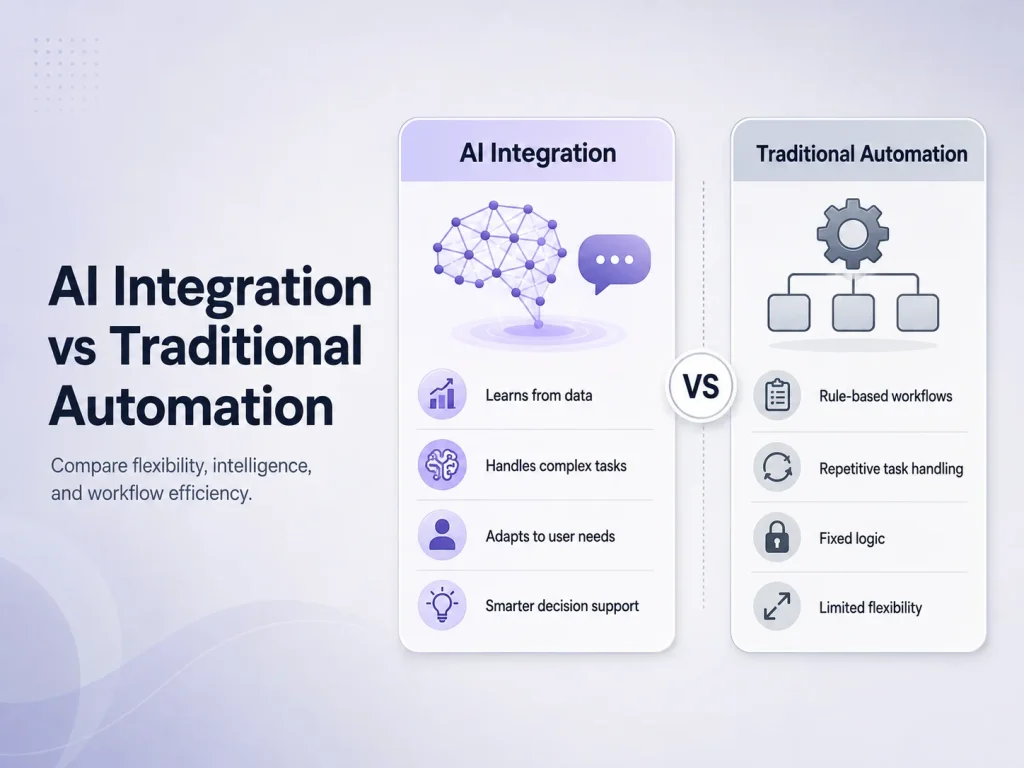
Custom AI software becomes more dependable when AI is used for tasks that require interpretation while normal application logic remains responsible for predictable actions. AI can understand a message, extract information, categorize a request, or prepare a recommendation. Standard software can then validate permissions, update the database, calculate totals, process payments, or send notifications.
This separation is especially important for important business operations. AI output can vary, so account permissions, financial calculations, payment confirmation, inventory updates, and other sensitive actions should not depend entirely on generated responses.
A well-designed system can also include human review where appropriate. An AI-generated support response may be reviewed by an employee before sending, while a low-risk document classification might happen automatically. The level of automation should match the potential impact of an incorrect result.
How a Custom AI Software Project Is Built
The process should begin with the business problem rather than the AI model. The development team needs to understand what employees or customers currently do, which steps consume the most time, where information comes from, and what result the business wants to improve.
After the workflow is understood, the team can determine which parts need AI and which parts should remain traditional software. This may involve designing the user interface, preparing APIs, connecting business data, defining user permissions, creating backend workflows, and selecting suitable AI services.
Testing is particularly important because the team needs to evaluate more than whether the software runs without errors. AI responses should be useful, permissions should remain secure, important data should be protected, and the system should behave appropriately when the AI cannot produce a reliable result.
Many businesses benefit from starting with one focused feature instead of attempting to automate an entire organization at once. A customer-support assistant, document-processing workflow, or internal search system can provide a practical first project. Once the business understands the value and limitations, additional AI features can be introduced gradually.
Discuss a Custom AI Solution
Building AI Software Around Your Business
The value of custom AI development comes from connecting intelligent capabilities with software that already understands the business. The application can use the company’s own processes, permissions, data sources, integrations, and customer experience rather than operating as a separate tool.
Encoder IT Limited develops custom AI-powered software for businesses, including AI assistants, customer support systems, document-processing solutions, intelligent search, SaaS applications, mobile apps, API integrations, and business workflow automation.
Custom AI software is most effective when it solves a clearly defined problem. Businesses do not need to add AI to every process. A focused system that removes repetitive work, makes information easier to access, or helps employees make faster decisions can often provide more value than a large AI project with no specific operational goal.