Customer service teams often spend a large part of their day answering the same types of questions about products, orders, appointments, subscriptions, account access, pricing, and company policies. As the number of customers grows, these repetitive conversations can slow response times and increase support costs.
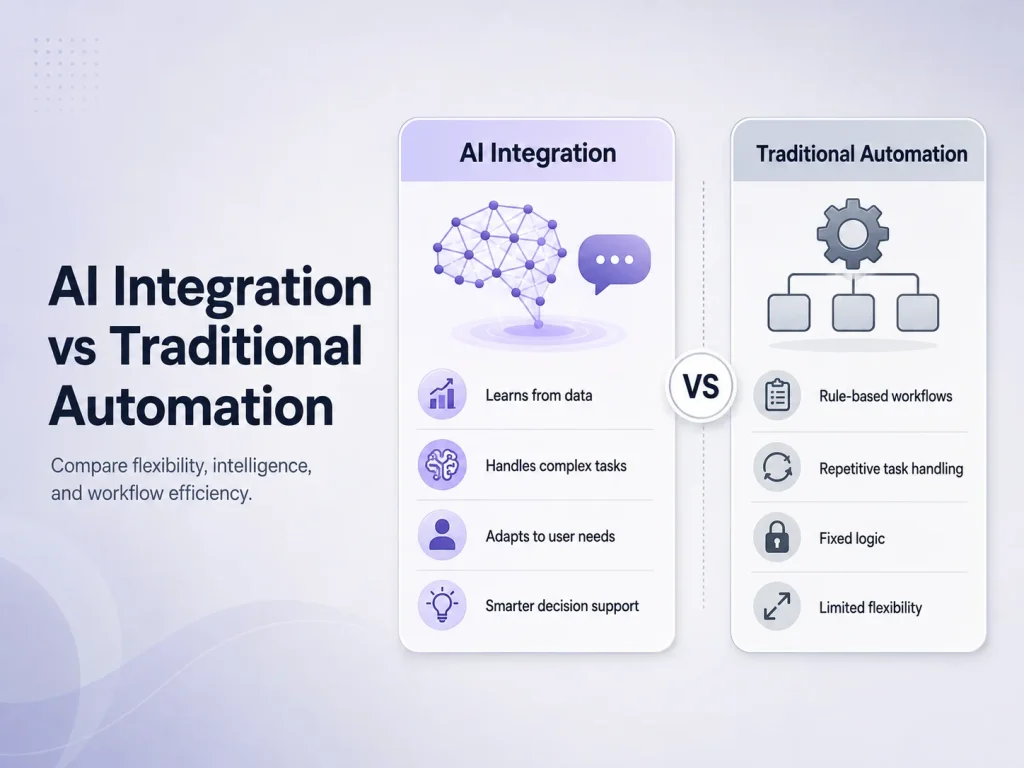
AI-powered chatbots can help businesses handle many of these routine interactions automatically while still keeping human agents available for situations that require judgment, empathy, or deeper problem-solving. Unlike simple rule-based chatbots that depend heavily on predefined buttons and keywords, modern AI chatbots can understand more natural customer questions and respond in a conversational way.
The most effective chatbot is not one that tries to replace an entire customer service team. It should remove repetitive work, help customers reach useful information faster, and make it easy to move to a human employee when automation is no longer appropriate.
How AI Chatbots Improve the Customer Experience
Customers usually contact support because they want an answer quickly. An AI chatbot can provide immediate assistance for common questions without requiring the customer to wait for an available support agent. This can be especially useful outside normal business hours or during periods when support teams receive a large number of requests.
A customer may ask about delivery times, available services, account access, booking procedures, return policies, or product information using their own words. The chatbot can interpret the request and provide an appropriate response based on the information available to it.
This creates a more flexible experience than a basic chatbot that forces customers to choose from a fixed menu. Users can ask follow-up questions, clarify what they mean, and move through a conversation in a way that feels closer to normal communication.
AI chatbots can also help reduce unnecessary navigation. Instead of asking a customer to search through several help pages, the chatbot can locate relevant information and present it directly in the conversation.
A chatbot becomes much more valuable when it can use accurate information from the business. This may include FAQs, product documentation, service descriptions, company policies, help articles, troubleshooting guides, or other approved knowledge sources.
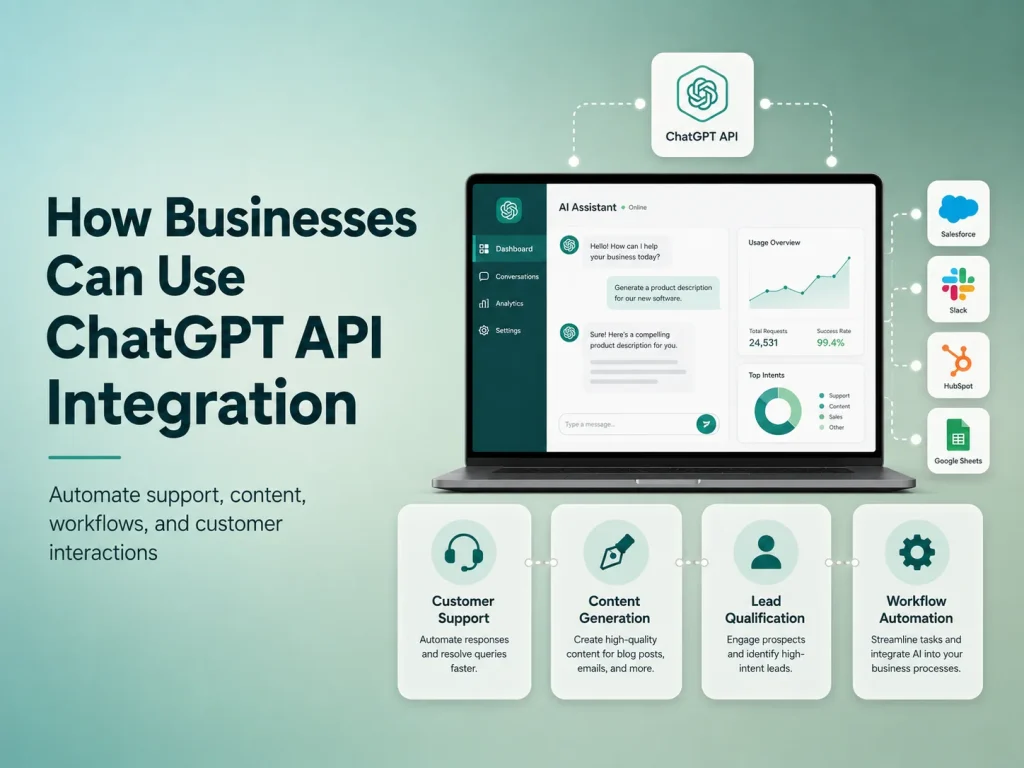
More advanced chatbots can also connect with existing systems through secure APIs. After verifying the customer, the chatbot may be able to help with order status, appointments, subscriptions, account information, or support-ticket progress.
For example, if a customer asks, “Has my order shipped yet?” the chatbot should not guess. The application can retrieve the customer’s authorized order information from the backend and use that data to prepare the response.
This connection between AI and business systems is what turns a simple chatbot into a useful customer-service tool. The conversational layer helps understand the customer, while normal application logic continues handling authentication, permissions, database updates, payments, and other important actions.
AI Chatbots Should Know When to Transfer the Conversation
Not every support request should be automated. Complaints, complicated billing issues, account-security problems, unusual technical failures, or emotionally sensitive situations may require a real person.
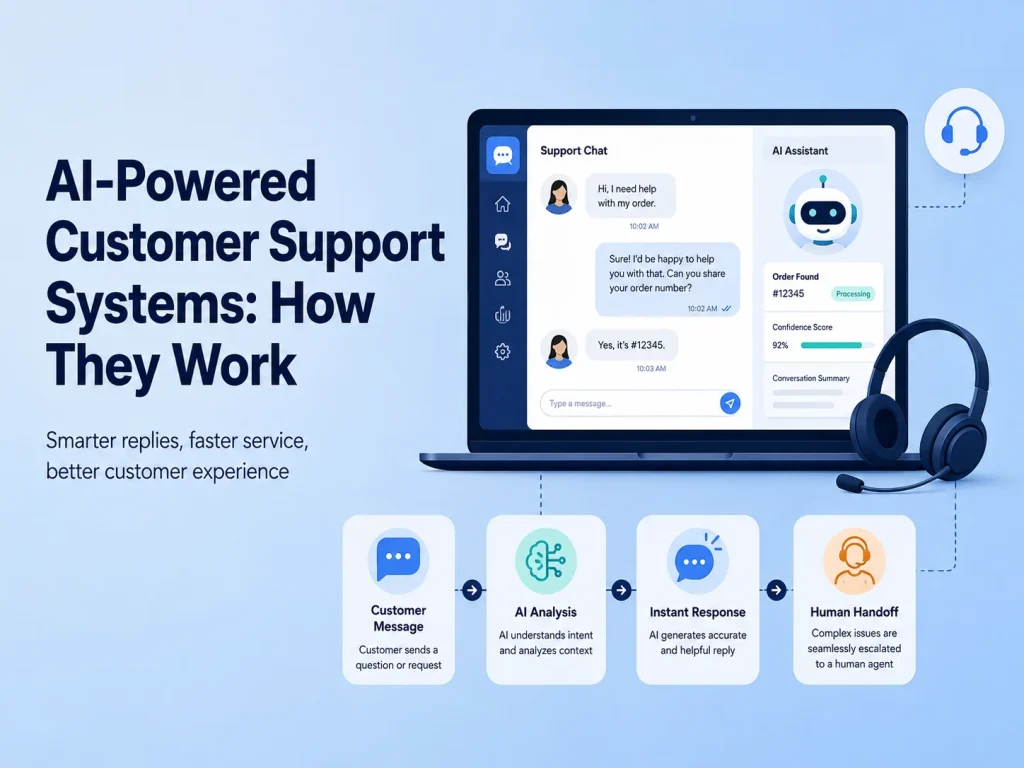
A well-designed chatbot should recognize when it cannot provide a reliable answer or when the customer asks to speak with an employee. The transition should be simple rather than forcing the customer to repeat the same questions several times.
The chatbot can prepare the handoff by summarizing the conversation, identifying the likely issue, and passing along information already collected. A human support agent can then begin with useful context instead of asking the customer to explain everything again.
This is one of the most important differences between useful automation and frustrating automation. AI should make human support easier to reach when it is needed, not create another barrier between the business and the customer.
Chatbots Can Reduce Work for Support Teams
AI chatbots can provide value even when they do not fully resolve the customer’s request. They can collect account information, categorize the problem, identify the appropriate department, create a support ticket, and prepare a summary for the employee who will handle it.
Support teams can also use AI internally. Instead of communicating directly with customers, an AI assistant can suggest draft responses, summarize long conversations, search internal documentation, or highlight important details from previous support interactions.
- Answer repetitive customer questions
- Provide product and service information
- Search approved support documentation
- Collect information before human support begins
- Summarize customer conversations
- Automatically categorize support requests
- Route tickets to the appropriate team
- Assist agents with suggested responses
These features can reduce time spent on repetitive preparation while allowing support employees to focus on conversations where their experience creates more value.
Build an AI Customer Support Chatbot
Build the Chatbot Around Real Customer Problems
Businesses should avoid adding a chatbot simply because AI is becoming popular. The first step should be reviewing the questions customers already ask and identifying where the support team spends the most repetitive time.
If customers frequently ask about orders, the chatbot should be designed around order support. If users struggle to understand a complex SaaS platform, it may need access to product documentation. If a service company receives repeated booking questions, connecting the chatbot to availability and appointment workflows may provide the greatest value.
Accuracy, privacy, and security also need to be considered from the beginning. Customers should only receive information they are authorized to access, sensitive credentials should remain protected on the backend, and the chatbot should avoid presenting uncertain information as guaranteed fact.
Encoder IT Limited develops AI-powered chatbots and customer-support systems for websites, mobile applications, SaaS platforms, customer portals, and custom business software. We can connect AI with knowledge bases, APIs, CRM systems, support workflows, customer accounts, and other existing business tools.
A strong AI chatbot does not need to automate every conversation. Its value comes from answering common questions quickly, reducing repetitive work, connecting customers with useful business information, and involving human employees at the right moment. When those elements work together, AI can improve both customer experience and the efficiency of the support team.