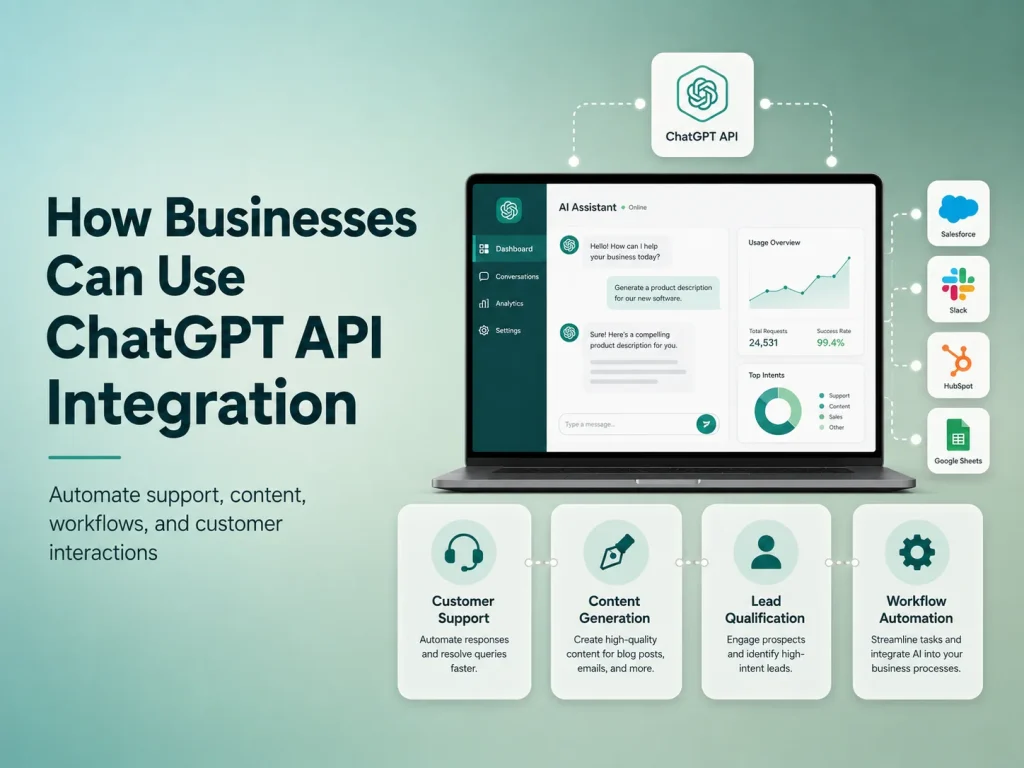
Businesses are increasingly looking for ways to add AI capabilities to their existing websites, mobile apps, SaaS platforms, and internal software. One practical approach is commonly described as ChatGPT API integration—connecting OpenAI’s models with business applications so AI can work alongside existing data, software, and workflows.
This can go far beyond adding a simple chatbot. AI can help answer customer questions, summarize documents, search business knowledge, classify requests, generate structured information, assist employees, and trigger actions through existing systems.
The most useful integrations usually start with a specific business problem. Instead of asking, “Where can we add AI?” a better question is, “Which repetitive or information-heavy process could become faster or easier with AI?”
Use AI to Improve Customer Support
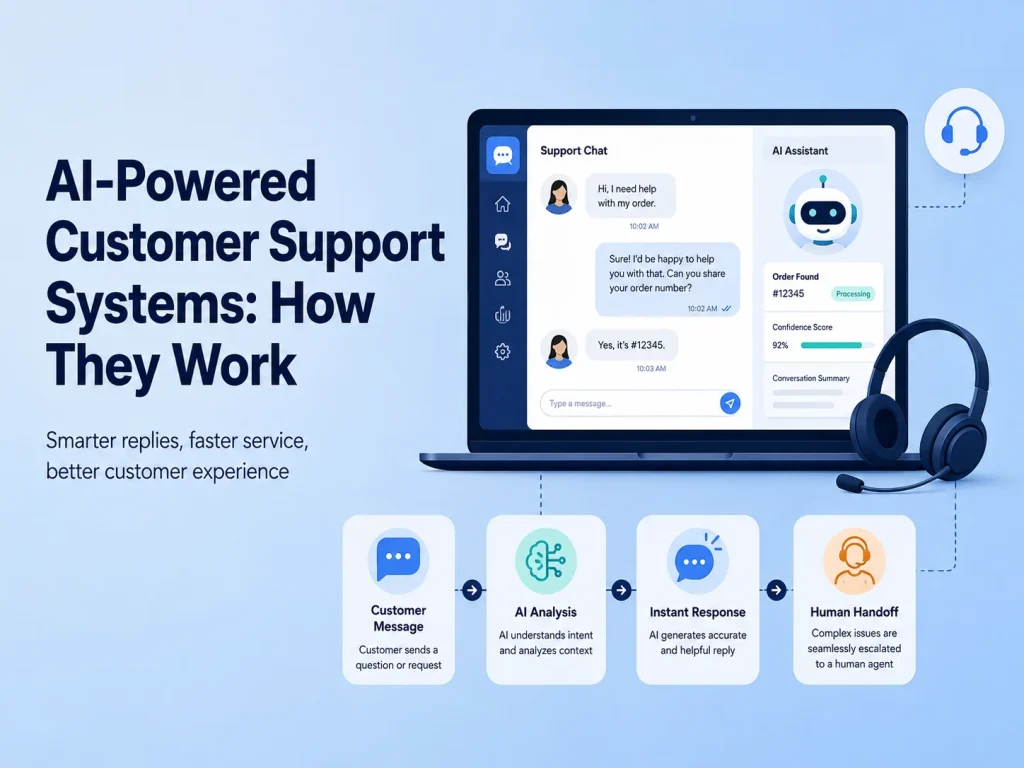
Customer support is one of the most practical applications of AI integration. A business can connect an AI assistant to its website, mobile app, or customer portal and allow customers to ask questions using natural language.
The assistant can use approved information such as FAQs, product documentation, service details, troubleshooting instructions, or company policies when preparing responses. This can reduce the amount of time support teams spend answering the same questions repeatedly.
More advanced integrations can connect AI with existing business systems. An authenticated customer might ask about an order, subscription, booking, or account status. The application can retrieve the appropriate information through secure backend APIs and use AI to present it conversationally.
Human support should still remain available. Complaints, complicated billing problems, sensitive account issues, and situations requiring judgment can be passed to an employee with the conversation history and a useful summary already prepared.
Create an AI Assistant for Employees
AI integration can also be used internally rather than directly with customers. Employees often spend significant time searching documentation, reading long records, preparing summaries, or finding information across multiple systems.
An internal assistant can help staff search policies, product information, training documents, technical documentation, customer records, or other approved company information. Instead of manually opening several documents, an employee could ask a question and receive a focused answer based on the available knowledge.
This can be useful for support teams, sales departments, operations staff, HR teams, managers, and employees working with large amounts of information.
AI can also summarize long customer conversations, meeting notes, reports, support tickets, or documents so employees can understand the important information more quickly. The original records can remain available whenever a person needs to verify the details.
Connect AI With Real Business Workflows
The biggest value often appears when AI can do more than generate text. OpenAI’s function-calling capabilities allow applications to connect models with functions and data provided by the business’s own software.
For example, a customer could ask an AI assistant to check an order. The AI can identify what information is needed, while the application securely calls the existing order system and returns the result. Similar workflows can be created for bookings, customer accounts, support tickets, inventory, CRM records, or internal tools.
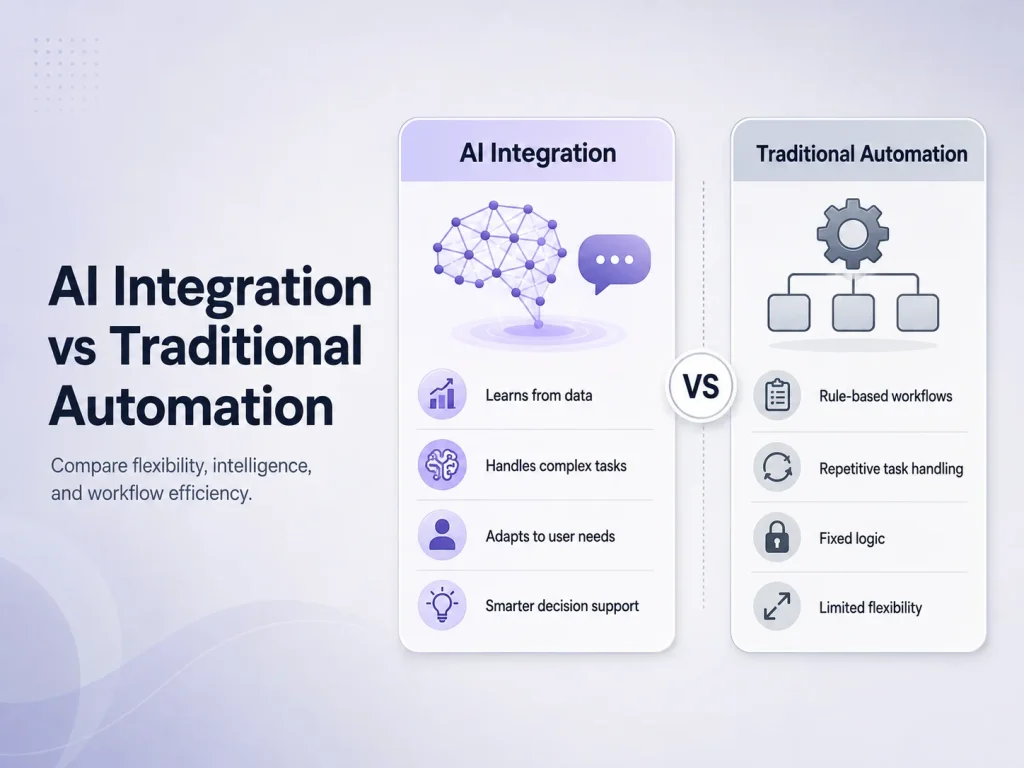
AI can also help interpret a request before traditional automation takes over. A customer might describe a problem in several sentences. AI can categorize the request and extract the relevant information, while normal backend logic creates the ticket, assigns the department, saves the record, and sends notifications.
This combination is often more reliable than trying to make AI responsible for the entire workflow. AI handles flexible language and unstructured information, while standard application code continues controlling predictable business rules, permissions, and database changes.
Search Documents and Business Knowledge More Naturally
Businesses often accumulate large amounts of information across documentation, policies, knowledge bases, product descriptions, manuals, and other text. Finding the right information through ordinary keyword search can become difficult as the amount of content grows.
AI-based search can help users find related information even when their wording does not exactly match the words stored in the source documents. OpenAI embeddings are designed to represent text numerically and can support applications such as search, classification, recommendations, and related-information retrieval.
This can support customer help centers, internal knowledge systems, SaaS documentation, product catalogs, employee portals, and other applications where users need to locate information quickly.
Automate Content and Information Processing
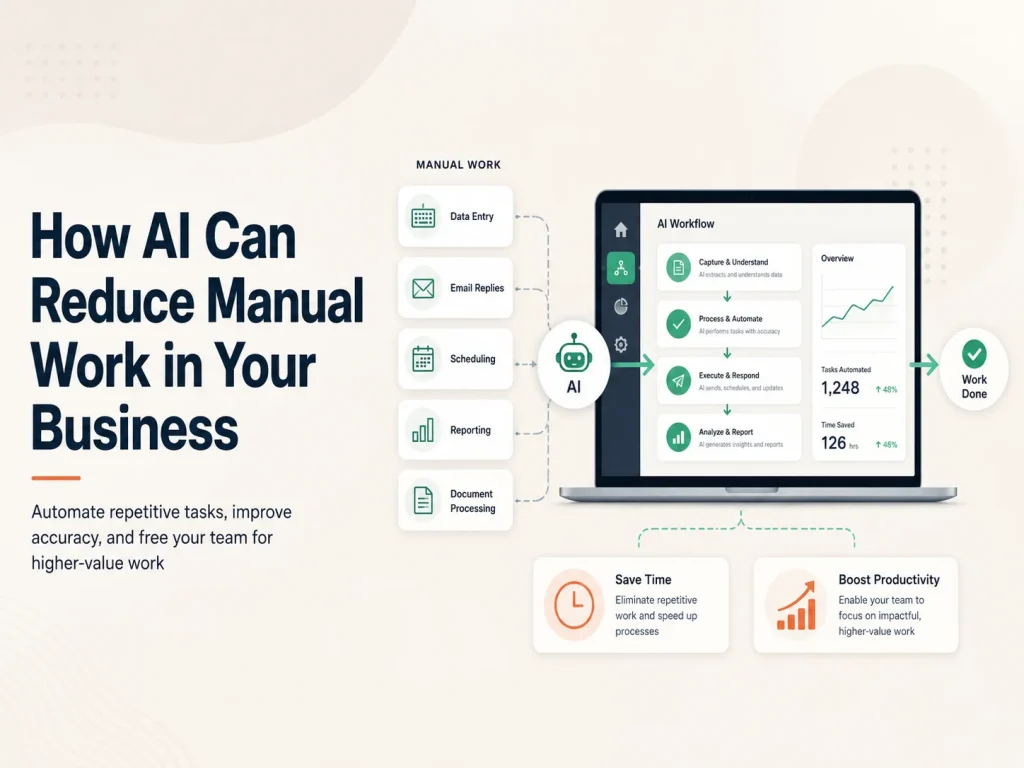
Many businesses have repetitive tasks that involve reading, organizing, or preparing text. AI integration can assist with these processes without requiring employees to manually handle every item from the beginning.
- Summarizing reports, documents, or customer conversations
- Classifying support requests and incoming messages
- Extracting important information from submitted content
- Preparing draft emails, descriptions, or responses
- Organizing leads according to submitted information
- Creating structured information for another business workflow
The final workflow should depend on the risk involved. Generating an internal summary may require little supervision, while financial, legal, healthcare, account-security, or other high-impact decisions should include stronger validation and appropriate human review.
Discuss Your AI Integration
Integrate AI Into the Software You Already Use
A business does not necessarily need to rebuild its website or application to start using AI. In many cases, AI functionality can be introduced through the existing backend and added gradually to specific workflows.
A website could receive an AI support assistant. A CRM system could gain automatic conversation summaries. A customer portal could provide intelligent document search. A mobile app could add a conversational interface while continuing to use the same authentication, database, and APIs that already power the application.
This gradual approach makes it easier to measure whether an AI feature is actually useful before expanding it across the business.
Security should remain part of the architecture. API credentials should be protected on the backend, users should only be able to retrieve information they are authorized to access, and sensitive business actions should still be validated by application logic rather than trusting generated text alone.
Encoder IT Limited helps businesses integrate AI into websites, mobile apps, SaaS platforms, customer portals, and internal software. Our work can include AI assistants, customer support automation, OpenAI API integration, knowledge search, backend APIs, document workflows, and custom business automation.
The strongest ChatGPT API integrations are usually not the ones that add AI everywhere. They identify a valuable business workflow, connect AI with the right information and software, and use traditional application logic wherever predictable control is required. That approach can make AI a practical part of business operations instead of simply another feature.