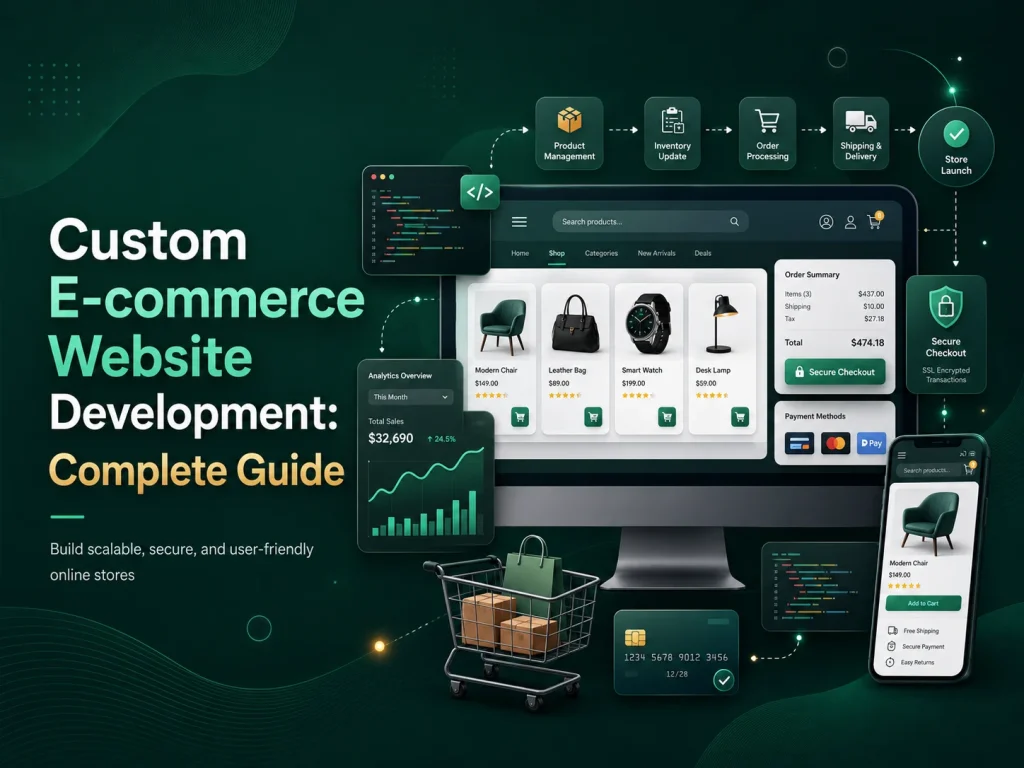
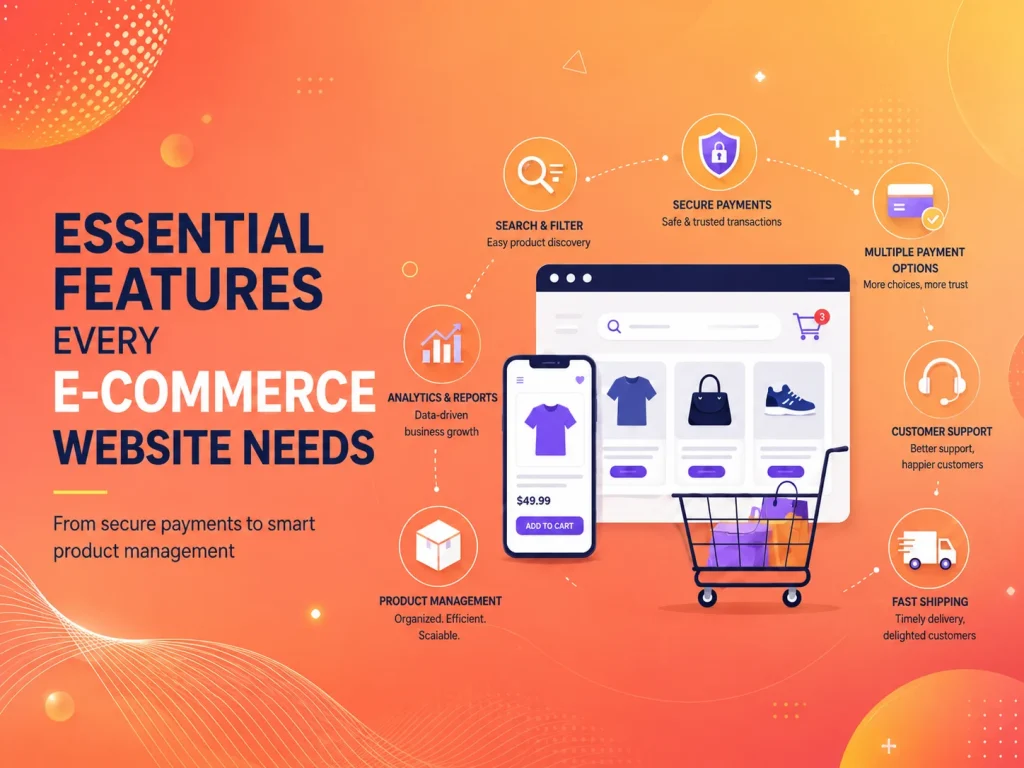
A custom e-commerce website gives businesses more control over how products are presented, how customers shop, and how orders move through internal systems. Instead of adapting every business process to a standard template, the store can be designed around specific products, customers, integrations, and operational requirements.
Custom e-commerce website development can be a strong choice for businesses that need unique functionality, better scalability, specialized integrations, or a shopping experience that standard themes and plugins cannot provide effectively.
What Is Custom E-commerce Development?
Custom e-commerce development involves designing and building an online store around specific business requirements. This can include a fully customized WooCommerce or Shopify store, or a more advanced platform developed with technologies such as Laravel, React, Next.js, or Node.js.
The level of customization depends on the business. Some companies only need a custom frontend and checkout experience, while others require complex pricing, inventory, subscriptions, marketplaces, customer portals, or integration with internal software.
When Do You Need a Custom E-commerce Website?
Standard e-commerce platforms can handle many common online stores. Custom development becomes more valuable when existing solutions require too many workarounds or cannot support important business processes.
- Complex product or pricing rules
- Custom checkout workflows
- Subscription or membership features
- ERP, CRM, or inventory integrations
- Multiple customer roles or pricing levels
- Advanced search and filtering
- Custom dashboards or customer portals
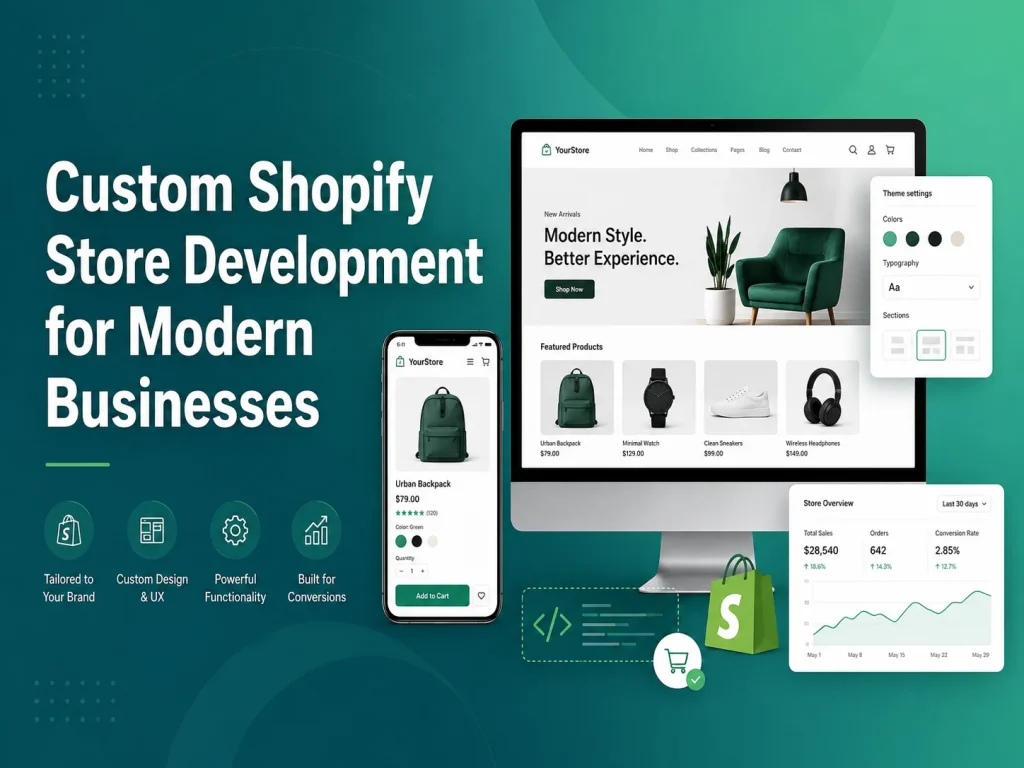
Platform selection should depend on the products, business model, technical requirements, and future growth plans. WooCommerce can be a strong option for businesses that need WordPress flexibility and extensive customization, while Shopify can work well when managed infrastructure and simpler store administration are priorities.
For highly specialized workflows, a custom e-commerce application may provide greater control over architecture, user roles, integrations, and business logic.
Plan the Customer Journey
A successful online store should make it easy for customers to move from product discovery to checkout. Navigation, categories, search, filters, product pages, cart, and checkout should all work together as one clear journey.
Before development begins, define how customers will find products, compare options, select variations, complete payment, and manage orders after purchase. Good planning reduces unnecessary complexity later.
Design Clear Product Pages
Product pages should provide the information customers need to make confident buying decisions. This may include product images, descriptions, pricing, variations, stock availability, delivery information, specifications, and reviews.
The most important actions should remain visually clear. Avoid overcrowding product pages with unnecessary banners, popups, or unrelated information that distracts from the purchase decision.
Build a Simple Checkout Experience
Checkout is one of the most important parts of an e-commerce website. Long forms, confusing payment options, unexpected charges, or unnecessary steps can make purchasing difficult.
A custom checkout can simplify required fields, organize shipping and payment options, support business-specific rules, and provide clear validation. The experience should also work smoothly on mobile devices.
Integrate Payments, Shipping, and Business Software
E-commerce websites often need to communicate with other systems. APIs can connect the store with payment gateways, shipping providers, accounting platforms, CRM systems, ERP software, inventory platforms, email tools, and other services.
For example, a completed order can update inventory automatically, send information to a fulfillment provider, create an accounting record, and notify the customer without employees manually transferring data between systems.
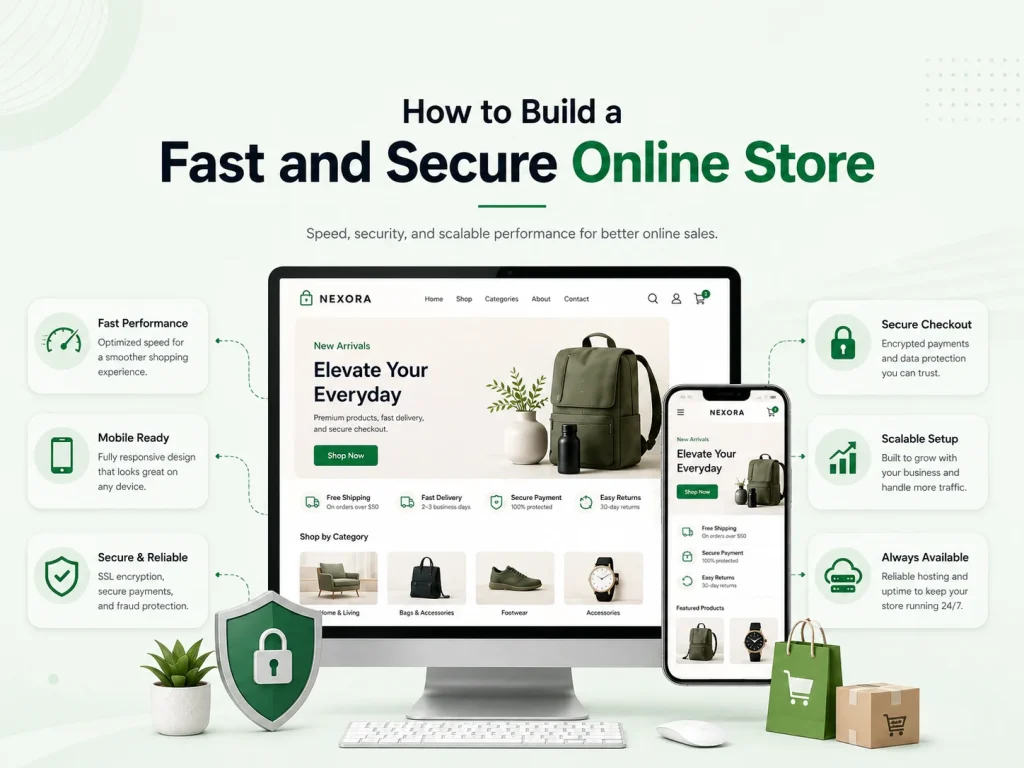
Customers should be able to browse products, use filters, manage the cart, and complete checkout comfortably from smartphones and tablets. Responsive e-commerce design should prioritize important actions rather than simply shrinking the desktop layout.
Performance is equally important. Optimized images, efficient code, caching, database optimization, and suitable hosting can help keep product and checkout pages responsive as the store grows.
Build for Security and Scalability
E-commerce websites handle customer accounts, orders, payments, and other important information, so security needs to be considered throughout development. User permissions, secure API communication, software updates, backups, and reliable payment integration are all important parts of the platform.
The architecture should also support realistic growth. New products, customers, integrations, locations, or features should be possible without requiring the complete store to be rebuilt.
Custom E-commerce Development Process
A typical project begins with requirements analysis and planning, followed by UI/UX design, platform selection, frontend and backend development, integrations, testing, and deployment.
Testing should cover product variations, search, cart behavior, payments, shipping rules, customer accounts, responsive layouts, emails, and important third-party integrations before launch.
Custom vs Template-Based E-commerce
Template-based stores are faster and more affordable when the business has straightforward requirements. They can be an excellent choice for smaller stores that do not need specialized functionality.
Custom development is more appropriate when the store needs greater control over design, workflows, performance, integrations, or future expansion. The best solution is not necessarily the most customized one—it is the one that fits the business requirements without unnecessary complexity.
How Encoder IT Limited Can Help
Encoder IT Limited provides custom e-commerce design and development services for businesses that need professional, scalable, and user-friendly online stores.
- WooCommerce development and customization
- Shopify development
- Custom e-commerce platforms
- Payment and shipping integrations
- API and business software integration
- E-commerce UI/UX and performance optimization
Our team can help from initial planning and design through development, integration, testing, launch, and ongoing maintenance.
Request a Quote
Final Thoughts
Custom e-commerce website development gives businesses the flexibility to build an online store around their products, customers, and operational workflows. The right approach depends on how much customization is genuinely required.
By choosing the right platform, simplifying the customer journey, integrating important business systems, and planning for performance and growth, businesses can create e-commerce websites that are easier to manage and better prepared for long-term expansion.