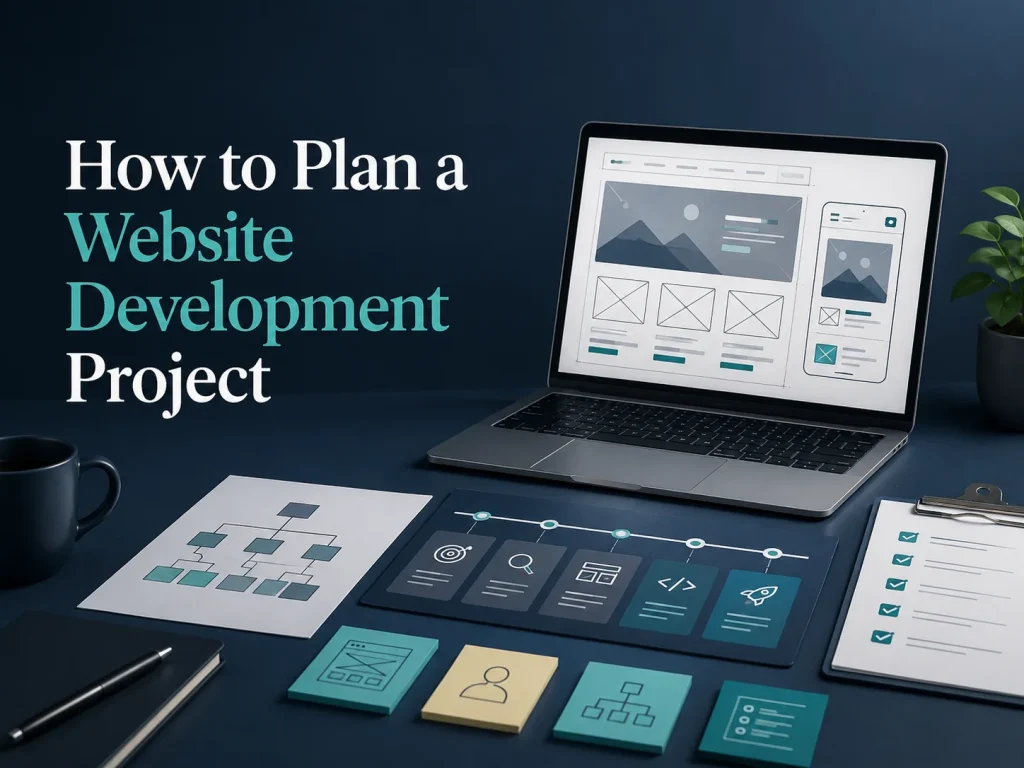
A successful website development project usually begins long before the first page is designed or coded. Businesses need to understand what the website should achieve, who will use it, what information visitors need, and which features are necessary for the first launch.
Good planning helps reduce redesigns, missed requirements, unexpected costs, and delays during development. It also gives designers, developers, content teams, and business stakeholders a shared understanding of what is being built and why.
The goal is not to document every small detail before work begins. A useful website plan should define the main objectives, page structure, user journeys, functionality, content responsibilities, technology requirements, and launch priorities clearly enough for the project to move forward with fewer assumptions.
Define What the Website Needs to Achieve
The first question should be about the business rather than the technology. Why is the website being created or redesigned? A company may want to generate more enquiries, sell products, accept bookings, strengthen its brand, provide customer self-service, publish content, or support internal business operations.
These goals influence almost every later decision. A lead-generation website may need strong service pages, case studies, clear calls to action, and optimized enquiry forms. An e-commerce website requires products, checkout, payments, customer accounts, shipping, and order management. A customer portal may need authentication, dashboards, documents, notifications, and role-based access.
It is also important to identify the people who will use the website. Different users may need different information or workflows. A potential customer visiting for the first time has different needs from an existing customer logging in to manage an account.
Plan the Pages, Content, and User Journey Together
Once the goals are clear, the website structure can be planned. Start with the most important pages rather than trying to create a large sitemap immediately. Most business websites need a homepage, service or product pages, company information, contact options, and supporting content relevant to customer questions.
The page structure should follow how visitors actually look for information. If a company provides several services, each important service may need its own page rather than being compressed into one long overview. If customers frequently search for pricing, industries, locations, or case studies, those areas may deserve a clearer position in the navigation.
Content planning should happen at the same time. One of the most common causes of website delays is waiting until development is nearly complete before preparing text, images, case studies, team profiles, product information, or other content.
- Identify the main website goal. Decide what business result the website should support.
- Define the target users. Understand what information and actions matter to each audience.
- Build the core sitemap. Organize pages around customer needs rather than internal company structure.
- Assign content responsibilities. Decide who will prepare, review, and approve text and media.
- Prioritize the first launch. Separate essential requirements from features that can be introduced later.
Thinking about the user journey is especially important. A visitor might discover the company through Google, land directly on a service page, review examples of previous work, and then request a quote. The website should make that path easy even if the visitor never opens the homepage.
Define Functionality Before Design and Development Go Too Far
Visual design becomes much easier when the development team already understands what each page needs to do. Features such as booking systems, payments, memberships, customer accounts, multilingual content, advanced forms, search, filters, dashboards, or third-party integrations should be identified early.
Some features look simple from the visitor’s perspective but require significant backend work. An online booking flow, for example, may involve availability, service duration, staff assignments, payment, cancellation rules, email notifications, and administrative controls.
The same applies to integrations. If website enquiries need to enter a CRM automatically, or products must synchronize with an inventory system, those requirements can affect database structure, form design, API development, testing, and project estimates.
Early planning does not mean every future feature needs to be built immediately. It simply allows the technical architecture to avoid unnecessary limitations when future expansion is already likely.
Plan Your Website Project
Set a Realistic Scope, Budget, and Approval Process
Projects become difficult when the first version continuously grows during development. A useful plan separates must-have features from improvements that can be added after launch. This keeps the project focused and makes cost and timeline estimates more realistic.
The budget should consider more than design and coding. Content preparation, photography, premium software, hosting, integrations, data migration, testing, maintenance, and post-launch improvements may also need to be included depending on the project.
Businesses should also decide who can approve designs and functionality. If every decision needs feedback from several people with different priorities, small changes can create large delays. A clear decision-maker or approval process helps keep progress consistent.
Feedback works best when it is collected at defined stages. Reviewing wireframes before final UI design is more efficient than changing the entire page structure after development. Similarly, testing important workflows throughout development is easier than discovering major problems immediately before launch.
Prepare for Testing, Launch, and What Comes Next
A website development plan should include testing from the beginning rather than treating it as the final task. Responsive layouts, navigation, forms, calls to action, payments, integrations, account features, and important user journeys should be checked on appropriate devices and browsers.
Before launch, businesses may also need redirects from an old website, analytics configuration, backups, domain or hosting changes, form-delivery testing, SEO checks, and final content review. These tasks can be small individually but are important for a smooth launch.
Planning should continue beyond launch as well. A business website will usually need new content, security updates, performance improvements, landing pages, integrations, or new functionality as the company grows. Building the first version with maintainability in mind makes those changes easier.
Encoder IT Limited helps businesses plan and develop websites from initial requirements through UI/UX design, WordPress or custom development, e-commerce, API integrations, testing, deployment, and ongoing maintenance.
A good website development project starts with clarity. When the business goals, users, page structure, content, functionality, scope, and approval process are understood early, the development team can spend more time building the right solution and less time correcting avoidable misunderstandings later.