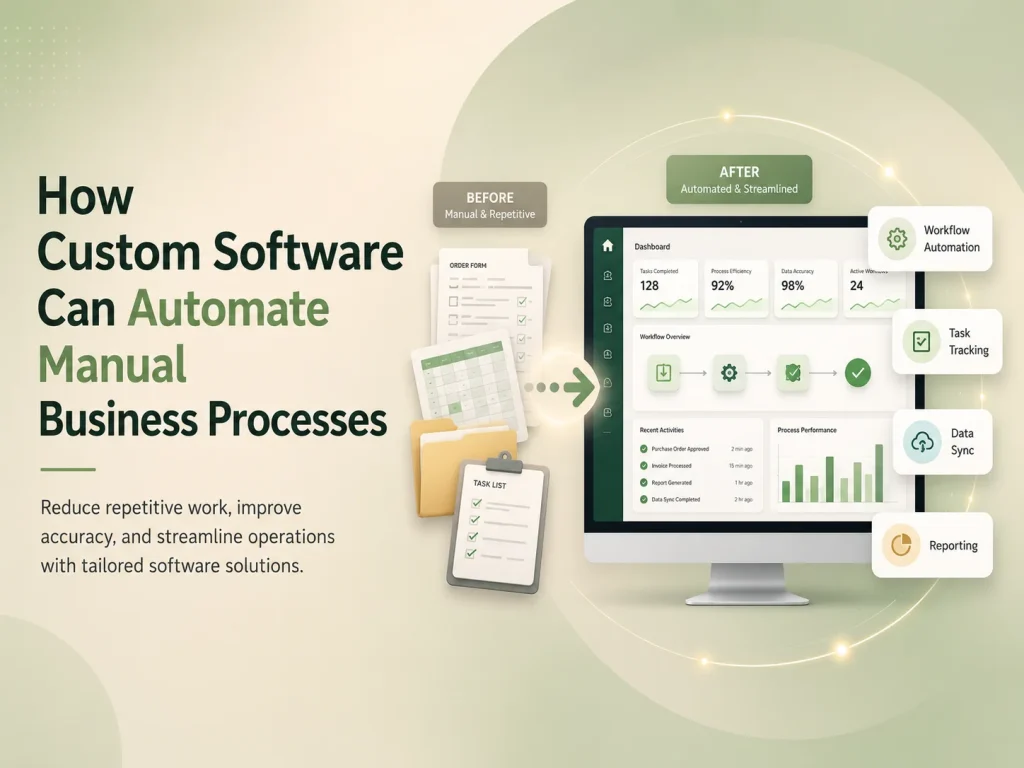
One of the first questions businesses ask when planning custom software is: How much does custom web application development cost? Unlike a standard website, there is rarely one fixed price because web applications can range from relatively simple internal management tools to large SaaS platforms supporting thousands of users, complex workflows, subscriptions, integrations, and automation.
For initial planning, a focused MVP or small application may begin around $10,000–$30,000+, while more complete business applications often move into the $30,000–$100,000+ range. Large platforms with complex workflows, integrations, security requirements, and multiple modules can reach $100,000–$200,000+, while enterprise systems may exceed $200,000.
These numbers should be treated as broad planning ranges rather than quotations. The real cost depends on what the application needs to do, how many users and roles it supports, how complex the business logic is, and how much design, testing, integration, and infrastructure work is required.
Typical Custom Web Application Cost Ranges
| Project Type |
Planning Cost Range |
Typical Scope |
| Focused MVP |
$10,000–$30,000+ |
Core workflow, basic accounts, limited administration, essential features |
| Small Business Web Application |
$20,000–$50,000+ |
Dashboards, customer records, workflows, roles, reporting, basic integrations |
| Mid-Sized Custom Application |
$50,000–$100,000+ |
Multiple modules, advanced permissions, automation, APIs, payments, reporting |
| Large Web Application or SaaS Platform |
$100,000–$200,000+ |
Complex workflows, multi-tenancy, subscriptions, extensive integrations, scalability |
| Enterprise Platform |
$200,000+ |
Large user base, advanced security, multiple systems, complex infrastructure and integrations |
A smaller application does not necessarily mean a simple-looking interface. Even a relatively focused platform may require frontend development, backend APIs, database architecture, authentication, administration, testing, deployment, and security.
Similarly, two applications with the same number of screens can have very different development costs. A dashboard displaying basic database records is much easier to build than a dashboard calculating financial data, communicating with external APIs, processing real-time events, and applying complex permissions.
Features and Business Logic Usually Have the Biggest Impact
The number of features matters, but the complexity behind those features is often more important. A simple customer-management module may allow employees to create, edit, and search customers. A more advanced version might include customer-specific pricing, contracts, invoices, documents, communications, automatic reminders, permissions, reporting, and integration with another CRM.
User roles can add similar complexity. An application with one administrator and one standard user is very different from a system containing platform administrators, company owners, managers, employees, customers, finance teams, and other roles with detailed permissions.
Other functionality that can significantly affect development scope includes subscriptions, recurring billing, multi-tenant architecture, marketplaces, real-time messaging, advanced search, document generation, workflow automation, reporting, AI functionality, and complex approval systems.
- User registration, authentication, and permissions
- Admin and management dashboards
- Customer or employee portals
- Subscription and payment functionality
- Workflow and approval automation
- Reporting and analytics
- Third-party API integrations
- Real-time notifications or communication
- Document and file management
- Multi-tenant SaaS functionality
UI/UX Design and Frontend Complexity Affect the Budget
Custom web application development normally includes more than backend programming. The product needs screens, navigation, forms, tables, dashboards, mobile-responsive layouts, loading states, errors, empty states, and other interface elements that users interact with every day.
A straightforward internal business tool may use a relatively simple design system with reusable components. A customer-facing SaaS product may require more extensive UX research, user flows, wireframes, prototypes, detailed responsive designs, and a larger component system.
Complex interfaces also require additional frontend development. Interactive charts, large data tables, drag-and-drop interfaces, scheduling calendars, advanced filters, real-time updates, and highly customized dashboards can increase the amount of development and testing required.
Investing in UX can be particularly important for software employees or customers use repeatedly. A workflow that requires unnecessary steps may create operational costs every day after the application launches.
Estimate Your Web Application Project
Integrations Can Change the Scope Significantly
Modern web applications often need to communicate with payment gateways, accounting platforms, CRM systems, cloud storage, calendars, email services, shipping providers, e-commerce systems, AI services, or other third-party platforms.
A basic API connection may be relatively straightforward. A deeper integration that synchronizes large amounts of data in both directions, handles webhooks, retries failed transactions, prevents duplicates, and maintains accurate records can require considerably more engineering.
The quality of the third-party API also matters. Clear documentation and reliable APIs can make integration faster, while older systems with limited documentation or unusual authentication may require additional development and testing.
Businesses should identify important integrations during planning rather than adding them near the end of development. They may influence database architecture, user workflows, permissions, and other parts of the platform.
Development Team Location and Structure Also Affect Cost
Custom software development rates vary significantly by region and by the experience of the development team. Working with developers in different global markets can therefore produce very different estimates for applications with similar requirements.
Team composition matters as well. A complete project may involve a business analyst or project manager, UI/UX designer, frontend developer, backend developer, QA engineer, and DevOps specialist. Smaller projects may combine several responsibilities, while large applications may require multiple specialists in each area.
The cheapest hourly rate does not automatically produce the lowest total project cost. Architecture mistakes, unclear requirements, limited testing, or poor-quality code can create additional development and maintenance costs later.
Businesses should compare proposed scope, development process, technical experience, communication, testing, documentation, and long-term support rather than comparing hourly rates alone.
Do Not Forget the Cost After Launch
Launching the application is not the end of the software lifecycle. Hosting, monitoring, backups, security updates, bug fixes, third-party services, infrastructure, and ongoing feature development should also be included in long-term budgeting.
A SaaS product may require continuous development because customer feedback introduces new features and integrations. An internal application may need fewer changes but still require framework updates, security maintenance, infrastructure monitoring, and support when business processes change.
Third-party services can introduce separate recurring expenses. Cloud hosting, email delivery, SMS, file storage, payment processing, maps, AI APIs, monitoring tools, and other external services may each have their own pricing model.
These operating expenses are different from the initial development budget and should be estimated separately according to expected usage.
How to Get a More Accurate Web Application Estimate
The most reliable way to estimate a custom application is to define the core workflows before requesting development quotes. Businesses do not necessarily need a complete technical specification, but they should understand who will use the software and what those users need to accomplish.
Identify the main user roles, core modules, essential integrations, payment requirements, reporting needs, and the processes that must be included in the first version. Separate essential functionality from features that can be introduced later.
For startups, developing an MVP first can reduce initial investment while providing an opportunity to validate the product. For established businesses, development can also be divided into phases so that the highest-value operational workflows are implemented before secondary modules.
Encoder IT Limited develops custom web applications, SaaS platforms, customer portals, dashboards, workflow automation systems, API integrations, and business management software using technologies such as React, Next.js, Laravel, and Node.js.
The cost of custom web application development depends primarily on complexity rather than the number of pages. A clearly defined MVP may be achievable with a relatively focused budget, while a multi-tenant SaaS or enterprise platform can require a much larger investment. Defining the business problem, core workflow, users, integrations, and development phases before coding begins is one of the best ways to create a realistic budget and avoid unnecessary development costs.