Your website may have looked modern when it was first launched, but design standards, user expectations, mobile devices, search behavior, and your own business can change significantly over time. A website that is technically still working may no longer represent your company effectively or help visitors become customers.
A redesign does not always mean replacing everything. Sometimes the right solution is improving the design and user experience while keeping useful content and functionality. In other situations, an outdated structure, technology, or content-management system may make a larger rebuild more practical.
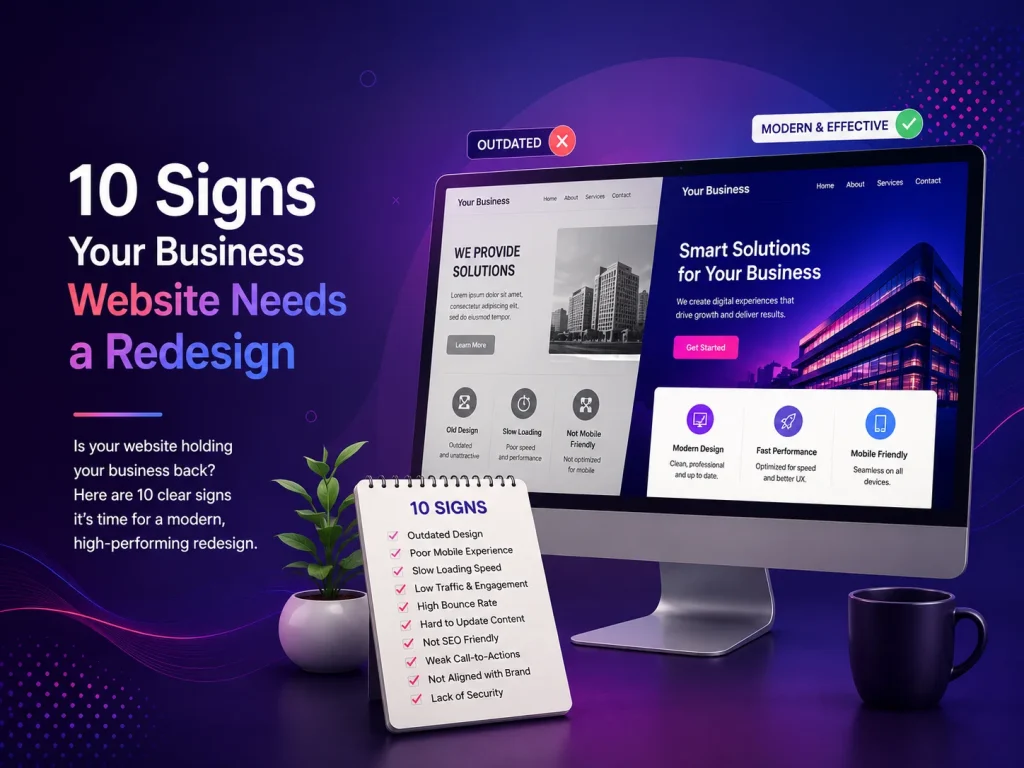
10 Signs It May Be Time to Redesign Your Website
- 1. Your Website Looks Outdated
Visual design strongly influences a visitor’s first impression. Old typography, crowded layouts, dated graphics, inconsistent colors, or an interface that looks several years behind competitors can make an established company appear less professional than it actually is.
A redesign can modernize the visual identity while making important services, calls to action, and business information easier to understand.
- 2. The Mobile Experience Is Difficult to Use
If visitors need to zoom, scroll sideways, struggle with small buttons, or navigate menus designed primarily for desktop computers, the website needs attention. Responsive design should adapt content naturally across smartphones, tablets, laptops, and larger screens.
Mobile usability is especially important for businesses receiving enquiries, bookings, purchases, or calls directly from website visitors.
- 3. Pages Load Too Slowly
Visitors expect websites to respond quickly. Large images, unnecessary scripts, heavy plugins, old themes, poor hosting configurations, or inefficient code can gradually make a website slower.
A redesign provides an opportunity to review the technical foundation instead of repeatedly applying small fixes to an increasingly complicated website.
- 4. Visitors Are Not Taking the Actions You Want
A business website should guide people toward clear next steps, whether that means requesting a quote, booking a consultation, purchasing a product, calling the company, or submitting an enquiry.
If traffic is reaching the website but very few visitors are converting, the problem may involve confusing navigation, weak calls to action, unclear messaging, poor page structure, or unnecessary friction in forms and checkout processes.
- 5. Your Business Has Changed but the Website Has Not
Companies evolve. You may introduce new services, enter new markets, change positioning, update branding, or begin serving different types of customers. If the website still describes the business as it existed several years ago, visitors may receive the wrong impression.
A redesign can reorganize the website around current priorities instead of continuing to add new pages to an outdated structure.
- 6. Navigation Has Become Complicated
Websites often become harder to navigate as new pages are added over time. Menus grow longer, similar services appear in different locations, and visitors may no longer know where to begin.
Good website navigation should make the most important information easy to find. A redesign allows the information architecture to be reviewed so pages can be grouped logically around what customers are actually looking for.
- 7. Updating Content Is Difficult
Your team should not need a developer for every small text or image update. An outdated theme, poorly configured content-management system, or heavily customized page builder can make routine website management unnecessarily difficult.
Redesigning the website with reusable components and a cleaner CMS structure can make ongoing content updates faster while keeping the design consistent.
- 8. The Website No Longer Builds Enough Trust
Potential customers often visit a website before speaking with a business. If they see broken pages, inconsistent branding, old copyright information, outdated team details, low-quality images, or unclear service descriptions, trust can fall before the conversation even begins.
Professional design, clear messaging, useful case studies, testimonials, accurate contact information, and consistent presentation can help visitors feel more confident about the company behind the website.
- 9. Your Website Is Difficult to Expand
A website may begin as a simple company site and later need e-commerce, customer portals, booking systems, multilingual content, CRM integrations, automation, or other business functionality.
If every new feature creates technical conflicts or requires complicated workarounds, the existing architecture may have reached its practical limit. Redesigning around future requirements can provide a cleaner foundation for growth.
- 10. Competitors Provide a Much Better Online Experience
Competitor websites should not be copied, but they can reveal how expectations in your industry are changing. If competing businesses make services easier to understand, provide better mobile experiences, load faster, and guide visitors more clearly toward conversion, your website may be losing opportunities before customers ever contact you.
A redesign should focus on improving your own customer journey and communicating what makes your business different rather than simply following visual trends.
A Redesign Should Solve Problems, Not Just Change Colors
One of the biggest mistakes businesses make is treating a website redesign as a purely visual project. Changing colors, fonts, and images can make the site look newer, but it will not solve problems caused by confusing navigation, weak content, poor performance, complicated forms, or an unsuitable technical structure.
A strong redesign should begin with an audit of the current website. Review which pages receive traffic, where users leave, which calls to action generate enquiries, how the site performs on mobile devices, and what functionality the business expects to need in the future.
Some content may deserve to remain because it performs well or answers important customer questions. Other pages may need to be combined, rewritten, redirected, or removed. The goal is to improve the complete website experience without losing valuable content unnecessarily.
Plan Your Website Redesign
When Should You Redesign Instead of Making Small Improvements?
If the problems are limited to a few pages, performance settings, or visual elements, targeted improvements may be enough. A full redesign becomes more valuable when several problems exist together—for example, the design feels old, mobile navigation is poor, content is difficult to manage, and the website cannot support new business requirements.
Encoder IT Limited provides website redesign, custom website development, WordPress development, e-commerce development, UI/UX design, performance optimization, and custom web solutions for businesses that need to modernize their online presence.
Your website should evolve with your business. If it no longer represents your brand accurately, creates friction for mobile users, loads slowly, or fails to guide visitors toward meaningful actions, a redesign may be more than a visual improvement—it can become an opportunity to create a stronger foundation for future growth.