
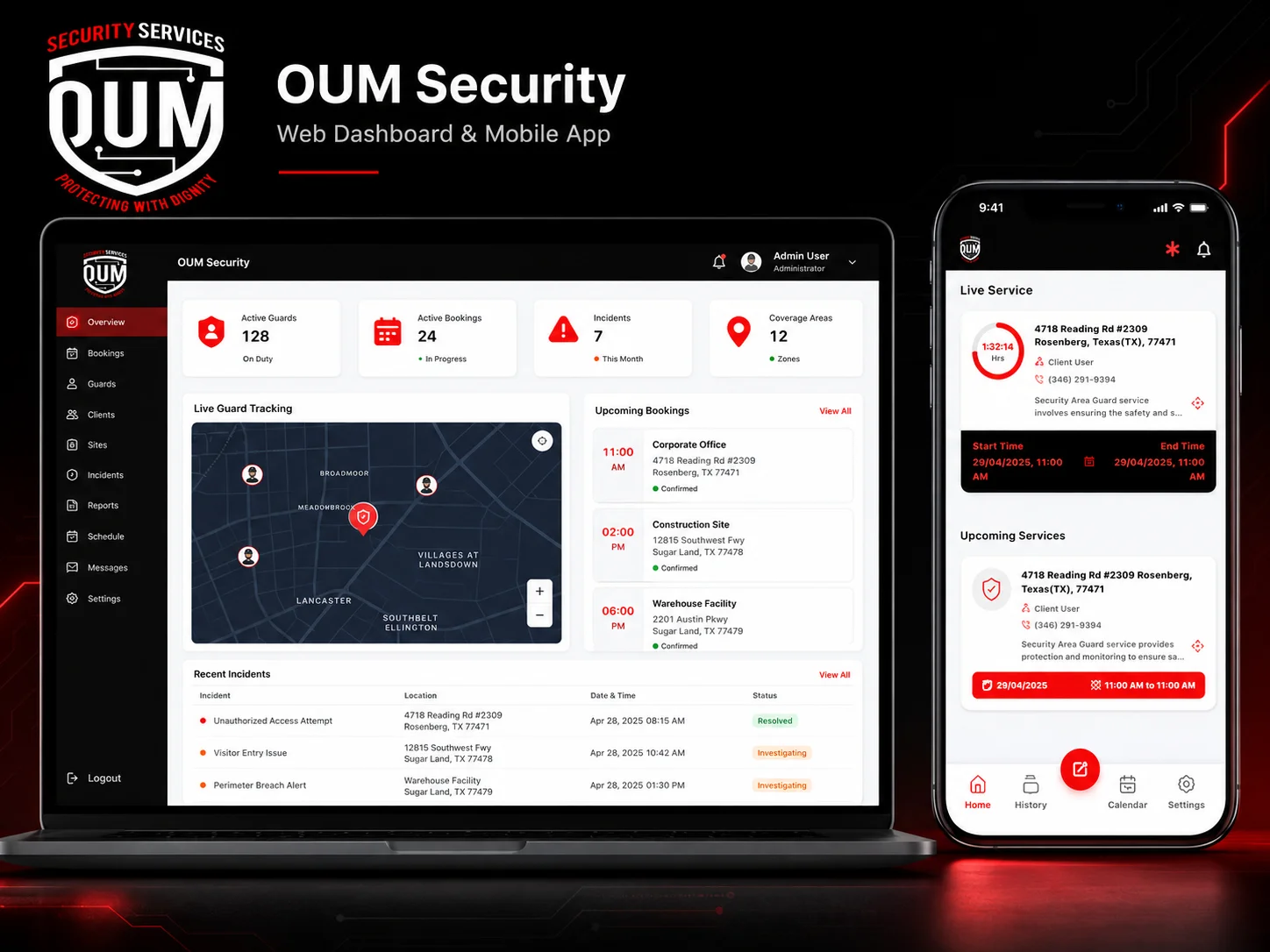
OumSecurity is an integrated web and mobile security operations platform designed for security companies, offices, properties, institutions, and organizations that manage guards across multiple locations. The system brings service booking, scheduling, guard assignments, real-time monitoring, incident reporting, live location tracking, emergency support, daily activity logs, and administrative oversight into one connected platform.
Industry: Security Services, Workforce Management & Field Operations
Project Type: Web & Mobile Security Management Platform
Services: Mobile App Development, Web Application Development, Backend API Development, Real-Time Operations & Location-Based Features
Technologies: Flutter, Laravel, React.js, REST API, Geolocation & Google Maps Integration
Platforms: Android, iOS & Web
Play Store: View Android App
App Store: View iOS App
App Demo: Watch Project Demo
Project Overview
OumSecurity was developed to modernize the way security companies coordinate guards, clients, locations, assignments, and day-to-day field operations. Traditional security management often depends on phone calls, paper logs, spreadsheets, manual scheduling, and separate communication channels, making it difficult for managers to maintain real-time visibility across multiple sites.
The objective was to build one connected system where clients and administrators could manage security service requirements while guards and supervisors could access assignments, submit operational updates, report incidents, and communicate from the field. The platform needed to work across web and mobile environments so both office-based management teams and field personnel could use the system effectively.
The final solution combines booking and scheduling with guard management, site operations, geolocation, live monitoring, emergency alerts, incident reporting, daily logs, post orders, and administrative control. This creates a more structured workflow from service request and guard assignment through active security operations and reporting.
The Challenge
Security operations involve people working across different locations, shifts, schedules, and client sites. Managers need to know which guards are assigned, where they are working, what activity has taken place, whether incidents have occurred, and whether urgent intervention is required.
When this information is managed manually, operational visibility becomes limited. Scheduling changes may require repeated communication, incident information can arrive late, daily activity records may be inconsistent, and managers may have difficulty monitoring several active locations simultaneously.
The platform also needed to serve different types of users through different devices. Guards primarily interact through mobile devices in the field, while administrators and supervisors require a broader web-based operational view. Data therefore needed to stay synchronized across Flutter mobile applications, the React.js management interface, and the Laravel backend.
Location-sensitive features introduced additional complexity. Booking locations, guard check-ins, live tracking, map visualization, and emergency SOS functionality needed to provide useful operational context while remaining simple enough for guards to use during active shifts.
Goals & Requirements
- Create a centralized platform for managing security operations.
- Support security service booking and real-time scheduling.
- Allow administrators to assign guards to sites and services.
- Provide Android and iOS applications for field personnel.
- Provide a web dashboard for administrative and operational management.
- Integrate geolocation and Google Maps for location-based workflows.
- Support live guard activity and location monitoring.
- Provide Emergency SOS functionality for urgent situations.
- Allow guards to submit incident reports with relevant information and photos.
- Maintain daily logs and shift summaries for operational records.
- Support sites, post orders, and guard assignment management.
- Improve communication between guards, supervisors, administrators, and clients.
- Maintain user profiles and security service history.
- Provide structured backend APIs shared by web and mobile applications.
- Create an architecture capable of supporting multiple sites and expanding operations.
Our Approach
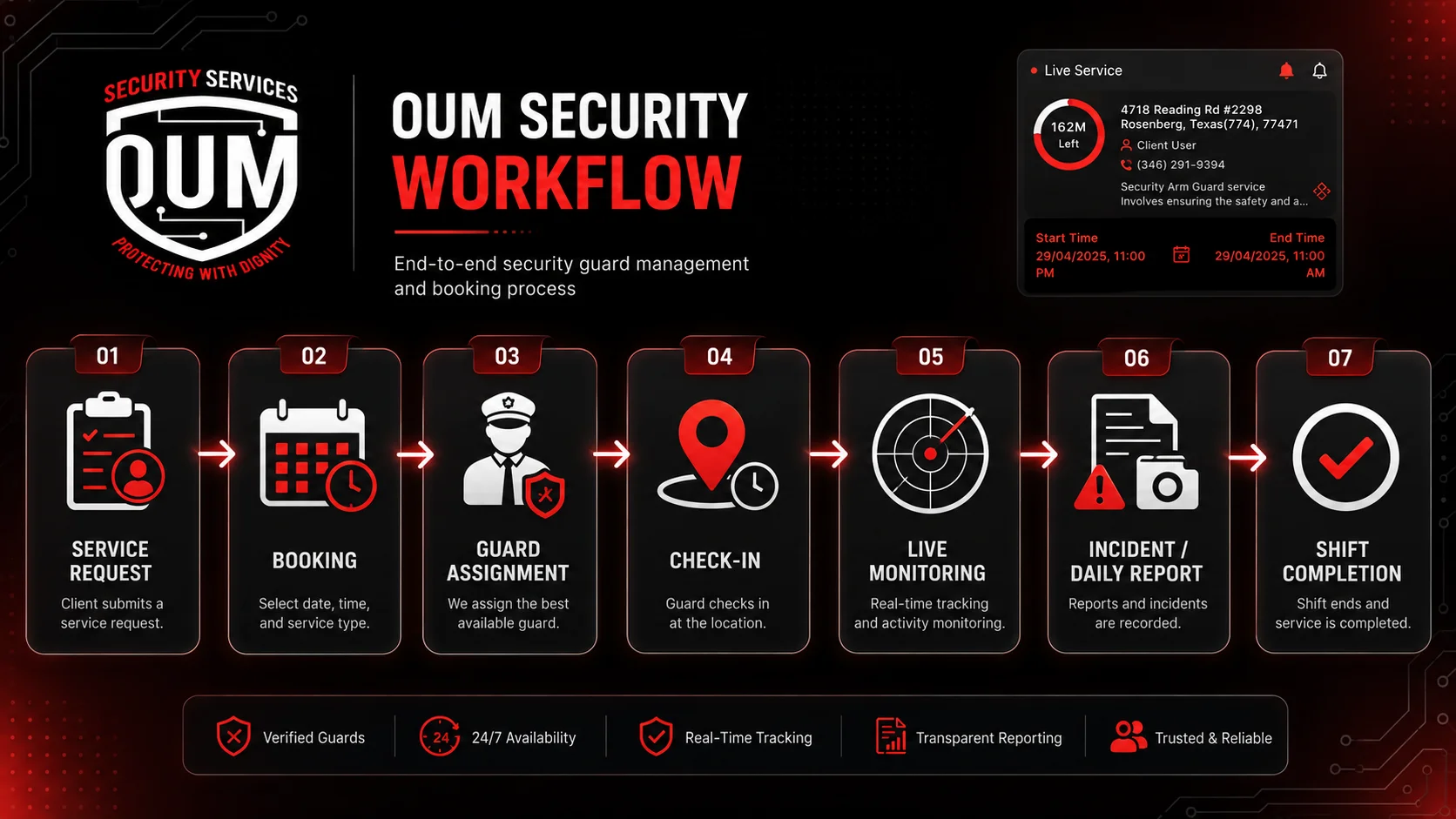
We started by mapping the operational lifecycle of a security service, from the initial requirement and booking through scheduling, guard assignment, active duty, monitoring, incident reporting, and service completion. This helped define which information needed to be available to clients, guards, supervisors, and administrators at each stage.
The system was then structured around a shared Laravel backend and API layer. Flutter was used for the mobile experience while React.js powered the web management interface, allowing both applications to operate on the same operational data and business rules.
UI/UX design focused on keeping common field actions simple for guards while giving administrators a broader overview of security operations. Features such as assignments, incident reporting, location activity, daily logs, and emergency actions were organized so they could be accessed quickly when needed.
Testing covered booking workflows, assignment states, mobile and web synchronization, location-based operations, incident submission, emergency actions, and different real-world usage scenarios before deployment to Android and iOS.
The Solution
OumSecurity delivers a unified security operations environment connecting management teams, supervisors, guards, clients, sites, and service activities. The platform replaces fragmented operational processes with structured digital workflows accessible through both web and mobile applications.
Security Service Booking & Scheduling
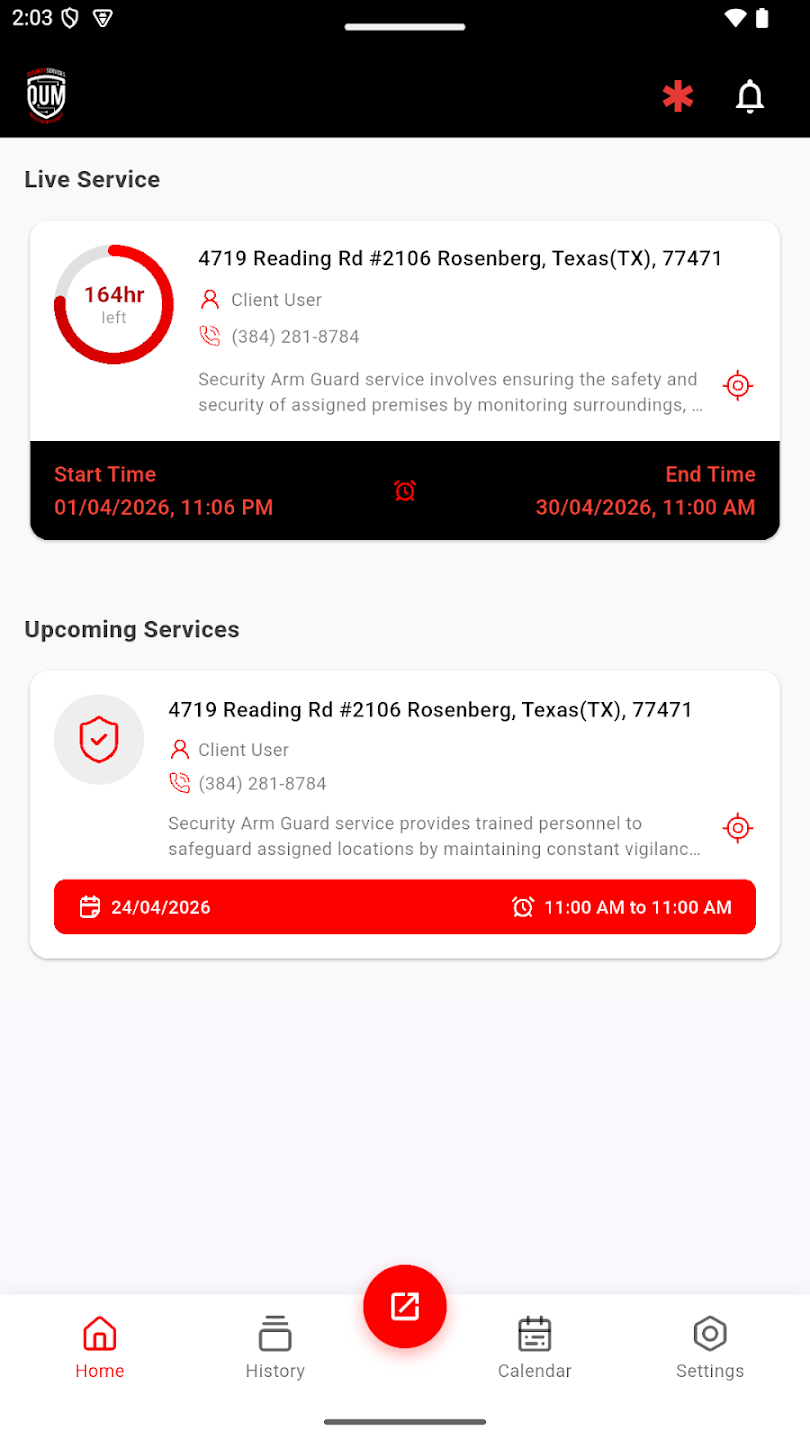
The booking workflow allows security service requirements to be organized digitally instead of relying on manual communication. Relevant service information, timing, location, and operational requirements can be maintained within the system, giving administrators a clearer foundation for planning resources.
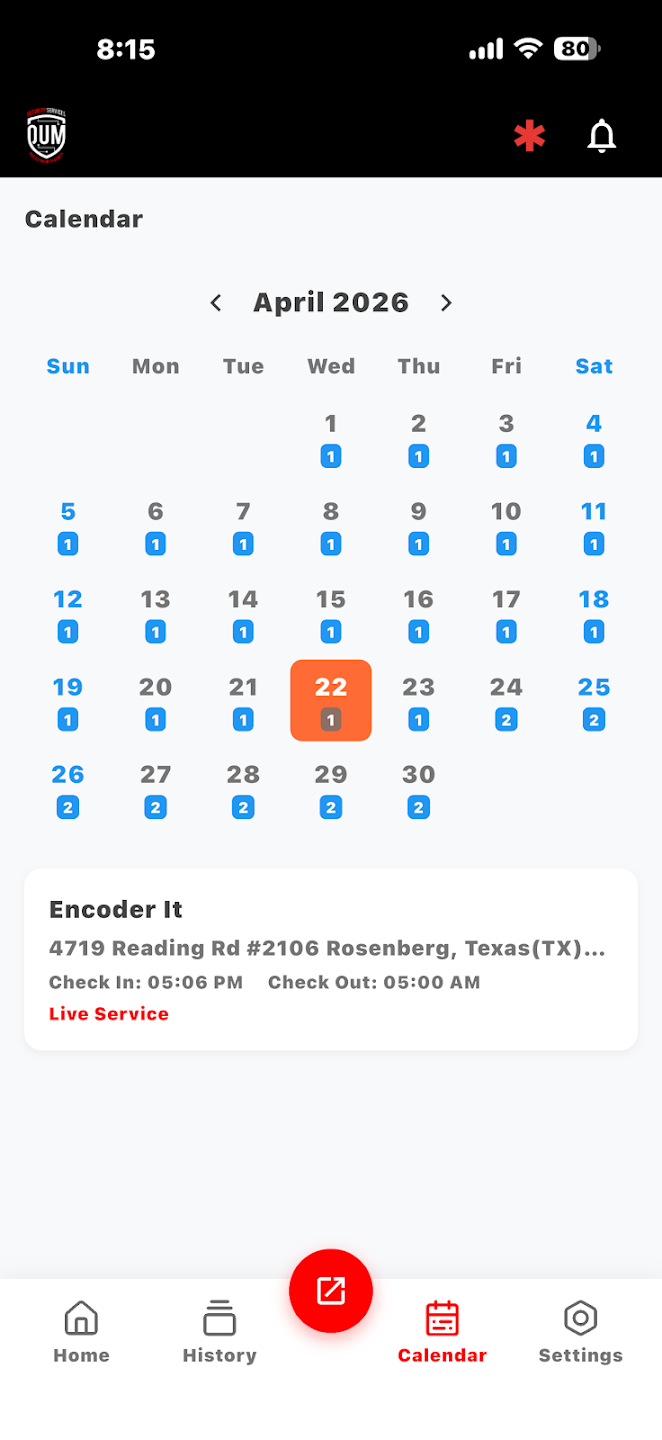
Scheduling functionality helps management coordinate security requirements with available personnel and active assignments. This improves visibility into upcoming work and provides a more structured way to manage recurring or time-sensitive services.
Guard Assignment & Site Management
Administrators can manage security sites, guard assignments, and operational instructions from the centralized management system. Guards receive relevant assignment information through the mobile application, reducing the need to communicate every detail manually.
Post orders can provide site-specific instructions and expectations so field personnel have access to important operational information while working at the assigned location. This helps standardize service delivery across different sites and shifts.
Real-Time Guard Monitoring
Real-time monitoring gives supervisors and management teams greater visibility into active security operations. Instead of depending entirely on phone calls or delayed reports, managers can view current guard activity and monitor ongoing services from the operational interface.
This makes it easier to coordinate teams across multiple locations and identify situations that may require attention. Centralized visibility is particularly valuable for security companies responsible for several client sites at the same time.
Geolocation & Live Location Tracking
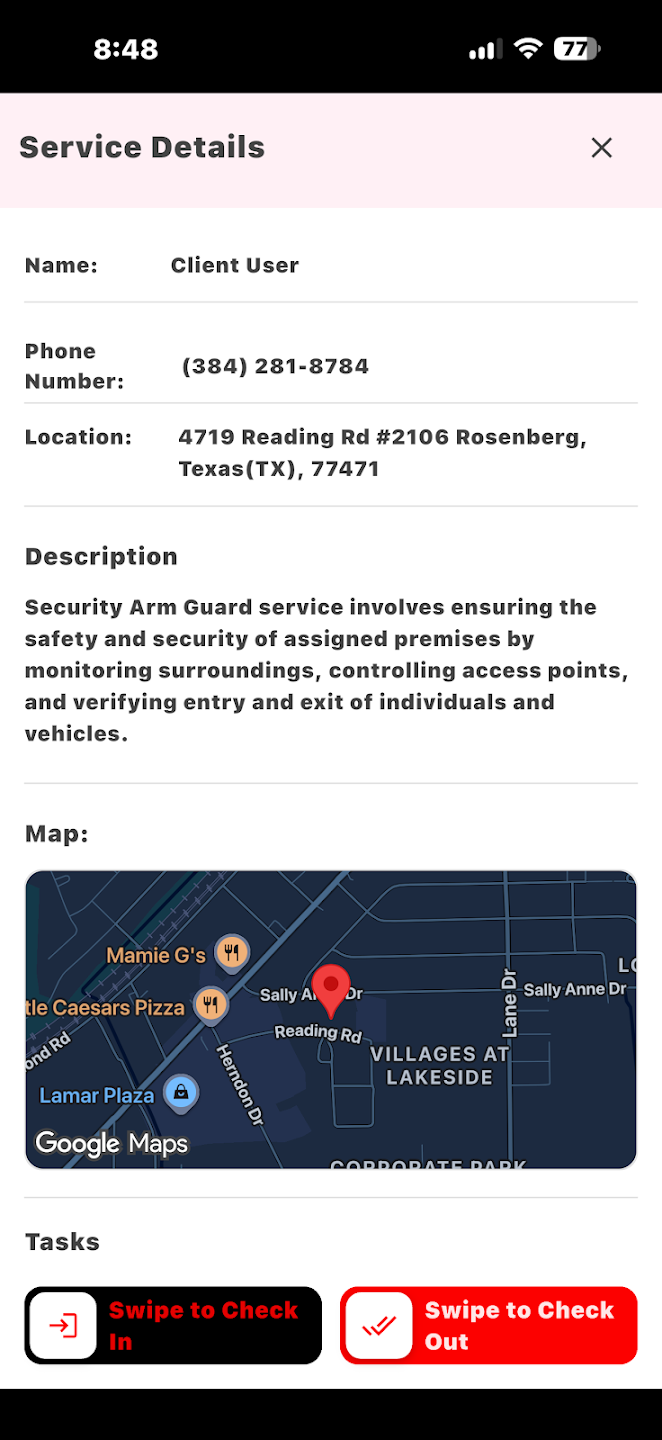
Geolocation and map functionality connect security operations with the physical locations where services are being delivered. Location information can support service assignments, guard activity, check-in or check-out workflows, and operational monitoring.
Google Maps integration provides managers with a visual representation of relevant locations and field activity, helping them understand where personnel are working without relying entirely on manually reported location information.
Emergency SOS
Security personnel may encounter situations where standard reporting is not fast enough. The Emergency SOS feature provides a dedicated way for guards to raise an urgent alert when immediate attention or support is required.
By connecting emergency activity with the digital security workflow, supervisors can receive clearer operational context and respond more quickly than when emergency communication depends entirely on manual calls or messages.
Incident Reporting
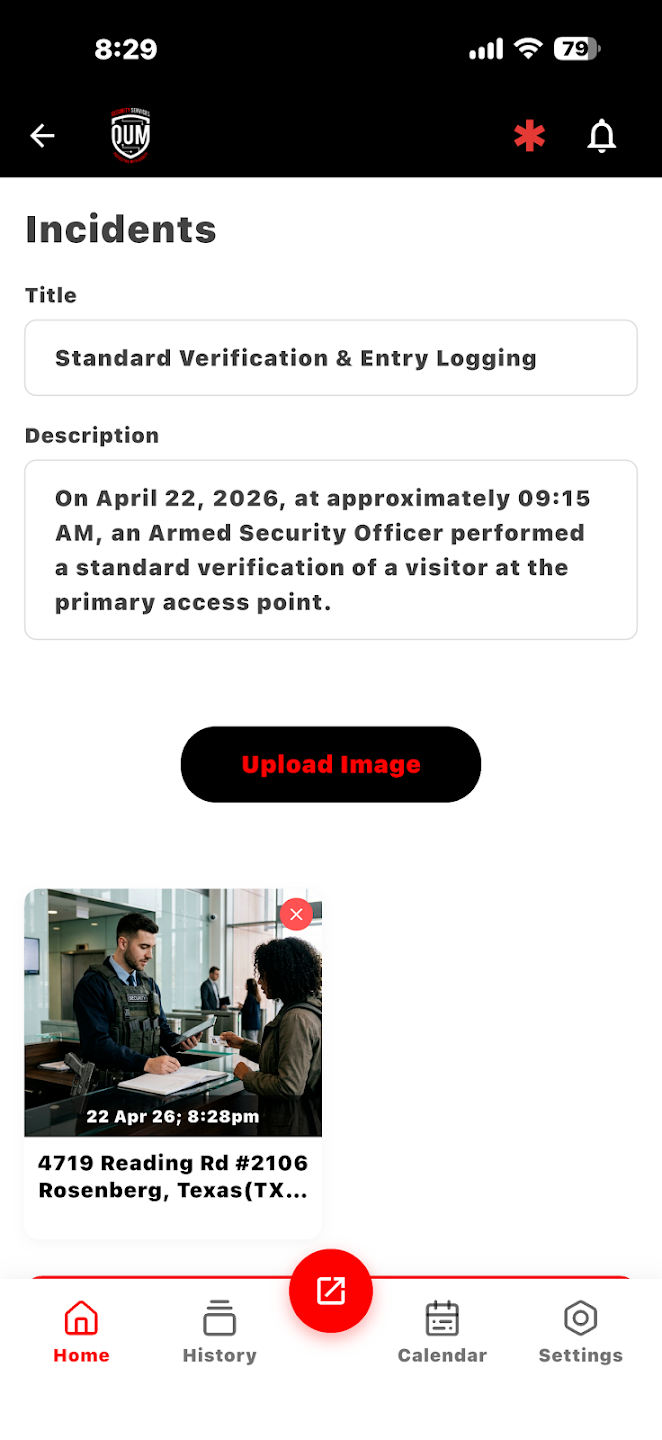
Guards can submit incident reports directly from the field, allowing important security events to be documented while the details are still current. Reports can include structured information and photo evidence, helping supervisors maintain clearer records of what happened during a service.
Centralizing incident reports also reduces reliance on paper forms and fragmented messaging. Management teams can review reported events through the system and maintain a more consistent operational history across sites and shifts.
Daily Logs & Shift Summaries
Daily operational records are important for accountability, client communication, and internal review. OumSecurity allows security activity to be documented through structured daily logs and shift summaries instead of depending only on handwritten reports or informal updates.
These records give supervisors and clients greater visibility into completed activities and create a historical reference that can be reviewed when questions arise about a particular shift, location, or service period.
Communication & Operational Updates
The platform helps improve communication between guards, supervisors, managers, and clients by keeping relevant operational information within one connected system. Assignment updates, incident information, shift activity, and service-related communication can remain associated with the security workflow.
This reduces the operational fragmentation created when important updates are distributed across multiple phone calls, messaging applications, and separate reporting channels.
Admin & Operations Dashboard
The React.js web dashboard acts as the central management interface for security operations. Administrators can maintain visibility over bookings, sites, guard assignments, activity, incident information, and other operational data from one environment.
The dashboard complements the guard-facing mobile application by providing management teams with the broader view required to coordinate personnel, review field information, and manage ongoing security services.
User Profiles & Service History
User profiles organize relevant account and service information in one place. Historical service records provide context for previous bookings or operational activity, helping users and administrators review earlier engagements without relying on separate records.
This creates a more complete relationship between users, services, sites, assignments, and operational history while making recurring security requirements easier to manage.
Technology Stack
The platform was developed using a cross-platform architecture that separates the mobile experience, web management interface, and backend business logic while connecting them through a shared API-driven system.
- Mobile Application: Flutter
- Platforms: Android & iOS
- Web Frontend: React.js
- Backend: Laravel
- API Architecture: REST API
- Location Services: Geolocation & Google Maps Integration
- Field Operations: Live Activity & Location-Based Workflows
- Reporting: Incident Reports, Photos, Daily Logs & Shift Summaries
- Security: Authenticated Application Access & SSL-Secured Server Communication
Key Technical Challenges
Synchronizing Web & Mobile Security Operations
Problem: Guards operate primarily from mobile devices while supervisors and administrators manage operations through the web dashboard. Booking, assignment, incident, and activity information needed to remain consistent across both environments.
Solution: A centralized Laravel backend and shared API architecture were used so the Flutter mobile application and React.js dashboard could work with the same business data and operational states.
Outcome: Field activity and management workflows remain connected, giving both mobile and web users a consistent view of current security operations.
Managing Real-Time Location-Based Workflows
Problem: Security operations are highly dependent on physical locations, and managers need useful visibility into where services and guards are operating.
Solution: Geolocation and mapping capabilities were integrated into relevant workflows to connect services, assignments, and field personnel with location information.
Outcome: Supervisors gain improved operational visibility and can manage geographically distributed security activity more effectively.
Handling Time-Critical Incidents & Emergency Events
Problem: Security incidents and emergencies require faster communication than normal administrative workflows. Important information can lose value when reporting is delayed or incomplete.
Solution: Dedicated incident reporting and Emergency SOS workflows allow field personnel to submit structured information and urgent alerts directly from the mobile application.
Outcome: Supervisors receive faster and more structured information, improving visibility when immediate operational attention may be required.
Before vs After
The main improvement was transforming fragmented security operations into a connected digital workflow that provides greater visibility from service booking through field execution and reporting.
| Before | After |
|---|---|
| Security requests and schedules managed manually. | Bookings and schedules can be organized through a centralized system. |
| Guard assignments communicated through calls or messages. | Assignments and relevant service details are available through connected web and mobile applications. |
| Limited visibility into active field operations. | Management can monitor guard activity and location-based operations more effectively. |
| Incident reports may be delayed or paper-based. | Guards can submit structured incident reports with photo evidence directly from the field. |
| Emergency communication depends on standard communication channels. | Emergency SOS provides a dedicated workflow for urgent situations. |
| Daily activity may be recorded inconsistently. | Daily logs and shift summaries provide more structured operational records. |
| Site instructions distributed through separate channels. | Sites, post orders, and assignments can be maintained within the platform. |
| Operational information fragmented across multiple tools. | Web and mobile workflows are connected through one shared security management system. |
Results & Business Impact
OumSecurity provides security organizations with a more structured way to coordinate field personnel and maintain operational visibility across sites. Instead of relying primarily on manual communication, managers can work from centralized information covering assignments, guard activity, incidents, daily logs, and service operations.
The mobile application gives field personnel a direct connection to the management system, while the web dashboard provides administrators and supervisors with the broader operational view required to coordinate multiple guards and locations.
- Multi-Platform Operations: Android, iOS, and web interfaces support both field personnel and management teams.
- Centralized Management: Bookings, sites, assignments, reports, and operational activity are managed within one ecosystem.
- Improved Visibility: Real-time guard activity and location-based workflows provide greater oversight of field operations.
- Faster Incident Reporting: Guards can document incidents directly from the mobile application with supporting information and photos.
- Emergency Readiness: SOS functionality provides a dedicated path for urgent field alerts.
- Better Accountability: Daily logs, shift summaries, assignments, and service history create clearer operational records.
- Scalable Architecture: Flutter, React.js, Laravel, and API-driven development provide a foundation for expanding future security-management capabilities.
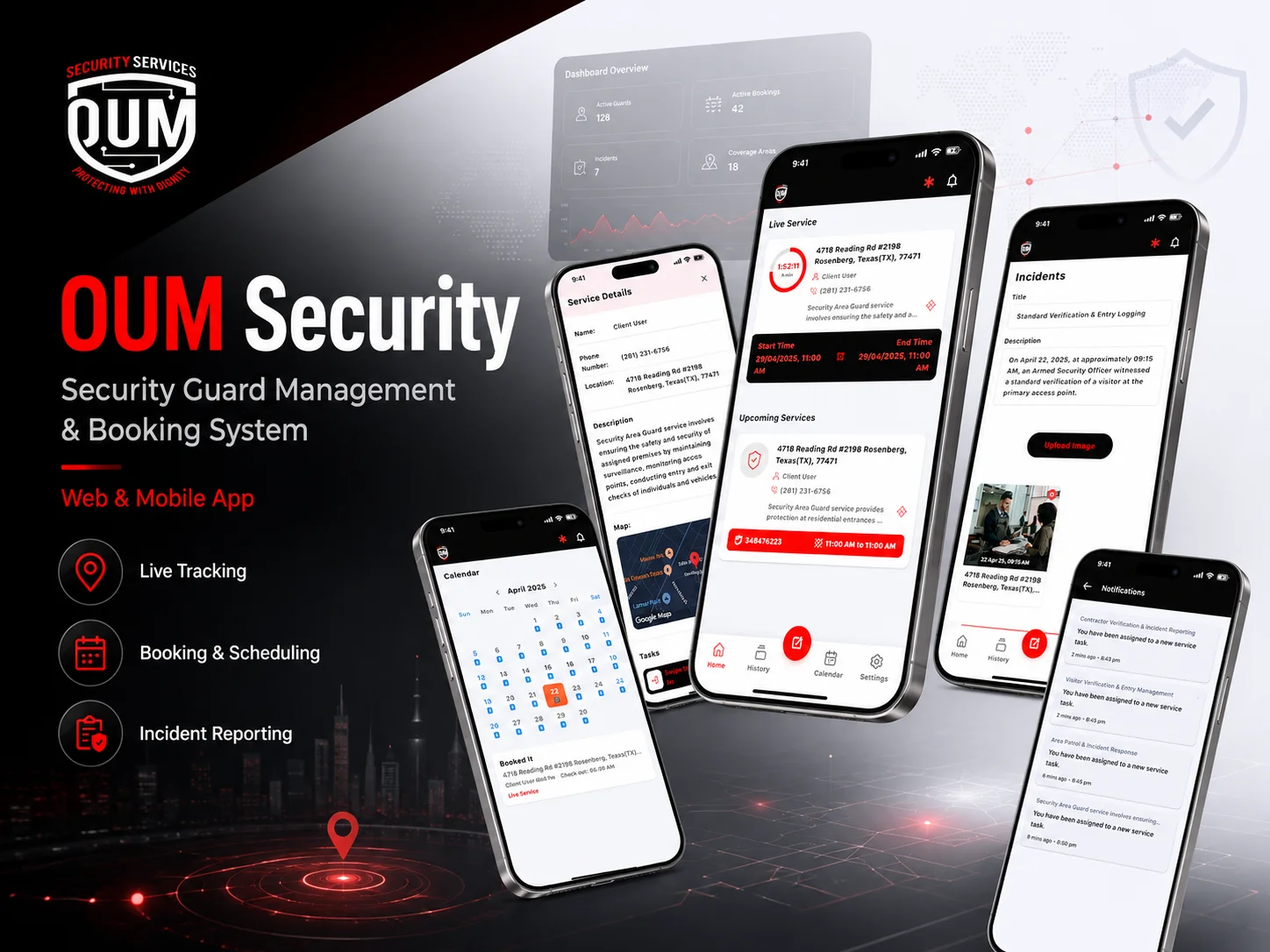
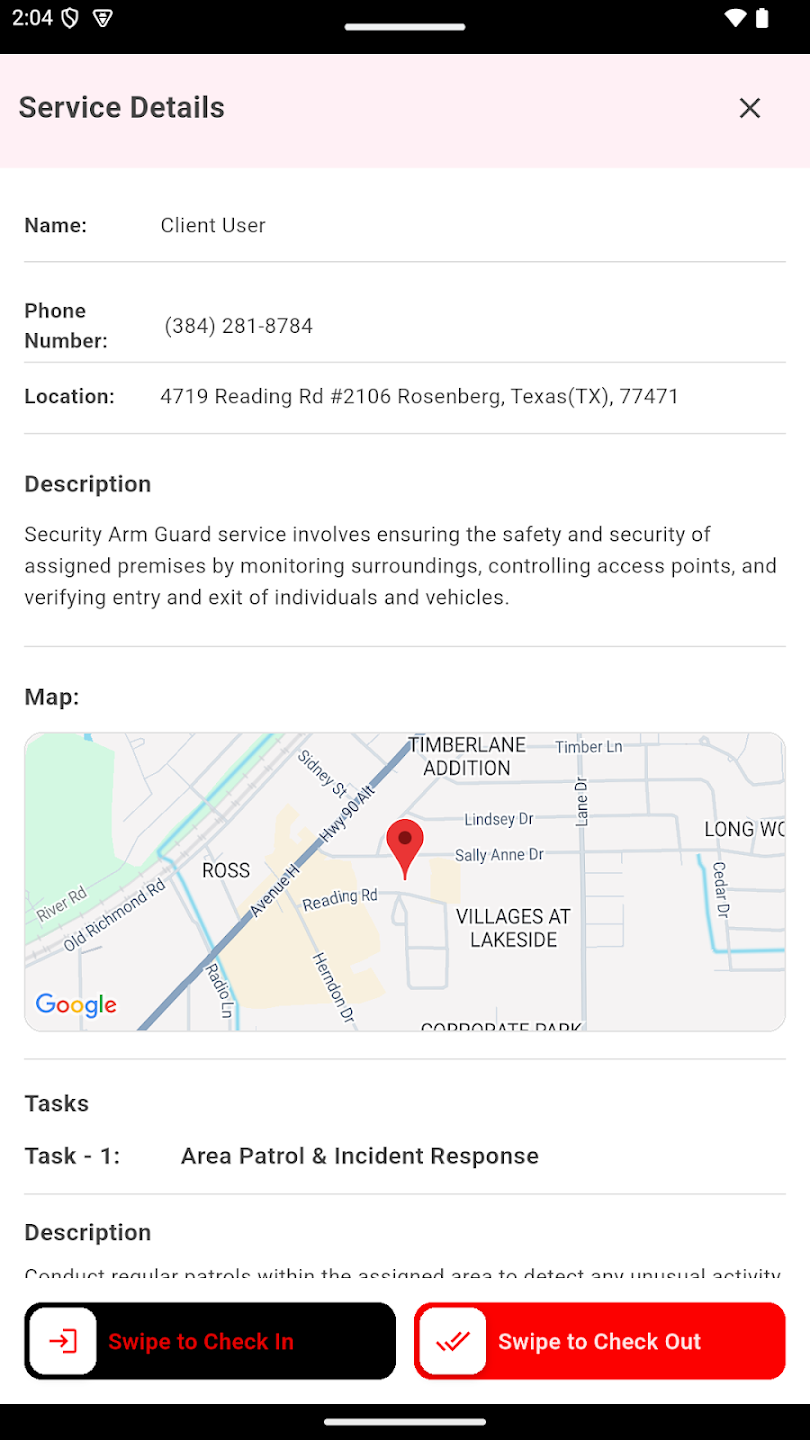
Project Screenshots & App Gallery
The gallery should demonstrate both sides of the platform: the field experience used by security personnel and the administrative tools used to monitor and coordinate security operations.
Project Summary
OumSecurity demonstrates how mobile technology, real-time operational visibility, geolocation, and centralized administration can modernize traditional security-service management. The platform connects booking, scheduling, guard assignments, field activity, incidents, emergency alerts, daily reporting, and site management through one coordinated system.
By combining a Flutter mobile application with a React.js web dashboard and Laravel backend, the solution supports both security personnel working in the field and managers responsible for supervising operations. The result is a flexible multi-platform system that improves coordination, accountability, communication, and operational visibility across security services.
Have a Similar Web or Mobile App Project?
Whether you need a workforce management platform, field-service application, booking system, live tracking solution, emergency response workflow, or a custom web and mobile product, Encoder IT Limited can transform your operational requirements into a scalable digital solution.